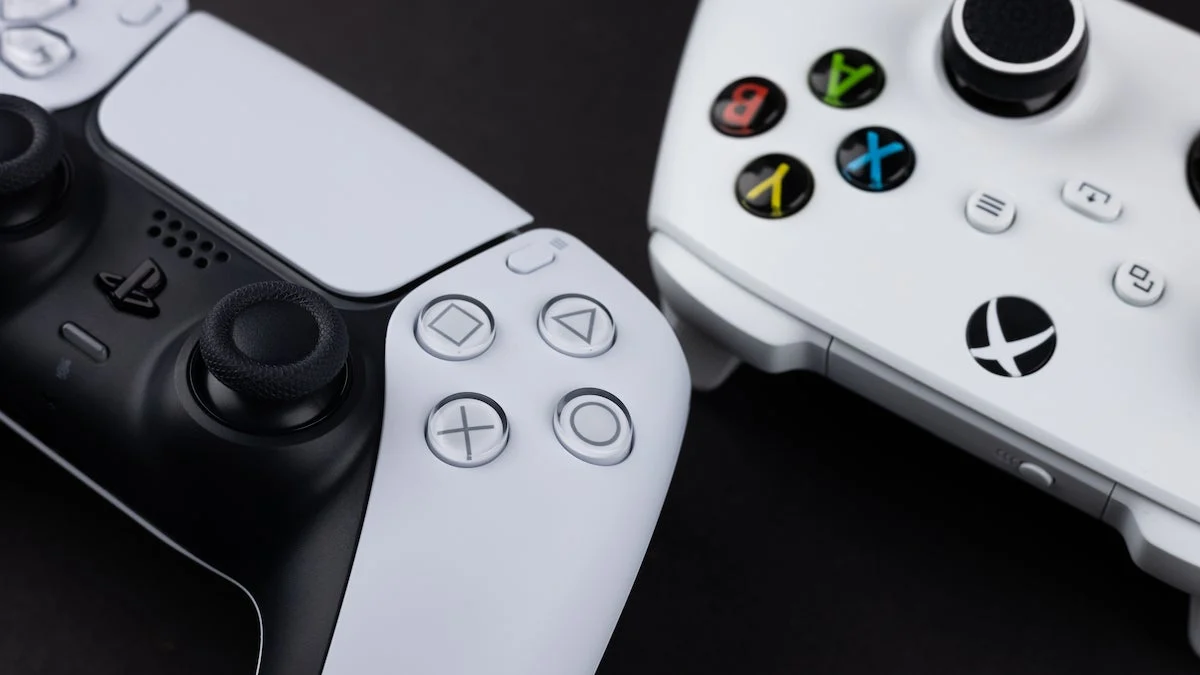
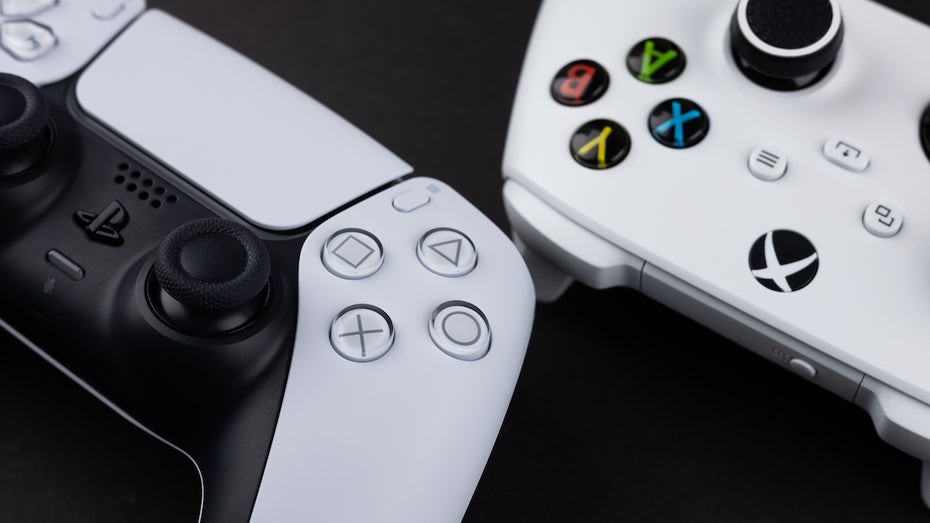
The gaming industry is currently standing at a crossroads. Six years have passed since the launch of the PlayStation 5 and the Xbox Series X/S—a lifetime in the fast-paced world of consumer electronics. As hardware cycles reach their twilight, the rumor mill has shifted into overdrive. Enthusiasts and industry analysts alike are bracing for the next generational leap, with the "PlayStation 6" and Microsoft’s "Project Helix" occupying the center stage of the gaming discourse.
As the industry prepares for this transition, we are seeing a convergence of cutting-edge hardware specifications, supply chain challenges, and shifting business models. Below, we provide an in-depth analysis of the next-generation landscape, covering the hardware, projected costs, and the strategic roadmaps of Sony and Microsoft.
The Strategic Shift: A New Era for Hardware
The traditional seven-year console cycle, which has long served as the gold standard for both Sony and Microsoft, is under pressure. While history suggests a 2027 release window, the current global climate—defined by volatile memory costs and advanced silicon manufacturing complexities—has forced both giants to reconsider their timelines.
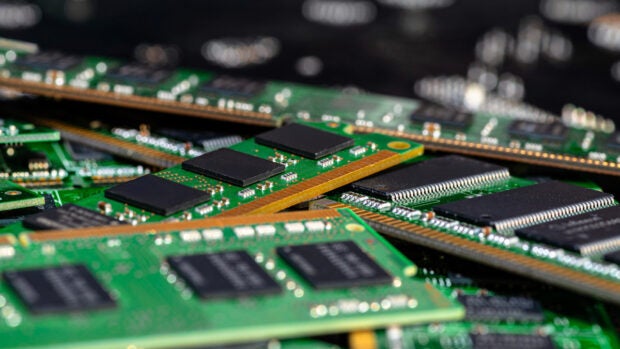
The primary hurdle for both companies is the transition to high-bandwidth memory (such as GDDR7) and the integration of advanced AI-driven scaling technologies. These components are not only expensive but, in the quantities required for a global launch, represent a significant logistical bottleneck. Consequently, the industry is bracing for a "price-shock" generation, where the dream of an affordable, entry-level console may be replaced by high-performance hardware carrying a premium price tag.
Chronology: The Timeline to Release
Initially, industry consensus pointed toward a 2027 launch for both the PS6 and Xbox Helix. However, recent reports from insiders and supply chain analysts suggest a more fragmented approach.
Microsoft’s "Project Helix" Roadmap
According to recent insights from Fortune and various industry leakers, Microsoft is leaning toward a late 2028 window for the primary home console release. Interestingly, the company is reportedly planning a handheld device to bridge the gap, potentially launching a year prior to the flagship console. The delay for the main hardware is largely attributed to software optimization and the ongoing struggle to stabilize production costs, as Microsoft appears to be moving away from the "loss-leader" strategy that characterized earlier generations.
Sony’s Cautious Approach
Sony has been notably more cryptic. In August 2026, Sony CEO Hiroki Totoki explicitly stated that the company had not yet finalized a firm roadmap for the PS6. Sony is clearly prioritizing a lessons-learned approach from the PS5, which suffered from severe inventory shortages and scalping issues during its initial launch. By waiting, Sony intends to ensure that when the PS6 does arrive, it will be supported by a robust supply chain, even if that means pushing the release closer to 2028 to maximize component availability.
The Financial Reality: Why the Next-Gen Will Be Expensive
If there is one consensus among analysts, it is that the "golden age" of cheap, mass-market consoles is coming to an end. The cost of raw components—specifically RAM and high-density storage—has not followed the expected deflationary path.
Xbox Helix: The Premium Gamble
Internal projections for the Xbox Helix suggest a retail price point between $1,200 and $1,800. While this sounds exorbitant compared to the $500 launch price of the Xbox Series X, Microsoft is reportedly debating whether to move away from the model of subsidizing hardware through software sales. If Microsoft decides to stop absorbing these costs, the consumer will face the full brunt of the manufacturing price, positioning the Xbox Helix more as a high-end enthusiast PC alternative than a traditional living-room console.
PlayStation 6: Component Costs at a Premium
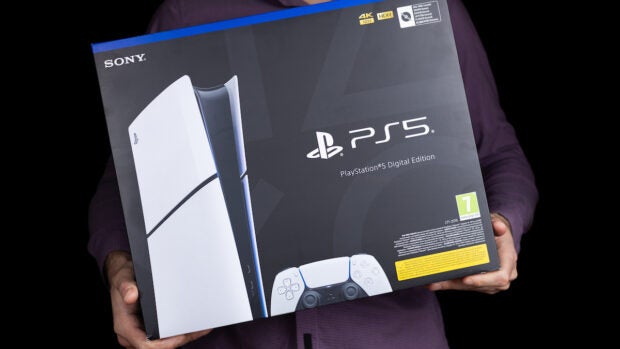
Sony faces a similar predicament. Leaked data suggests that the internal memory and storage architecture alone could cost Sony upwards of $680 per unit in production. When factoring in the R&D, chassis manufacturing, and the cooling systems required for such high-performance hardware, a price tag north of $1,000 for the PlayStation 6 is considered increasingly likely. This marks a significant departure from the $499 entry point of the PS5 and indicates that Sony may be positioning its next console as a "pro-level" device from day one.
Hardware Specifications: Power Under the Hood
To justify these price points, both manufacturers are pushing the boundaries of what is possible in a compact, proprietary form factor.
PlayStation 6: The AI-Centric Powerhouse
The PS6 is expected to utilize an AMD Zen 6C processor. The architecture likely features an eight-core setup dedicated to gaming, with two additional cores reserved exclusively for background tasks and operating system efficiency. On the graphical front, the console is targeting roughly 40 Teraflops of power. While rumors once suggested even higher performance, 40 TFLOPS represents a massive leap over the PS5’s 10.28 TFLOPS.
The inclusion of AMD’s "Neural Arrays" is perhaps the most significant hardware update. These specialized circuits will allow for advanced AI-driven resolution upscaling, ensuring that titles can run at high frame rates even when rendering complex geometry and ray-traced lighting. Whether Sony will retain a physical disc drive remains the subject of intense debate, especially given the company’s recent moves to minimize physical media distribution.
Xbox Helix: The Hybrid Frontier
Microsoft’s strategy for the Xbox Helix is built around versatility. With an eye-watering 56 TFLOPS of projected graphical power, the console is designed to dominate the raw performance metrics. Much like the PS6, it will utilize the RDNA 5 architecture and likely feature at least 24GB of high-speed GDDR7 RAM.
The most transformative aspect of the Xbox Helix is its rumored "Hybrid" nature. Microsoft is reportedly working on a system that allows the console to play both native console titles and a selection of PC games. This integration could potentially allow users to access parts of their PC libraries, though analysts suspect Microsoft will gate this behind its own ecosystem to maintain control over the platform’s security and performance.
Implications: The Death of the "Casual" Console?
The move toward high-end, high-priced hardware signals a fundamental shift in the gaming market. For years, consoles were the democratic gateway to gaming—affordable devices that democratized high-fidelity entertainment. By pushing prices toward the $1,000 threshold, Sony and Microsoft risk alienating the casual audience.
However, there is a strategic logic at play. By aligning console architecture closer to high-end PCs, developers can create "unified" experiences that scale more easily across hardware. This reduces development time and costs for multi-platform titles. Furthermore, as the lines between consoles and PCs blur, the "console" itself becomes less about a specific piece of hardware and more about an ecosystem—a gateway to cloud gaming, local processing, and digital storefronts.
Conclusion: A High-Stakes Future
The next generation of gaming is shaping up to be the most technically ambitious and financially challenging era in history. While the hardware will undoubtedly offer unprecedented levels of fidelity—making ray-tracing and AI-assisted rendering the norm rather than the exception—the barrier to entry is rising.
For gamers, the coming years will be defined by a choice: do we continue to invest in proprietary "closed" systems that are increasingly mimicking the cost and complexity of high-end PCs, or will the rise of handhelds and cloud-based alternatives provide a new path? As we approach 2027 and 2028, the battle between the PlayStation 6 and the Xbox Helix will not just be a fight for market share, but a defining moment for the future of interactive entertainment.
We will continue to update this article as more information regarding release dates, official pricing, and technical specifications becomes available.