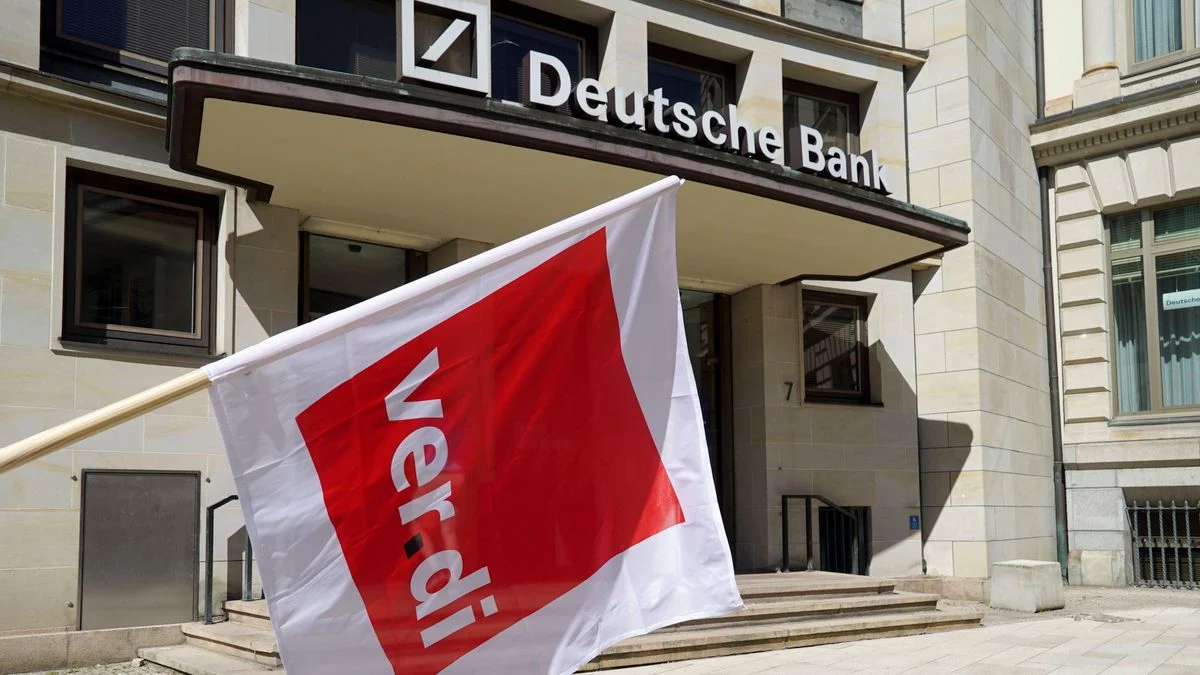
The German private banking sector is bracing for a period of significant industrial unrest. In a decisive move to break the stalemate in ongoing collective bargaining negotiations, the trade union Ver.di has called for the first wave of nationwide warning strikes, affecting approximately 150,000 employees. This escalation comes as a direct response to the perceived intransigence of employers during the initial round of talks, leaving the workforce frustrated and the union demanding a tangible shift in strategy ahead of the next scheduled negotiations on November 2.
The Core Conflict: A Clash of Expectations
At the heart of the dispute lies a fundamental disagreement over how the spoils of a high-performing sector should be distributed. While private banks have reported robust profits, employees argue that their compensation has failed to keep pace with both corporate success and the broader inflationary pressures currently affecting the German economy.
Ver.di’s lead negotiator, Jan Duscheck, did not mince words when describing the current atmosphere at the bargaining table. "While the banks are delivering on profits, they remain indebted to their employees when it comes to salaries," Duscheck remarked. "Those who contribute daily to the success of the industry have every right to expect fair participation."
The union’s demand is clear: they are seeking a substantial wage increase that reflects the professional commitment of banking staff and the current economic realities. However, the private banking employers’ association, the AGV Banken, has labeled these demands as "excessive" and disconnected from the long-term financial stability of the institutions.
Chronology of the Dispute
To understand the current impasse, it is necessary to examine the timeline of negotiations that led to the declaration of warning strikes:
- Early October: The initial round of collective bargaining began in Berlin. Expectations were high, but the atmosphere quickly cooled when employers failed to present a formal salary offer. Instead, the AGV Banken utilized the session to categorically reject several of the union’s core demands, including enhanced protection against dismissal and specific tariff-based regulations regarding the digital transformation processes within banks.
- Late October: Tensions mounted as Ver.di accused the employers of stalling. The lack of a concrete financial offer was perceived by union representatives as a sign of disrespect toward the workforce, prompting the leadership to authorize warning strikes to shift the power dynamic before the next round of talks.
- November 2: The next scheduled negotiation session. Both sides are currently under immense pressure to move from their entrenched positions to avoid a prolonged labor conflict that could paralyze financial operations.
Supporting Data: Profitability vs. Wage Growth
The tension in the banking sector is set against a backdrop of complex economic indicators. In recent quarters, many private banks have benefited from rising interest rates, which have bolstered net interest margins—a primary revenue driver for commercial banking.
Industry analysts note that while the sector has navigated a difficult transition period—marked by branch closures, digitalization, and the automation of customer service—the remaining workforce is doing more with less. Productivity metrics per employee have seen a steady upward trend as headcount reductions have forced survivors to take on more complex, value-added tasks.
Ver.di argues that the "transformation" narrative used by banks to justify austerity measures is now threadbare. They point out that the investment in new technologies, while necessary, should not come at the expense of the employees who are the ones managing these complex digital transitions. The union’s data suggests that the real wages of bank employees have been eroded over the last two years due to persistent inflation, creating a "gap" that only a significant pay rise can bridge.
Official Responses and Strategic Posturing
The rhetoric from both sides of the aisle highlights the depth of the ideological divide.
The Employer Perspective: Stability and "Lean" Demands
Carsten Rogge-Strang, Chief Negotiator for the AGV Banken, has adopted a posture of cautious containment. Speaking to the DPA news agency, he expressed hope that the warning strikes would remain "manageable" and result in "no perceptible impact on banking operations."
From the employers’ viewpoint, the union’s catalog of demands is bloated and unrealistic. Rogge-Strang explicitly stated that for any salary offer to be tabled, the union must be prepared to "slim down" its list of demands. He argued that the industry faces significant structural headwinds—regulatory compliance costs, intense competition from Fintechs, and the need for massive capital investment—which limit the room for maneuver on labor costs.
The Union Perspective: Fairness and Recognition
Ver.di remains unmoved by the "structural headwind" argument. They view the dismissal of their requests for better job security as a deliberate attempt to undermine the social partnership model. By calling for strikes, the union is signaling that it is no longer willing to discuss financial compensation in a vacuum, but insists that social protections, such as protection against dismissal during digitalization phases, remain on the agenda.
Implications: The Potential for Widespread Disruption
The impact of these warning strikes, while intended to be "manageable," carries significant risks for both the banking sector and the broader economy.
1. Operational Risks
Banks operate on a foundation of trust and continuous availability. While most modern banking is digitized, specialized services, corporate banking, and customer support centers rely on human intervention. A sustained strike could disrupt processing times for loans, international transfers, and complex advisory services, potentially damaging the reputation of institutions already fighting to maintain customer loyalty in a digital-first market.
2. The Precedent of Transformation
This dispute is a litmus test for how the German financial sector will handle the "human side" of digital transformation. If the employers successfully block tariff-based protections for employees during technological shifts, it could set a precedent that leaves workers vulnerable to future layoffs triggered by artificial intelligence and automated processes. Conversely, if Ver.di achieves a breakthrough, it could become a blueprint for other service sectors currently undergoing similar structural overhauls.
3. Economic Impact
With 150,000 employees involved, this is one of the largest collective bargaining disputes in the German service sector this year. A prolonged conflict would not only affect the internal balance sheets of the banks but could also create a ripple effect, impacting the availability of credit to small and medium-sized enterprises (the Mittelstand) that rely on these institutions for liquidity.
The Path Forward: A Narrow Window for Compromise
As the November 2nd deadline approaches, the pressure on both parties to reach a negotiated settlement is mounting. Failure to reach an agreement could lead to an escalation from warning strikes to indefinite industrial action, a scenario that both sides have publicly claimed they wish to avoid but for which they are clearly preparing.
For the AGV Banken, the challenge will be to determine what constitutes a "fair" offer that acknowledges the employees’ contributions without alienating shareholders who expect dividend growth. For Ver.di, the challenge lies in balancing the immediate need for salary increases with the long-term goal of securing employment standards in an industry that is rapidly shedding its traditional skin.
The outcome of these negotiations will be closely watched by the German financial community. It is a defining moment that will likely shape the relationship between labor and management in the private banking sector for years to come. Whether the November meeting results in a breakthrough or a breakdown will depend on whether the parties can move beyond the current cycle of public accusations and return to the constructive spirit that historically characterized German industrial relations.
As the strike sirens sound across the country, the message from the employees is clear: the era of "business as usual" is over. The banks must now decide whether they are willing to share the prosperity they have generated, or if they are prepared to weather the storm of a protracted and potentially damaging labor dispute.