The entertainment world is in mourning following the passing of legendary British actor and musical icon Tim Curry. Known for his chameleon-like ability to inhabit roles ranging from the grotesque to the grand, Curry’s death at age 80 marks the end of a singular era in cinema and theater.
The Final Curtain: A Summary of the Loss
Tim Curry, the quintessential character actor whose career spanned over five decades, has passed away at his home in Los Angeles. The confirmation, provided by his long-time management team, brought an outpouring of tributes from Hollywood peers, theater critics, and generations of fans who grew up enchanted by his distinctive voice and uncanny ability to command the screen.
Curry was a man of immense range, equally comfortable on the stages of the West End and Broadway as he was in blockbuster Hollywood films. While his career was defined by his iconic portrayals of flamboyant villains and eccentric outcasts, his off-screen life was characterized by a reserved dignity, particularly during his final years of health challenges.
A Chronology of a Masterful Career
The Early Years and the "Rocky Horror" Phenomenon
Born in 1946 in Cheshire, England, Timothy James Curry was the son of a Methodist chaplain and a school secretary. He graduated from the University of Birmingham with combined degrees in English and Drama. His professional ascent began in the late 1960s, but it was his 1973 performance as Dr. Frank-N-Furter in the original London stage production of The Rocky Horror Show that would change the trajectory of his life.
When he reprised the role for the 1975 film adaptation, The Rocky Horror Picture Show, he created a cultural touchstone. As the "Sweet Transvestite from Transsexual, Transylvania," Curry delivered a performance that was at once terrifying, seductive, and campy. It remains one of the most recognizable performances in cinematic history, turning the film into the world’s longest-running theatrical release.
The Rise of the Character Actor
Following the global success of Rocky Horror, Curry refused to be typecast. Throughout the 1980s and 90s, he built a reputation as the industry’s most reliable "villain-for-hire." In 1982, he showcased his musical theater chops as Rooster Hannigan in Annie, and in 1985, he starred as the sinister Lord of Darkness in Ridley Scott’s Legend.
Perhaps his most terrifying contribution to pop culture came in 1990, when he portrayed Pennywise the Dancing Clown in the television miniseries adaptation of Stephen King’s It. His performance was so harrowing that it left an entire generation with a lifelong phobia of clowns—a testament to his ability to blend charm with genuine malice.
Versatility and the Later Years
Curry’s filmography is a masterclass in variety. He brought a sense of sophisticated villainy to The Hunt for Red October (1990) as Dr. Petrov, and displayed brilliant comedic timing as the concierge in Home Alone 2: Lost in New York (1992). He moved effortlessly into the realm of family entertainment, lending his distinctive, gravelly voice to countless animated projects, including The Wild Thornberrys and various Scooby-Doo iterations, proving that his talent transcended the need for visual presence.
Supporting Data: A Legacy of Accolades
Tim Curry’s impact was not merely cultural; it was critical. Over his career, he was the recipient of:
- Three Tony Award nominations: Specifically for Travesties, Amadeus, and My Favorite Year.
- An Emmy Award: Won in 2004 for his voice-over performance in Peter Pan and the Pirates.
- The Royal Variety Performance recognition: A hallmark of his early success in British theater.
His influence on the horror and musical genres is difficult to quantify, but his presence in "cult" cinema remains unparalleled. Film historians often cite Curry as the bridge between the "theatrical" acting style of the mid-20th century and the "method" intensity that defined the late 1980s.
Health Struggles and Resilience
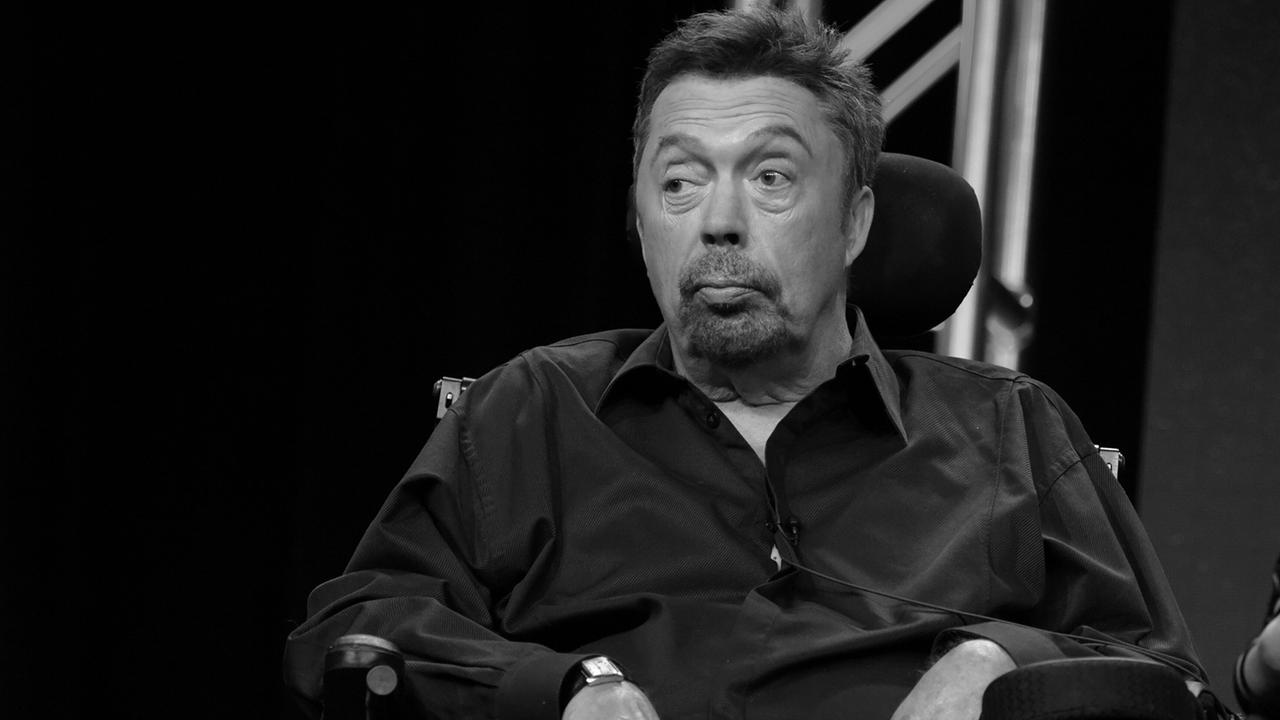
In 2012, Curry suffered a major stroke that left him partially paralyzed and largely confined to a wheelchair. For many, this might have signaled the end of a career, but for Curry, it marked a pivot. He largely withdrew from on-camera appearances, choosing instead to focus on voice acting, where his legendary voice remained as sharp and evocative as ever.
His resilience in the face of these health challenges became a source of inspiration for his fans. In the years following his stroke, he made rare appearances at conventions and charity events, always maintaining his signature dry wit and profound humility. He spoke rarely of his health, preferring to focus on his craft and the joy of storytelling.
Official Responses and Industry Tributes
The industry response has been swift and deeply emotional.
- From his management: "Tim’s legacy is not found in the awards he won, but in the millions of people who felt seen, represented, or simply entertained by his work. He was a kind, generous, and incredibly private man who lived for the craft."
- From the theater community: The Society of London Theatre released a statement noting, "Tim Curry was a titan of the stage. From his early days at the National Theatre to his later triumphs, he demonstrated that acting is an act of total transformation."
- From social media and fans: Within hours of the announcement, "Frank-N-Furter" and "Pennywise" were trending globally, as fans shared clips of his most famous monologues, highlighting his unique ability to deliver lines with equal parts menace and camp.
Implications: The End of a Singular Archetype
The passing of Tim Curry leaves a void in the landscape of character acting that may never be filled. In an era of Hollywood where actors are often pushed to play versions of themselves, Curry was a true shapeshifter. He was not interested in "likability"; he was interested in "believability."
His career serves as a roadmap for aspiring actors on how to balance high art with mass-market appeal. Whether he was playing a sinister clown, a butler, or a transvestite scientist, he treated every role with the same level of intellectual rigor and physical commitment.
A Final Reflection
As we look back at the breadth of his work, it becomes clear that Tim Curry was a rare breed of performer who understood that the audience doesn’t just want to be told a story; they want to be taken on a journey. Through his voice, his gestures, and his fearless embrace of the bizarre, he invited us into worlds that were darker, funnier, and more vibrant than our own.
While the curtain has officially fallen, the body of work he leaves behind is vast and immortal. From the dark sewers of Derry to the strange, neon-lit mansion of Frank-N-Furter, Tim Curry’s ghosts will continue to haunt and delight us for generations to come. He was, in every sense of the word, a legend.
Rest in peace, Tim. The show was better for having you in it.