In the landscape of modern media, children’s television is frequently dismissed as mere "background noise"—a colorful, rhythmic distraction designed to keep the youngest demographic occupied while parents attend to the demands of adult life. From the relentless cheer of Peppa Pig to the heroic, high-tech rescue missions of PAW Patrol, these programs are staples of the modern household. Yet, beneath the vibrant animation and catchy theme songs lies a deeper, often contentious reality: children’s television has long served as a sandbox for social, political, and cultural subversion.
When media creators prioritize the child’s perspective, they inevitably clash with the sensibilities of adults who demand order, obedience, and conformity. As a result, shows that were intended to educate or entertain have occasionally found themselves in the crosshairs of global powers, ranging from the censors of the Chinese Communist Party to the political polarization surrounding Donald Trump in the United States.
The Anatomy of Subversion: Challenging the Adult World
At its core, the most effective children’s programming is rooted in a fundamental shift of power. Media researcher Maya Götz, who heads the International Central Institute for Youth and Educational Television (IZI) at Bayerischer Rundfunk, argues that what adults often perceive as "provocation" is, in reality, nothing more than the authentic expression of the child’s perspective.
"For children, the joy of these shows lies in the fact that their humor and their logic take center stage," Götz explains. "They identify with characters who don’t always act ‘correctly’ or follow the rules set by society. This, in turn, deeply irritates adults who expect children to be quiet, obedient, and functional."
By centering the narrative on the child’s viewpoint, these shows inadvertently undermine the traditional hierarchical structure of the family and the state. When a character like Peppa Pig ignores a parent’s suggestion or a Teen Titan questions the authority of a mentor, they are modeling autonomy. To a child, this is empowering; to a regime or a traditionalist, it can appear revolutionary.
A Global Chronology of Conflict
The tension between children’s media and political authority is not a new phenomenon. It has evolved alongside the medium itself, moving from local educational initiatives to global ideological battles.
1969–1971: The Birth of the Sesame Street Philosophy
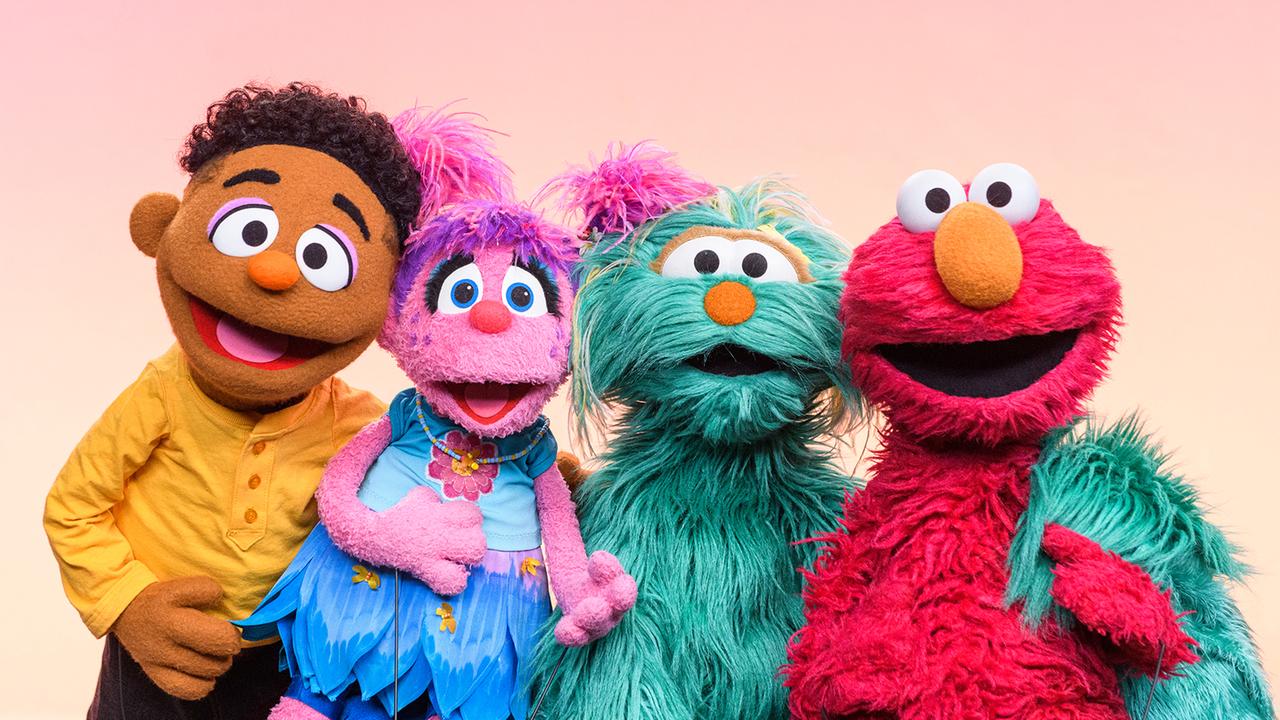
When Sesame Street debuted in the United States in 1969 (and 1971 in Germany), its goal was radical: to provide high-quality, pre-school education to children from disadvantaged backgrounds. By treating children as intelligent, capable, and deserving of intellectual stimulation, the show set a new standard. However, this commitment to equality and social awareness quickly made it a target for those who viewed such programming as an "elite" or "liberal" agenda.
2005: The "Grump" Conflict
The most infamous example of Sesame Street’s subversive nature is its long-standing satire of Donald Trump. Throughout the late 80s and early 2000s, the show featured a character named "Ronald Grump." Portrayed as an arrogant, gold-obsessed real estate developer, Grump lived in a "trash-can tower" and frequently bragged about his wealth. When the character reappeared in 2005 as a parody of The Apprentice, he was blunt and aggressive. The impact was lasting; for many, the character became a permanent symbol of the "subversive liberal" media, contributing to the political scrutiny the show would face years later.
2018: The Peppa Pig Censorship in China
The conflict reached a geopolitical stage in 2018 when the Chinese government effectively banned Peppa Pig from the popular video platform Douyin. While officials cited vague concerns regarding "nakedness and weapons" in user-generated content, the underlying cause was far more political. Reports from The Guardian indicated that the Chinese Communist Party viewed the show as a vehicle for "western values." The character of Peppa, who is depicted as independent and occasionally rebellious, was deemed an unsuitable role model for the youth of China.
Supporting Data: Why "Distraction" Matters
The influence of these programs is supported by the sheer scale of their reach. The IZI, which conducts rigorous analysis of media trends, has examined the impact of everything from the Harry Potter phenomenon to the rise of reality-TV-style "challenge" shows.
Data shows that children’s media consumption is no longer linear. With the advent of streaming services, children have moved away from traditional broadcast television toward platforms that prioritize interactivity. Shows like Salish and Jordan Matter—where a father and daughter engage in competitive challenges—have become global hits because they mirror the real-life power dynamics between parents and children. When Salish outsmarts her father in a challenge, she is not just playing; she is asserting agency.
According to Anke Lindemann, director of the children’s film festival Goldener Spatz, this "battle" format is essential for emotional development. "By placing authorities under pressure and having a bit of fun with it, children explore the limits of their own environment," says Lindemann. "It is through this subversive play that they learn to navigate their identity as individuals within a family unit."
Official Responses and Political Repercussions
The backlash against these shows often follows a predictable pattern. In the United States, the political climate surrounding public broadcasting has been particularly volatile. Following Donald Trump’s inauguration, Republican lawmakers moved to defund the entities that support programs like Sesame Street.
The argument was framed as fiscal responsibility, but the subtext was clearly ideological. The "Sesame Workshop," the non-profit organization behind the show, found itself in a precarious financial position. The show was forced to pivot, eventually securing a lifeline through a high-profile partnership with a streaming service. This transition highlights the fragility of public-interest media in a polarized market: when content is perceived as challenging the status quo, the first line of attack is often the budget.
In authoritarian regimes, the response is more direct. The banning of content is not a negotiation; it is an erasure. By removing Peppa Pig from digital platforms, the state attempted to insulate its youth from the "contagion" of Western individualistic humor. These actions confirm that, regardless of the target audience, those in power recognize that children’s media is a powerful tool for cultural transmission.
Implications: The Future of the "Subversive" Child
As we look toward the future, the boundary between children’s television and political discourse is likely to blur further. As younger generations grow up with content that encourages questioning, independence, and critical thinking, the "innocence" of children’s media will continue to be a site of contestation.
The implications are twofold:
- The Rise of Algorithmic Curation: As children move to algorithmically curated feeds, the "subversive" elements of traditional storytelling may be filtered out by content moderation AI, which is often trained to prefer "safe" and "neutral" content. This could lead to a sanitized version of childhood media that lacks the sharp edges that allow for true character growth.
- Parental Empowerment: Conversely, as parents become more aware of the content their children consume, they are beginning to view media as a tool for dialogue. Rather than shielding children from "provocative" shows, parents are increasingly using these programs as starting points for conversations about power, fairness, and morality.
In conclusion, the "subversive" nature of children’s television is not a flaw; it is a feature of a healthy media diet. Whether it is a piglet challenging the status quo or a muppet questioning the ethics of a billionaire, these stories provide a safe space for children to rehearse the complexities of the adult world.
As Maya Götz notes, the ability of a show to provoke an adult is the surest sign that it is doing its job well. By continuing to tell stories that challenge authority and prioritize the perspective of the child, producers ensure that the next generation remains curious, skeptical, and, perhaps most importantly, free. The struggle for the soul of children’s television is, in essence, a struggle for the future of our culture—one in which the smallest voices are given the loudest platform.