As the 2026 Nobel Prize announcements begin, the world turns its gaze toward Stockholm and Oslo. For over a century, these accolades have represented the pinnacle of human achievement. But what is the secret behind the prestige of the Nobel Prize, and how does the rigorous selection process function in the modern era?
By Nina Kunze, SWR Science Desk
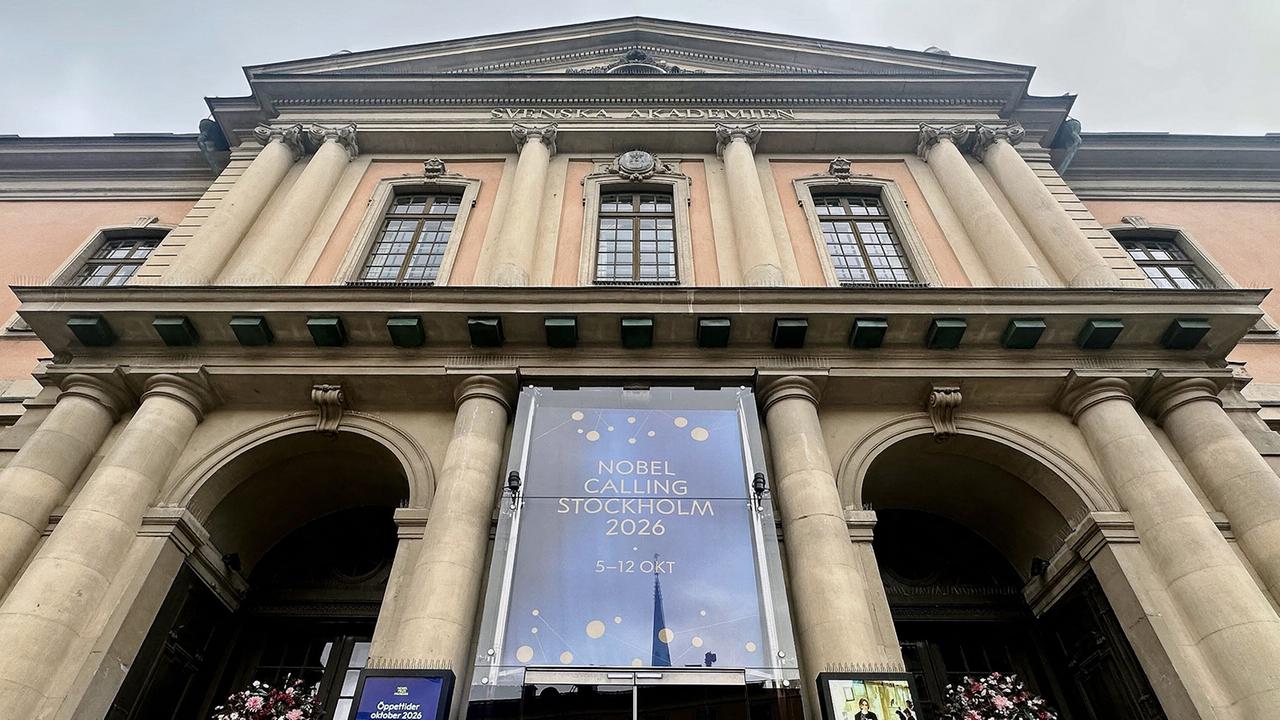
On October 5, 2026, the global scientific, literary, and political communities held their breath once more. The annual tradition of announcing the Nobel Prize laureates—a ritual that has captivated the public imagination since 1901—is underway. As we mark the 125th anniversary of these prestigious awards, it is worth examining not just the winners, but the institutional weight, historical neutrality, and rigorous academic scrutiny that have cemented the Nobel Prize as the ultimate benchmark for human progress.
The Genesis: Alfred Nobel’s Final Testament
The story of the Nobel Prize begins not with an institution, but with a single, profound act of reflection. Alfred Nobel, the Swedish chemist, engineer, and inventor of dynamite, was a man of complex contradictions. A titan of industry who held 355 patents, he was often referred to as the "merchant of death" by the press following a premature obituary published in a French newspaper.
Deeply troubled by this legacy, Nobel sought to redefine his impact on history. On November 27, 1895, he signed his final will and testament in Paris. He stipulated that the bulk of his vast fortune—amassed through his industrial endeavors—be invested in "safe securities." The annual interest was to be distributed as prizes to those who, during the preceding year, had "conferred the greatest benefit to humankind."
Nobel’s vision was specific: five distinct categories were established: Physics, Chemistry, Physiology or Medicine, Literature, and the promotion of Peace. In 1969, the Sveriges Riksbank (Sweden’s central bank) added the Prize in Economic Sciences in memory of Alfred Nobel, further expanding the scope of the honors.
A Chronology of Prestige: From 1901 to the Modern Era
The inaugural ceremony in 1901 marked the beginning of a new era for international intellectual recognition. While regional and national awards existed at the turn of the 20th century, the Nobel Prize was explicitly global.
- 1901: The first Nobel Prizes are awarded. Winners include Wilhelm Röntgen (Physics) and Emil von Behring (Medicine).
- 1921: Albert Einstein is finally honored for his work on the photoelectric effect, cementing the prize’s association with the greatest minds in history.
- 1969: The Prize in Economic Sciences is established, broadening the scope of the foundation’s mission.
- 2000s–Present: The Nobel Foundation begins to emphasize interdisciplinary research and the inclusion of diverse voices from the Global South, moving away from a strictly Western-centric selection process.
Why the Nobel Prize Retains Its Unrivaled Status
Ralph Burmester, a prominent exhibition curator and science historian at the German Museum (Deutsches Museum) in Bonn, argues that the Nobel Prize’s enduring fame is no accident. Its stature is built on a foundation of internationalism and strategic neutrality.
The Power of Neutrality
"Sweden and Norway were not entangled in the great power alliances of the early 20th century," Burmester explains. "They were neutral ground. That political distance provided the necessary impartiality for the prize to be respected across borders, even during times of war and geopolitical tension."
The "Spotlight Effect"
Beyond neutrality, the Nobel Prize acts as a global megaphone. In the natural sciences, it validates groundbreaking discoveries—from the structure of DNA to the detection of gravitational waves. In the fields of literature and peace, the committee often utilizes its platform to highlight emerging narratives or critical humanitarian crises. By awarding the Peace Prize to grassroots activists or organizations working in conflict zones, the committee does more than honor an individual; it sets a political and social agenda for the coming year.
Historical Association
The list of laureates reads like a "Who’s Who" of human history: Marie Curie, Paul Ehrlich, Nelson Mandela, and Malala Yousafzai. By consistently selecting individuals who have fundamentally altered the trajectory of their fields, the Nobel Foundation has maintained an aura of exclusivity and excellence that few other awards can match.
The Anatomy of a Selection: How Winners Are Chosen
The process of choosing a Nobel laureate is notoriously opaque, secretive, and grueling. For each prize, a dedicated committee is formed, composed of experts based in Sweden or Norway.
Heiner Linke, a Professor of Nanophysics at Lund University and a current member of the committee tasked with evaluating candidates for the Chemistry Nobel Prize, provides insight into the immense logistical operation involved.
"The search for the next year’s laureates begins almost immediately after the current year’s announcements," Linke explains. "Every autumn, we issue invitations to thousands of scientists, university professors, and past laureates across the globe. We invite them to nominate candidates. It is a massive, crowdsourced peer-review process."
The Evaluation Phase
Once the nominations arrive, the committees begin a rigorous vetting process. They do not rely solely on the nomination letters; they consult independent experts to verify the impact of the research. They ask:
- Has the discovery stood the test of time? (The Nobel Committee often waits years to ensure the findings are reproducible and transformative.)
- Does the research provide a "great benefit to humankind"?
- Is the work foundational?
The final decision is reached only on the morning of the announcement, a tradition that adds to the palpable tension and excitement that grips the global media each October.
Implications: The Nobel Prize in the 21st Century
As we navigate 2026, the question arises: Does the Nobel Prize still matter in an age of rapid digital information and fragmented attention spans?
According to Professor Linke, the significance has evolved rather than diminished. "What has changed is how science is perceived in society," he notes. "Today, science is often under attack from misinformation or is viewed with skepticism. The Nobel Prize provides a stage. When the world watches these announcements, it creates a moment to explain why these discoveries matter to our daily lives. It is a bridge between the laboratory and the living room."
Challenges and Criticisms
Despite its prestige, the institution is not immune to criticism. Critics often point to the slow pace of recognizing female scientists and the lack of representation from certain global regions. In response, the Nobel Foundation has implemented more inclusive nomination guidelines and has publicly committed to fostering diversity in its selection committees.
Furthermore, the prize faces the challenge of rewarding collaborative science. Modern research—such as the development of mRNA vaccines or the mapping of the human genome—is rarely the result of a single "genius" working in isolation. The committee is currently grappling with how to honor team-based, interdisciplinary science while still adhering to the traditional limit of three recipients per category.
Conclusion: A Living Legacy
125 years after Alfred Nobel’s vision first became a reality, the prizes remain the gold standard of human achievement. They are more than just medals and prize money; they are a testament to the capacity of the human mind to solve the most daunting challenges of our existence.
As the 2026 laureates are revealed, they join a pantheon of thinkers, writers, and peacemakers who have defined our world. Whether it is through a breakthrough in quantum mechanics or a courageous act of diplomacy, the Nobel Prize continues to do what its founder intended: it turns the spotlight onto those who have, in the most profound sense, moved humanity forward.
In an increasingly divided world, the Nobel Prize serves as a rare, unified moment of recognition for the pursuit of truth, beauty, and peace—a legacy that, even after more than a century, shows no signs of losing its luster.