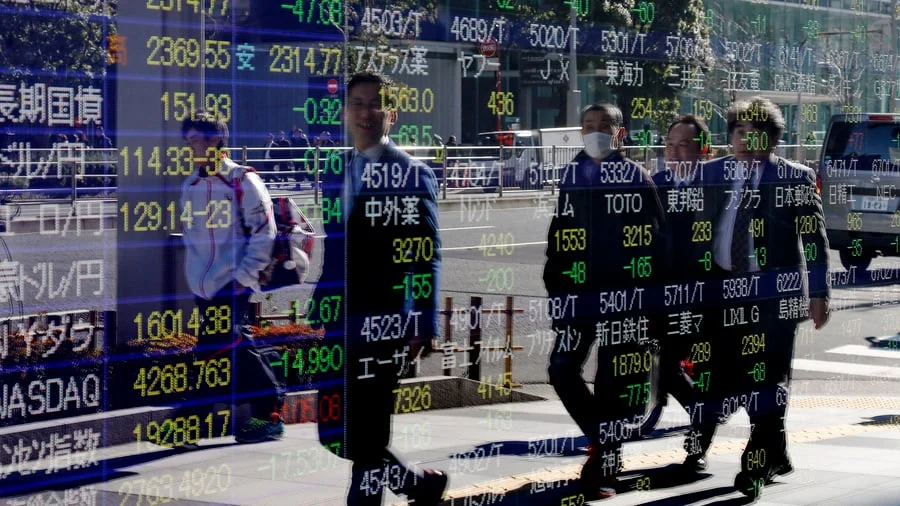
HONG KONG/TOKYO – The Asian financial markets experienced a rollercoaster of sentiment this Thursday, characterized by a fragile transition from early-morning optimism to late-session anxiety. While regional investors initially drew confidence from robust quarterly earnings reports emanating from the United States technology sector, the prevailing mood quickly soured as geopolitical instability at the Persian Gulf and mounting skepticism regarding the immediate profitability of Artificial Intelligence (AI) investments took hold.
1. Main Facts: A Shift from Tech-Driven Gains to Geopolitical Caution
The trading day in Asia began with a sense of relief. Major U.S. technology giants, including Meta and SpaceX, had reported financial results that exceeded market expectations. These figures, often seen as a barometer for the health of the global tech sector, provided a much-needed tailwind for Asian equities, particularly in the semiconductor and hardware manufacturing hubs of Japan and South Korea.

However, the rally was ephemeral. By mid-day, the narrative shifted from corporate balance sheets to the volatile landscape of international relations. The primary catalyst for the downturn was the growing concern over the security situation in the Middle East, specifically following reports of an escalation in the Red Sea region involving the Houthi movement. The subsequent news that the United States had initiated the withdrawal of diplomatic personnel from Saudi Arabia served as a stark reminder of the potential for a broader regional conflict.
This geopolitical "risk-off" sentiment triggered a flight to safety, with investors shedding riskier equity positions in favor of traditional safe-haven assets. Consequently, the initial gains in the Nikkei 225 and the Hang Seng Index were largely erased by the close of the trading session.

2. Chronology: The Anatomy of the Trading Day
To understand the volatility observed, it is essential to track the sequence of events that dictated market behavior:
- 09:00 JST (Early Session): The opening bell in Tokyo reflected the positive sentiment from the U.S. markets. Indices pushed higher as investors bought into tech stocks, buoyed by Meta’s strong advertising revenue projections and positive momentum surrounding the AI infrastructure build-out.
- 11:30 JST (The Mid-day Pivot): As news wires began reporting on the escalating situation in the Persian Gulf, the mood shifted. Institutional traders began adjusting their portfolios to account for potential disruptions in global energy supply chains.
- 14:00 HKT (Afternoon Decline): As the Hong Kong markets reached full activity, the focus turned toward the diplomatic developments in Saudi Arabia. The realization that the U.S. was pulling staff from the Kingdom injected a sense of urgency into the selling pressure.
- 16:00 HKT (Closing Bell): Markets across the region settled in negative or neutral territory, with the initial "tech-rally" narrative completely displaced by concerns regarding global supply chain vulnerabilities and the rising cost of geopolitical risk.
3. Supporting Data: The Disconnect Between AI Hype and Market Reality
The day’s price action was also driven by a growing, if subtle, skepticism regarding the "AI Gold Rush." While companies like Meta continue to report massive capital expenditure on AI, market analysts are beginning to demand clearer paths to monetization.
Capital Expenditure vs. Revenue Growth
Recent filings indicate that major tech firms are pouring billions into data centers and GPU acquisition. However, the data reveals a lagging indicator in terms of actual bottom-line impact. Investors in Asia, who provide the critical hardware components for these AI systems, are beginning to wonder if the demand will remain sustainable if the promised productivity gains from AI do not materialize at scale in the next two to four quarters.
Energy Price Sensitivity
Furthermore, the volatility in energy prices remains a critical data point. As the Middle East remains a primary hub for global energy production, any sign of instability creates a direct correlation with inflation expectations. When geopolitical tensions spike, the immediate reaction in the bond market is a rise in yields, which disproportionately hurts growth-oriented tech stocks—the very stocks that were supposed to lead the market recovery.

4. Official Responses and Institutional Analysis
Market observers and financial institutions have been quick to comment on the shift in sentiment. According to analysts at major brokerage houses in Hong Kong, the market is currently caught in a "tug-of-war" between fundamental earnings growth and macro-level existential risks.
"The earnings are fine, even excellent," one senior strategist noted. "But you cannot ignore the fact that the geopolitical risk premium is currently mispriced. When the U.S. takes diplomatic action in the Gulf, the market doesn’t look at the P/E ratio; it looks at the price of oil and the stability of shipping lanes."

Official statements from regional central banks have remained guarded, emphasizing the need for stability. However, the prevailing sentiment among liquidity providers is that until there is a clear de-escalation in the Middle East, volatility will remain the defining feature of Asian trading sessions.
5. Implications: What This Means for Global Investors
The events of this week highlight a critical lesson for global investors: the era of "corporate-driven market autonomy" is over. For the past decade, low interest rates and strong corporate growth were sufficient to drive indices to new highs, regardless of regional conflicts. Today, the interconnectedness of global supply chains means that a local skirmish in the Middle East has immediate, direct consequences for a tech manufacturer in Taiwan or a financial firm in Tokyo.

The "AI Bubble" Question
The current market hesitation suggests that the "AI narrative" is no longer an automatic "buy" signal. Investors are becoming more discerning, looking for actual evidence of profitability rather than just projected growth. This indicates a maturing market cycle where quality and cash flow will likely outperform speculative growth stocks in the coming months.
Strategic Portfolio Diversification
For the average investor, the current environment necessitates a re-evaluation of exposure to high-beta technology stocks. While the long-term potential of AI remains intact, the short-term reality is dictated by factors outside of the control of corporate boards. Increased allocation to defensive sectors—such as utilities, consumer staples, and perhaps gold or other commodities—may become a standard strategy for mitigating the risks posed by ongoing geopolitical volatility.

Looking Ahead
The markets will continue to watch the Middle East closely. Any sign of a diplomatic thaw could quickly reverse the current pessimism, allowing the strong underlying earnings of the U.S. tech sector to once again take center stage. Conversely, if the tension continues to simmer, the market may enter a period of consolidation, as traders wait for a clearer signal on the direction of global energy prices and international diplomatic stability.
In conclusion, the Asian markets remain a microcosm of the current global dilemma: a struggle between the promise of technological transformation and the harsh, often unpredictable reality of geopolitical conflict. As we head into the next trading week, the focus will remain on whether the foundations of corporate profitability can withstand the pressures of an increasingly fractured global order.

Disclaimer: This article is for informational purposes only and does not constitute financial advice. Investors should consult with a qualified financial advisor before making any investment decisions based on market analysis.