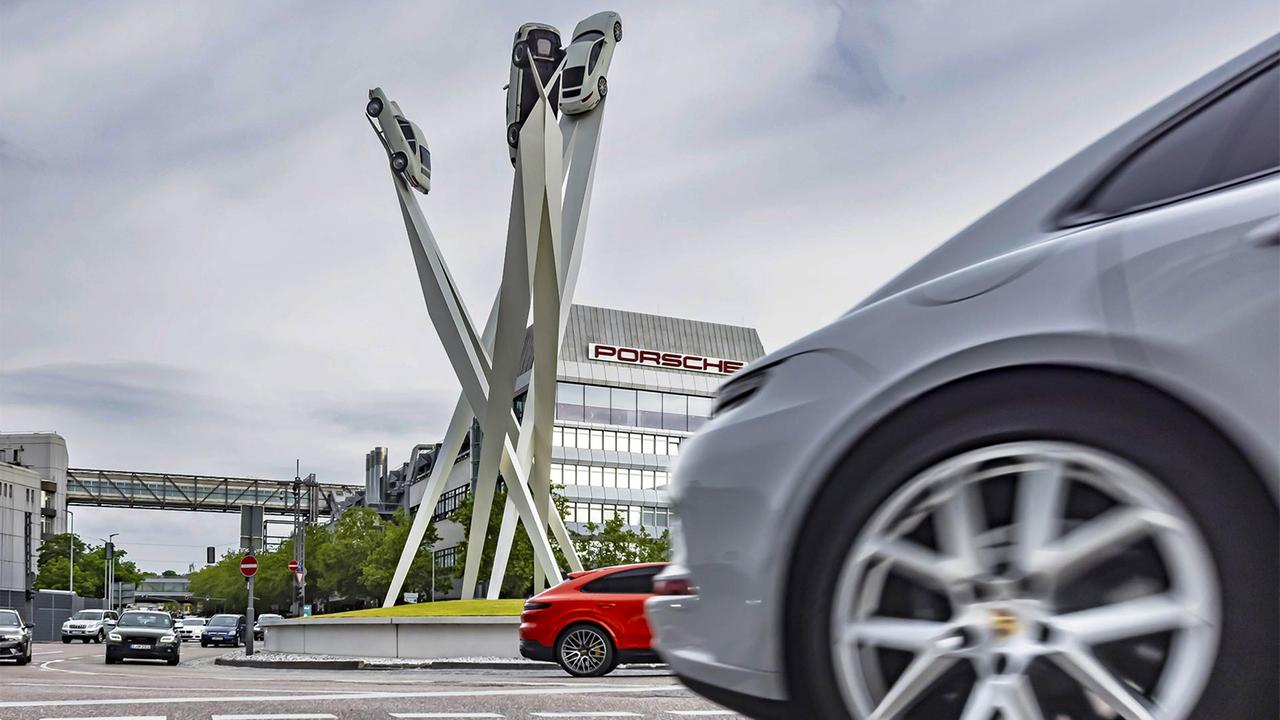
STUTTGART, GERMANY – In a move that signals a profound shift in strategy for one of the world’s most prestigious automotive brands, Porsche AG has announced a comprehensive restructuring program dubbed "Sportwagenschmiede 35" (Sports Car Forge 35). As the luxury automaker grapples with a cooling Chinese market, shifting global economic pressures, and the complexities of the electric transition, CEO Michael Leiters is pivoting the company toward an “exclusivity-first” model designed to protect margins and ensure long-term sustainability.
The announcement, delivered at the company’s Capital Markets Day on October 7, 2026, marks the end of an era of aggressive volume growth. Instead, Porsche is embracing the mantra that “less is more,” aiming to become a leaner, more profitable entity that prioritizes high-end customization and premium pricing over mass-market penetration.
The Core Facts: A Shift Toward Exclusivity
Under the "Sportwagenschmiede 35" initiative, Porsche is fundamentally recalibrating its business model. The primary objective is to reach a mid-term profit margin of 10 to 15 percent on revenues ranging between €41 billion and €45 billion.
The strategy hinges on three pillars:
- Product Pruning: Porsche will reduce its total number of vehicle variants by 20 percent, focusing its engineering and production capacity on fewer, higher-margin models.
- Upmarket Positioning: The company intends to raise the average price of its top-tier models—which are expected to see annual sales of at least 10,000 units—by 20 percent, pushing average transaction prices for these vehicles beyond the €330,000 threshold.
- Efficiency at Scale: The company is lowering its break-even point significantly. Management aims to be profitable at annual sales volumes of fewer than 200,000 units by 2027, a stark contrast to previous strategies that relied on ever-increasing delivery numbers to maintain profitability.
Chronology: The Road to Restructuring
The necessity for this transformation did not emerge overnight. To understand the current shift, one must look at the recent timeline of the Volkswagen subsidiary’s challenges:
- 2023: Porsche began to feel the impact of slowing luxury demand in China, its largest market. Increased competition from domestic Chinese electric vehicle (EV) manufacturers began to erode the brand’s traditional market share.
- Early 2026: The downward trend accelerated. First-half reports for 2026 showed a 16 percent decline in total vehicle deliveries. The combination of high U.S. tariffs and the lingering effects of an overly ambitious, poorly executed EV strategy—attributed to previous management—left the company vulnerable.
- October 7, 2026: CEO Michael Leiters officially unveils "Sportwagenschmiede 35," confirming that the dream of reaching 20 percent margins (a benchmark held by rivals like Ferrari) is no longer the immediate target. The new focus is on stabilization and structural efficiency.
Supporting Data: Economic Realities
The financial landscape for Porsche is characterized by both volatility and high stakes. Currently, the company’s reliance on global markets is split: 35 percent of its business is in the United States, 35 percent in Europe, and the remainder in other regions, including the critical, yet currently struggling, Chinese market.
Leiters remains committed to China, stating, "We will not abandon this market," despite the ongoing competition. However, the company is looking to the U.S. to absorb more of its production, banking on the American appetite for high-performance luxury vehicles to offset the decline in the East.
Perhaps most striking is the shift in the company’s powertrain strategy. Initially pushed toward a near-total electrification goal, the new roadmap suggests a more pragmatic approach. By the 2030s, the company anticipates a product mix of two-thirds internal combustion engines (ICE) and one-third battery-electric vehicles (BEV), reflecting a sober acknowledgment of current consumer demand and the infrastructure limitations facing pure-EV lineups.
The Human Cost: A Significant Workforce Reduction
The most controversial element of the restructuring is the plan to reduce the workforce. To improve profitability across all divisions—from R&D and production to administration and sales—Porsche is planning a headcount reduction of 25 percent, with a strategic ceiling of 30 percent.
This translates to the loss of approximately 9,000 positions by 2035. The company has already completed two rounds of negotiations with the works council to formalize this reduction. Notably, the cull will be disproportionately felt in management, where 40 percent of roles are set to be eliminated. The automaker has committed to a "socially responsible" transition, pledging that the reductions will be achieved through attrition and voluntary measures rather than mass layoffs.
Official Responses and Strategic Implications
Industry analysts view the pivot as a "flight to quality." By reducing the complexity of its manufacturing—partly by leveraging shared platforms with corporate cousin Audi—Porsche hopes to streamline its supply chain and reduce operational overhead.
"The strategy is clear: stop chasing volume and start chasing value," said one market analyst following the announcement. "By positioning itself as a boutique manufacturer that happens to have the scale of a global corporation, Porsche is attempting to insulate itself from the boom-and-bust cycles that plague the broader automotive industry."
However, the strategy is not without risks. The decision to scale back on EVs and maintain a heavy reliance on ICE models could leave the company behind if global regulatory bodies continue to tighten emissions standards faster than expected. Furthermore, the move to raise prices by 20 percent on top-tier models relies on the continued resilience of the ultra-high-net-worth segment, a demographic that is not entirely immune to global macroeconomic downturns.
Market Reaction: A Reflection of Uncertainty
The broader financial markets responded with caution. On the day of the announcement, the German DAX index fell by 1.4 percent, closing below 25,100 points, as rising oil prices and bond yields dampened investor enthusiasm across the board.
The automotive sector in particular saw mixed reactions. While the parent company, Volkswagen AG, saw its preferred shares gain 0.5 percent, Porsche AG shares struggled, reflecting investor skepticism regarding the short-term impact of such a massive structural overhaul. The MDAX, which contains both the Porsche SE holding company and the Porsche AG automaker, ended the day down by nearly one percent.
Conclusion: The Path Ahead
As Porsche embarks on this ambitious restructuring, the company is essentially betting its future on the strength of its brand equity. By moving toward a model defined by scarcity and high-value, bespoke products, the company aims to weather the current storm.
The success of "Sportwagenschmiede 35" will be measured not by how many cars roll off the assembly line in Zuffenhausen or Leipzig, but by the bottom line. For a brand that has defined the intersection of engineering excellence and luxury for decades, the next five years will be a test of whether it can successfully transition from being a volume-driven manufacturer to an exclusive curator of performance art.
If the strategy holds, Porsche may emerge as a smaller, but significantly more robust company—one that is better equipped to handle the shifting tides of the global automotive landscape. If it fails, the "Sports Car Forge" may find that the cost of its transformation was the very soul of the brand itself.