In a clash that underscored the ruthless nature of elite European football, RB Leipzig’s Champions League ambitions suffered a significant blow on Wednesday evening. Despite a performance characterized by tactical discipline and genuine offensive threat for the better part of an hour, the German side eventually succumbed to a 4-1 defeat at the hands of Real Madrid. The result leaves the Königlichen unbeaten in the competition, while Leipzig must now grapple with the sobering reality of a second group-stage defeat.
The Core Narrative: Precision Meets Persistence
For the first 43 minutes of the encounter, the script seemed to be heading in a direction that would have sent shockwaves through the Santiago Bernabéu. Martín Demichelis, managing a Leipzig side still reeling from a demoralizing domestic defeat to Bayern Munich four days prior, had clearly demanded a response. His players answered with a display of defensive structure and high-pressing intensity that frequently left the Spanish giants appearing disjointed and frustrated.
However, football at this level is decided by fine margins. Real Madrid, a club synonymous with the ability to turn a game on its head in the blink of an eye, demonstrated precisely why they are the perennial kings of Europe. A momentary lapse in the dying moments of the first half allowed Bernardo Silva to break the deadlock, a goal that effectively punctured the Leipzig balloon and paved the way for a second-half clinical masterclass from the hosts.
A Chronological Breakdown of the Struggle
The Opening Gambit: Leipzig’s Defensive Rigor
From the opening whistle, it was evident that Leipzig had come to Madrid not merely to participate, but to compete. They utilized a compact mid-block that forced Real Madrid to play sideways, suffocating the space typically reserved for the likes of Jude Bellingham and Kylian Mbappé.
The visitors were not just sitting deep; they were dangerous. A pivotal moment occurred midway through the first half when Ridle Baku intercepted a loose pass in midfield, sparking a rapid transition. Romulo found himself in acres of space, driving toward the goal with intent. His powerful effort from 13 meters, however, met the unwavering resolve of Thibaut Courtois, who produced a world-class reflex save to keep the score level.
The Turning Point: Silva’s Breakthrough
As the first half entered its final minutes, the tension in the stadium was palpable. Jude Bellingham had come agonizingly close to opening the scoring in the 39th minute with a thunderous strike that whistled just wide of the post. Moments later, Christopher Nkunku nearly punished Real for their defensive lapses, forcing another sprawling save from Courtois.
Just as it seemed the visitors would reach the dressing room with a hard-earned stalemate, disaster struck. In the 43rd minute, a chaotic scramble in the Leipzig box—sparked by an initial save from Maarten Vandevoort—saw the ball fall kindly to Bernardo Silva. The Portuguese midfielder made no mistake, sliding the ball home to give Madrid a lead that felt, at the time, largely against the run of play.
The Second Half: A Lesson in Clinical Finishing
If the first half was a tactical stalemate, the second was a demonstration of how elite teams capitalize on momentum. Real Madrid returned from the tunnel with a renewed sense of urgency. In the 52nd minute, Arda Güler doubled the lead. Following a delicate flick from Kylian Mbappé, the young Turkish sensation found the back of the net under intense pressure, effectively ending Leipzig’s hopes of a points-based recovery.
The remainder of the match saw Leipzig struggle to sustain their earlier intensity. Real, having settled into a comfortable rhythm, began to pick apart the German defense with ease. The inevitability of the result was cemented in the 83rd minute when Kylian Mbappé, a constant threat throughout the night, curled a nonchalant effort into the corner of the net.
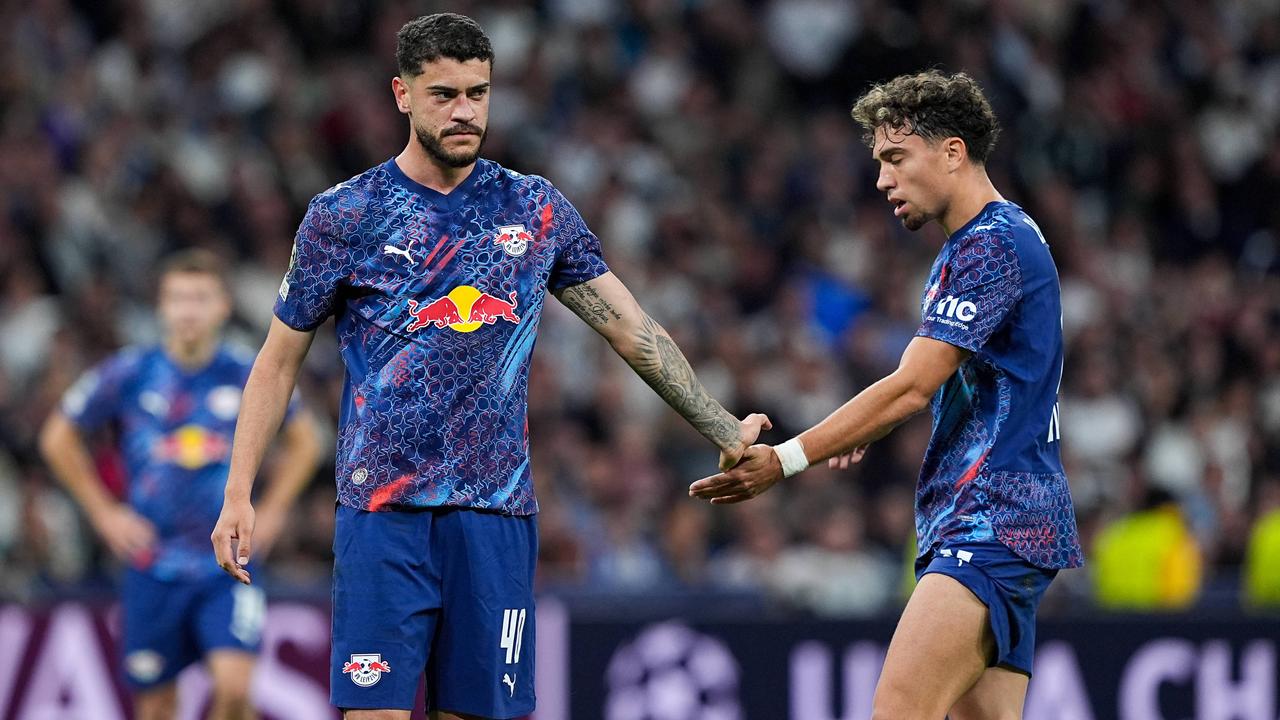
While Tidiam Gomis managed to pull one back for Leipzig in the 85th minute, the night concluded with a moment of poetic cruelty: Yan Diomande, who had transferred from Leipzig to Madrid just this past summer, unleashed a spectacular volley in the 87th minute to finalize the 4-1 scoreline.
Supporting Data and Statistical Context
The match statistics highlight the disparity between the two sides in terms of finishing efficiency. While Leipzig registered a credible number of shots on target, their inability to convert high-probability chances proved fatal.
- Possession: Real Madrid controlled 58% of the ball, though they were largely kept at bay until the final third of the pitch.
- Defensive Gaps: Leipzig’s defensive record remains a concern for Demichelis. Having conceded heavily against Bayern on the weekend, allowing four goals against Madrid indicates a recurring vulnerability in the team’s transition defense.
- The "Ex-Factor": Yan Diomande’s goal served as a microcosm of the evening. His deep knowledge of Leipzig’s defensive structures, combined with his individual technical brilliance, epitomized the gap between the two squads.
Official Responses: The Managerial Perspective
Speaking to DAZN in the aftermath of the match, RB Leipzig coach Martín Demichelis offered a balanced assessment of his team’s performance.
"I walk away from this match with a heavy heart, purely because it is a defeat," Demichelis stated. "However, if we are to be objective, my personal assessment is that the team showed a completely different face tonight compared to the match against Bayern. We were brave, we were organized, and we created legitimate chances against one of the best teams in the world."
When pressed on his team’s defensive frailties, Demichelis was candid. "I cannot say I am satisfied with the final result, but in terms of progress, I am encouraged. We are, however, conceding too many goals. That is a trend we must address immediately. We have to keep our heads up, work harder, and ensure that when we create these opportunities in the future, we take them. You simply cannot leave the door open against a side like Real Madrid."
Implications: The Road Ahead
For Real Madrid, the victory is a statement of intent. They remain firmly in control of their group and continue their quest for another European title with an air of inevitability.
For RB Leipzig, the situation is more nuanced. While the performance against Madrid was a significant improvement over their domestic struggles against Bayern, the reality of the standings is harsh. With two defeats in the Champions League, the margin for error has effectively vanished.
What This Means for Leipzig:
- Psychological Stability: The team must avoid letting the "heavy" scoreline negate the progress they made in terms of tactical discipline.
- Defensive Reinforcement: Demichelis must find a way to shore up his backline. Allowing eight goals in two matches across all competitions is unsustainable for a team with high aspirations.
- Must-Win Territory: The upcoming fixtures in the Champions League are now essentially knockout matches. Any further slip-ups could see the German side relegated to the Europa League or eliminated from European competition entirely.
In conclusion, while the scoreline suggests a rout, the reality was a match of intense tactical maneuvering. Leipzig proved that they can compete with the giants of the game, but until they learn to match the ruthless efficiency of clubs like Real Madrid, they will continue to be victims of their own missed opportunities. The journey for Demichelis’ men continues, but the path to redemption is now steeper than ever.