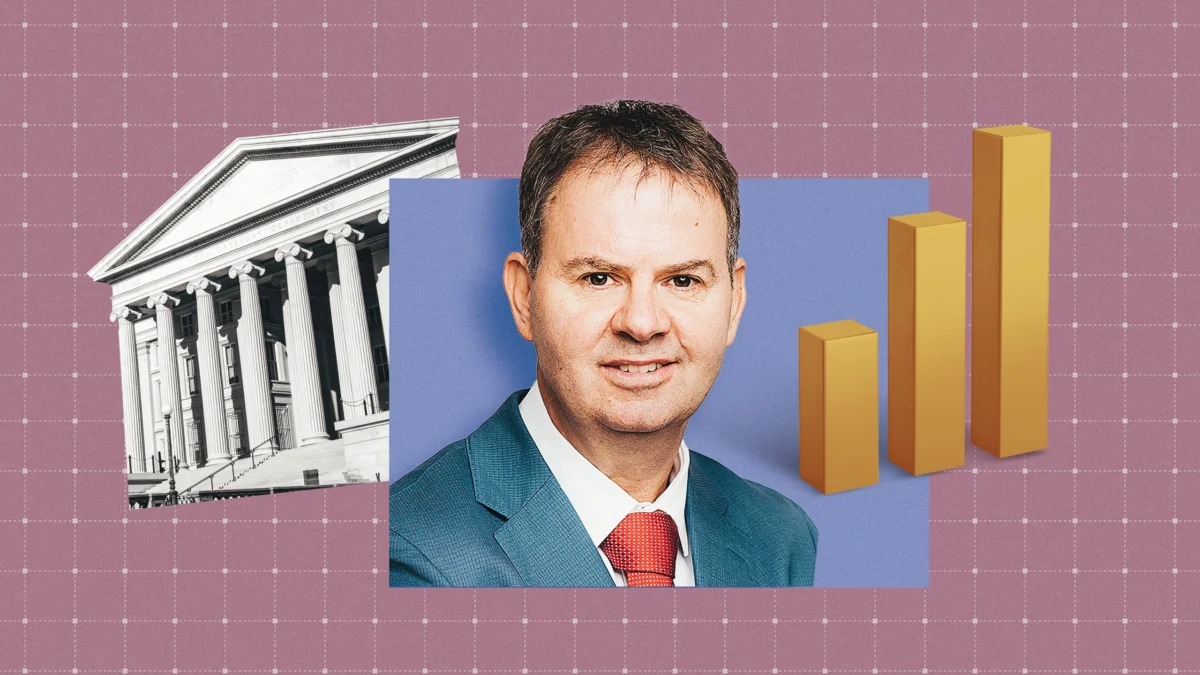
After a prolonged period of turbulence that tested the resolve of even the most seasoned investors, the global bond market is experiencing a significant strategic shift. As interest rates across major economies have reached multi-decade highs, fixed-income assets are shedding their reputation as "dead money" and are once again becoming a cornerstone of institutional portfolio strategies.
Recent data from Bank of America’s influential survey of global fund managers reveals that 19 percent of participants have shifted their allocation back toward bonds. This move marks a departure from the "TINA" (There Is No Alternative) era of equity dominance, signaling that the risk-reward profile of debt securities has finally reached a point of professional appeal.

The Strategic Pivot: Allianz GI and the Return to Duration
At the center of this movement are major institutional players like Allianz Global Investors (Allianz GI). Michael Krautzberger, Chief Investment Officer for Fixed Income and Multi-Asset strategies, has recently advocated for a more aggressive stance on bonds. In an interview, Krautzberger noted, "Naturally, one has to look at bonds when the yield is this high."
Allianz GI’s recent portfolio adjustments are particularly telling: for the first time in several quarters, the firm is actively overweighting bonds with longer maturities. This indicates a belief that the peak of the interest rate cycle is either here or imminent, making the lock-in of current yields a prudent long-term play.

Chronology of a Market Correction
The journey to current yield levels has been anything but smooth. The bond market sell-off was fueled by a convergence of macroeconomic headwinds:
- The Inflation Surge: Post-pandemic supply chain issues, exacerbated by the ongoing conflict in Ukraine and heightened tensions in the Middle East, drove energy and commodity prices to heights not seen in years.
- Central Bank Tightening: In a desperate attempt to tame inflation, the U.S. Federal Reserve (Fed) and the European Central Bank (ECB) embarked on a rapid series of interest rate hikes. This cycle forced a sharp repricing of risk, pushing capital market yields to levels that decimated bond prices.
- The 5% Threshold: In October, the yield on ten-year U.S. Treasuries crossed the five-percent mark for the first time in three years, briefly touching 5.3 percent—a level unseen in over two decades. Concurrently, German Bunds saw yields climb above 3.6 percent, while U.K. Gilts surged toward 5.5 percent.
- The Fiscal Anxiety: Beyond inflation, global markets have been rattled by the sheer scale of sovereign debt issuance, with investors increasingly questioning the sustainability of government spending.
Supporting Data: The Case for Real Returns
Despite the recent volatility, the long-term outlook for fixed income is supported by a clearer understanding of inflation expectations. As Krautzberger points out, market-implied inflation forecasts for the next decade stand at approximately 2.4 percent in the United States and 2.2 percent in the Eurozone.

"With bonds, you can once again earn a real return in the medium term, even after accounting for inflation," Krautzberger explains. This transition from negative real yields to positive, inflation-beating returns provides a fundamental floor for bond prices that was absent for the better part of a decade.
Furthermore, the "competition for capital" has intensified. It is not just sovereigns issuing debt; major technology conglomerates—the "hyperscalers" like Amazon, Alphabet, Meta, Microsoft, and Oracle—are flooding the market with high-quality corporate debt to finance massive investments in AI and data infrastructure. This creates a diverse menu for investors, allowing them to balance the relative safety of government bonds with the yield premiums offered by blue-chip corporates.

Divergent Perspectives: The Inflation Debate
While the mood among many managers is shifting toward optimism, a contingent of the investment community remains cautious. Helen Windischbauer, a portfolio manager specializing in multi-asset strategies at Amundi, emphasizes that the inflation battle is far from won.
"We are keeping a very close eye on the inflation rate," says Windischbauer. "Recent data shows inflation hitting 3.7 percent in the U.S. and 3.8 percent in the Eurozone. The risk of secondary effects—where wage increases and price hikes fuel each other—remains a tangible threat."

Windischbauer points out that while yields are attractive, the lack of clarity regarding the terminal rate of central bank hikes keeps her team cautious, particularly regarding long-duration bonds. While Krautzberger believes central bank rates will remain relatively stable in the coming years, Amundi’s approach remains more defensive, waiting for clearer signals that inflation has truly been anchored.
Implications for Sovereign Risk: The Case of France
One of the most pressing concerns for European investors is the fiscal situation in France. With a debt-to-GDP ratio reaching 119 percent and total debt exceeding 3.6 trillion euros, France has become a focal point of market anxiety.

The political environment in Paris—characterized by a deeply fractured parliament and persistent civil unrest—has made structural fiscal reform incredibly difficult to implement. Consequently, the yield on ten-year French government bonds has recently hit the five-percent threshold for the first time in over 24 years.
However, even here, there is a degree of professional detachment. Krautzberger does not foresee a full-blown Euro-sovereign debt crisis. He notes that the market for Credit Default Swaps (CDS)—which insure against bond defaults—does not indicate panic. "The risk premiums have risen, but for countries like Germany and the U.K., they remain very moderate, and for the U.S., the situation is not acutely alarming," he says.

Political Will and the Future of U.S. Debt
A recurring theme in the discourse on bond markets is the sustainability of U.S. debt. Allianz GI, along with affiliate Pimco, has suggested that the U.S. possesses significant, underutilized levers to improve its fiscal position.
"The U.S. collects less in taxes than most other developed economies and has a potential revenue source should the political will exist to use it," a recent Pimco study noted.

Krautzberger remains confident that the political leadership, including the Treasury and the White House, is acutely aware of the necessity of a stable bond market. "Financing costs are a priority for any administration. It is highly unlikely that we will see ten-year U.S. Treasury yields climb to six percent, as the pressure to maintain market stability will eventually force fiscal discipline."
Conclusion: A New Era for Fixed Income
The consensus among major institutional managers is that the era of "easy money" and zero-percent interest rates is a closed chapter. In its place is a market environment where fixed income serves its traditional purpose: providing a reliable, yield-generating foundation for portfolios.

While the path forward will undoubtedly be marked by periods of volatility, triggered by geopolitical shocks or stubborn inflation data, the fundamental value proposition of bonds has been restored. For investors willing to look past the short-term noise, the current yield environment offers a rare opportunity to secure long-term, inflation-adjusted returns.
As the market continues to recalibrate, the focus will remain on the interplay between central bank policy, sovereign fiscal responsibility, and the capacity of the global economy to absorb higher borrowing costs. For now, the verdict from the world’s leading portfolio managers is clear: bonds are back, and they are here to stay.