On October 14, 1926, a literary phenomenon was born in London that would eventually transcend the boundaries of age, culture, and language. Alan Alexander Milne, an already established playwright and novelist, published Winnie-the-Pooh, a collection of stories centered on the stuffed toys of his young son, Christopher Robin Milne.
One hundred years later, the "bear of very little brain" remains a global cultural icon. While the world has undergone seismic shifts in technology, politics, and social structure, the Hundred Acre Wood remains a sanctuary of simplicity. This article explores the legacy, the literary architecture, and the enduring psychological appeal of A.A. Milne’s masterpiece.
The Genesis of a Classic: A Chronology of the Bear
The origins of Winnie-the-Pooh are deeply rooted in the domestic life of the Milne family. The character was inspired by a real-life black bear named Winnie, who resided at the London Zoo after being brought over from Canada by a soldier during World War I. Christopher Robin Milne became fascinated with the bear, and his own teddy bear—originally named Edward Bear—was renamed in her honor.
- 1921: Christopher Robin receives a teddy bear from Harrods for his first birthday.
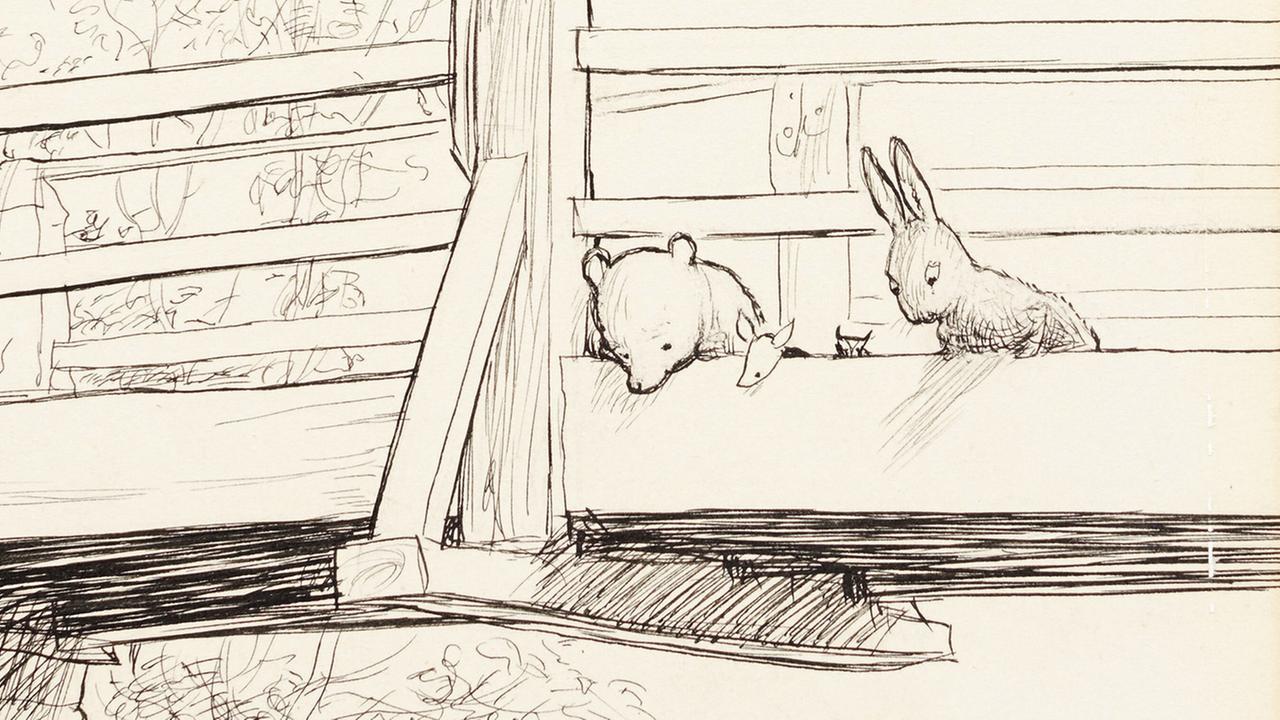
- 1924: A.A. Milne begins writing verses and stories for his son, observing his interactions with his menagerie of stuffed animals, including Piglet, Eeyore, Kanga, Roo, and Tigger.
- October 14, 1926: The first collection, Winnie-the-Pooh, is published in London by Methuen & Co.
- 1928: A second volume, The House at Pooh Corner, introduces the bouncy, boisterous Tigger.
- 1960s–1970s: The Walt Disney Company acquires the rights, launching a series of animated shorts that catapulted the bear into a new era of global commercial success.
- 1987: Harry Rowohlt publishes his definitive German translation, finally capturing the linguistic nuance and wit that had been missing in previous versions, solidifying the book’s status as a literary masterpiece for both children and adults.
Literary Architecture: Why the Story Works
The genius of A.A. Milne’s work lies in its multi-layered narrative structure. Unlike many children’s books of the early 20th century, which often leaned toward moralizing didacticism, Winnie-the-Pooh functions as a meta-fictional exploration of storytelling itself.
The Meta-Narrative Layer
The stories are framed by the presence of the Father (Milne) telling the tales to his son, Christopher Robin. The boy is simultaneously an audience member and a protagonist within the narrative. According to Professor Thomas Kullmann of the University of Osnabrück, this structure invites children to reflect on the nature of literature. "It forces the reader to ask: What is a story? How is it constructed? To whom are we telling it?"
Linguistic Wit and Character Archetypes
The enduring appeal is heavily reliant on the distinct voices of the inhabitants of the Hundred Acre Wood. As literary scholar Emer O’Sullivan notes, the characters represent a cross-section of human personality traits:
- Pooh: The optimist who prioritizes friendship and honey over intellect.
- Piglet: The embodiment of anxiety and humility.
- Eeyore: The perennial pessimist, whose dark humor is often lost on children but deeply relatable to adults.
- Owl: The pedantic intellectual who often lacks actual wisdom, evidenced by his frequent spelling errors.
This diversity creates a microcosm of society where, despite their incompatibilities, the group functions as a cohesive, loving community.
Supporting Data: The Global Reach of the Hundred Acre Wood
The influence of Winnie-the-Pooh is not merely anecdotal; it is a statistical titan in the world of publishing and media. Since 1926, the book has been translated into over 50 languages.
In the former Soviet Union, the character took on a unique life of his own. The 1969 animated film Winnie Puch, directed by Fyodor Khitruk, presented a version of the bear that was grittier and arguably more philosophically profound than the Western iterations. The existence of these parallel universes—the Disney version, the Russian version, and the original text—demonstrates the malleability of the character.
Furthermore, the "Pooh economy" remains robust. From plush toys to high-end merchandise, the franchise generates billions of dollars in revenue annually. However, scholars argue that the commercialization often obscures the quiet, anti-consumerist philosophy found in the original texts.
Official Responses and Scholarly Perspectives
For the centenary of the publication, literary critics and cultural historians have weighed in on why this "bear of very little brain" remains relevant in an age of artificial intelligence and digital fragmentation.
"For adult readers, the appeal is the absence of technology, violence, and war," explains O’Sullivan. "The Hundred Acre Wood is a space where time is measured in tea parties and conversations. It is a radical rejection of the frantic pace of modern life."
Kullmann adds, "Milne created a world that is not dependent on power or status. In Pooh’s world, you do not need to be a hero to be valued. Your flaws—your clumsiness, your fear, your forgetfulness—are not just tolerated; they are what make you a member of the community."
This sentiment is echoed by educators who use the books to teach emotional intelligence. The characters’ ability to navigate conflict without resorting to physical force provides a foundational model for conflict resolution.
The Implications: A Legacy of "Very Little Brain"
What does it mean for the world that a bear who claims to have "very little brain" is one of the most successful intellectual properties in human history?
1. The Celebration of Vulnerability
Pooh’s self-admitted lack of intelligence is his greatest strength. By removing the pressure to be the "smartest" or the "strongest," the narrative grants permission to the reader to be human. The stories teach that friendship is an act of presence, not performance.
2. A Buffer Against Modernity
In a world increasingly dominated by algorithms and rapid technological change, the Hundred Acre Wood serves as a psychological "safe space." The simplicity of the setting acts as a buffer against the complexity of the modern condition. The stories do not attempt to solve the world’s problems; instead, they provide a framework for enduring them with grace and companionship.
3. Linguistic Sophistication
The work of translators like Harry Rowohlt shifted the perception of the book from a mere "bedtime story" to a work of literary art. The wordplay, the self-deprecating humor, and the rhythmic prose serve as a gateway to more complex literature. It remains a standard-bearer for how language can be used to foster empathy.
Conclusion: The Timelessness of Being
As we celebrate the 100th anniversary of Winnie-the-Pooh, we find that the bear is as relevant today as he was in 1926. While the world has evolved, the core human needs—to be heard, to be accepted, and to share a pot of honey with a friend—remain unchanged.
The legacy of A.A. Milne is not just a book; it is a philosophy. By creating a character who is comfortable with his own limitations, Milne gifted the world a template for living that favors kindness over competition and stillness over speed. In the Hundred Acre Wood, it turns out, there is always time for a little something. And perhaps, in our fast-paced, high-tech world, that is exactly what we need the most.