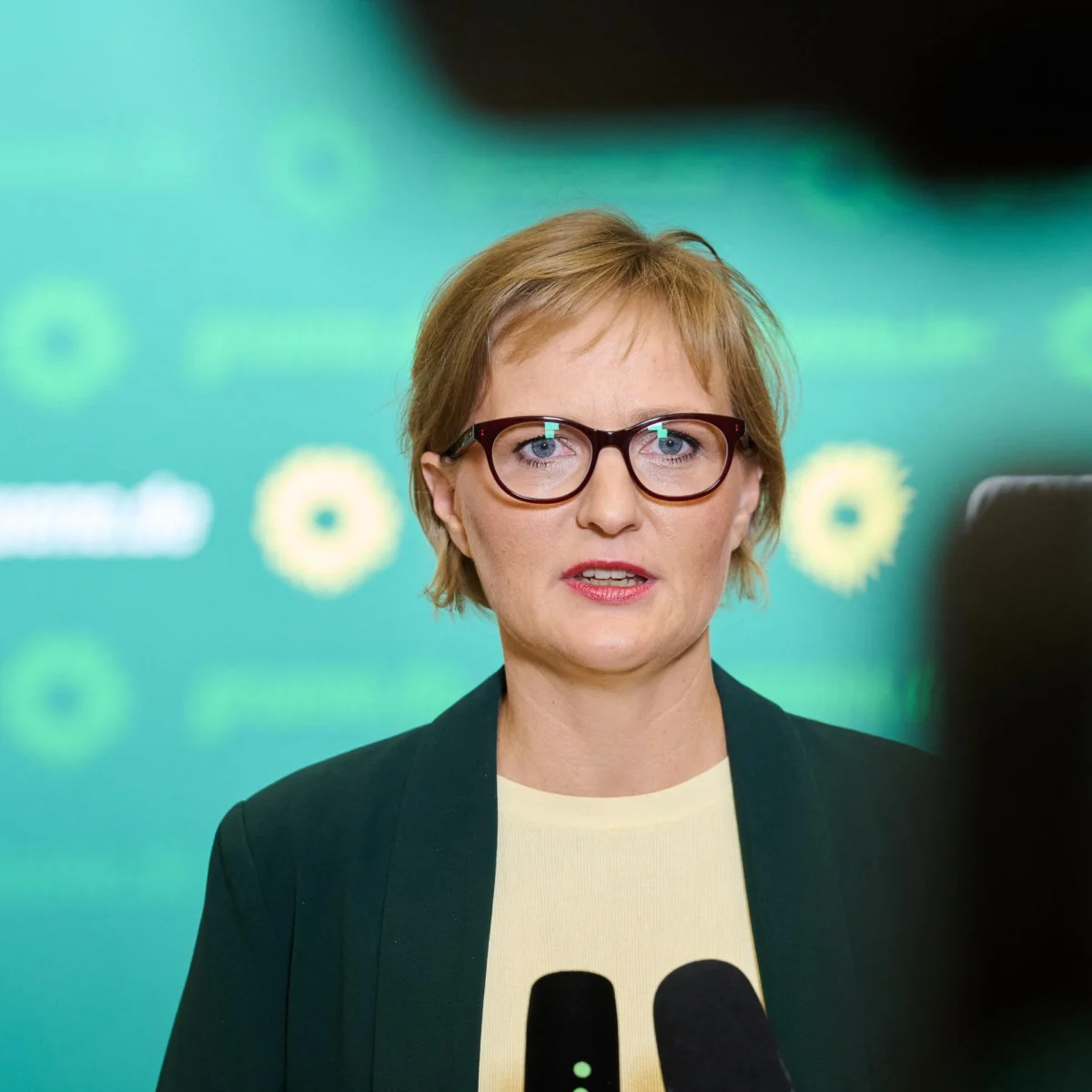
Brussels, Belgium – October 15, 2026 – Critical negotiations over the European Union’s next multiannual financial framework (MFF) for 2028-2034 commenced today in Brussels, overshadowed by sharp accusations of an "obstructionist stance" directed at German Chancellor Merz. Franziska Brantner, Co-Chair of the German Greens, fired the opening salvo, asserting that Europe, in these turbulent geopolitical times, must enhance its sovereignty and significantly ramp up investments in innovative technologies and security. Such vital endeavors, Brantner stressed in an interview with Deutschlandfunk, are simply "not free."
The high-stakes talks aim to secure a budget that will define the EU’s strategic direction and financial capacity for the better part of a decade. However, deep divisions among member states, particularly concerning the size of national contributions and the allocation of funds, threaten to derail swift progress. Germany, traditionally the largest net contributor, finds itself at the centre of a burgeoning dispute, with its Chancellor’s perceived inflexibility drawing ire from those advocating for a more robust, future-proof European Union.
The Core of the Conflict: Ambition vs. Austerity
At the heart of the current budgetary deadlock lies a fundamental clash between the EU’s growing geopolitical ambitions and the fiscal conservatism championed by several influential member states. The proposed budget, put forward by the Irish Council Presidency, envisions a substantially larger financial envelope than its predecessors, a reflection of the myriad challenges and strategic priorities facing the bloc.
However, this increased ambition comes with a hefty price tag. For Germany, the proposal could see its annual contribution surge from an estimated €32 billion to a staggering €58 billion. This projected increase has evidently prompted a cautious, if not resistant, approach from Chancellor Merz, whose government is reportedly pushing for significant cuts to the draft.
Brantner’s critique highlights a broader concern among Europeanists: that a reluctance to adequately fund common objectives will ultimately undermine the EU’s ability to act decisively on the global stage. "Europe must become more sovereign and invest more in innovative technologies and security," Brantner reiterated, directly linking these investments to the continent’s strategic autonomy in an increasingly complex world. Her statement underscores a growing sentiment that the cost of inaction, particularly in critical areas like defence and digital innovation, far outweighs the financial burden of increased contributions.
Adding his voice to the call for a robust budget, Manfred Weber, leader of the European People’s Party (EPP) Group in the European Parliament, echoed similar sentiments. Speaking on ZDF, the CSU politician emphatically stated that it is impossible to assume new responsibilities – such as enhanced border protection and defence capabilities – while simultaneously cutting funds. Weber stressed the urgent need for an agreement as soon as possible to guarantee Europe’s capacity to act, emphasizing the precarious balance between strategic necessity and fiscal prudence.
A Detailed Chronology of the Budgetary Battle
The current MFF negotiations are the culmination of months of preparatory work and political jockeying, building upon the lessons learned from previous budgetary cycles and adapting to the EU’s evolving strategic landscape.
Early 2025 – Initial Consultations and Strategic Outlook: The European Commission begins its preliminary consultations, assessing the needs and priorities for the next MFF. Discussions focus on key areas such as the Green Deal, digital transformation, defence integration, and social cohesion, framed against the backdrop of global geopolitical shifts.
Mid-2025 – Commission Proposes Broad Outlines: The Commission presents its initial communication outlining the strategic priorities and potential financial needs for the 2028-2034 period. This document serves as a starting point for discussions among member states and the European Parliament.
Late 2025 – National Positions Emerge: Member states begin to formulate their national positions, often influenced by domestic economic conditions, political priorities, and their status as net contributors or beneficiaries. Early signals indicate a divide between those advocating for increased spending to meet new challenges and those prioritising fiscal restraint.
Early 2026 – Irish Presidency Takes the Helm: The Irish Council Presidency, tasked with facilitating the negotiations, presents its first draft of the MFF proposal. This draft reflects a significant increase in the overall budget, proposing substantial allocations for new and existing priorities. It is this proposal that projects Germany’s contribution to rise dramatically.
October 15, 2026 – Brussels Negotiations Commence: Today marks the official start of the high-level negotiations in Brussels. Heads of state and government, alongside their finance ministers, convene to discuss the Irish Presidency’s proposal. The opening session immediately highlights the deep chasm between differing national interests, particularly concerning the overall size of the budget and the allocation of funds. Brantner’s public criticism of Chancellor Merz underscores the tension already present in the negotiation room.
Supporting Data: The Shifting Sands of EU Finance
The proposed MFF for 2028-2034 represents a pivotal moment for the European Union, moving beyond the traditional budgetary focus on agriculture and cohesion towards a more strategically oriented expenditure plan. The significant increase in the overall budget, and consequently in member state contributions, is directly linked to a series of urgent and expansive policy goals.
Key Drivers for Increased Spending:
- Geopolitical Security and Defence: The ongoing conflict in Ukraine and heightened global instability have profoundly altered the European security landscape. The proposed budget aims to bolster European defence capabilities, foster joint procurement, enhance cybersecurity, and strengthen the EU’s capacity to respond to hybrid threats. This includes potential funding for a European Defence Fund (EDF) and initiatives for military mobility.
- Technological Sovereignty: In an era of intense global competition, particularly with the United States and China, the EU seeks to reduce its strategic dependencies in critical technologies. The budget allocates substantial funds to research and development in areas like artificial intelligence, quantum computing, semiconductors, and green technologies. The goal is to ensure Europe remains at the forefront of innovation and maintains control over its digital infrastructure.
- Climate Change and Green Transition: The European Green Deal remains a central pillar of the EU’s agenda. Significant investments are earmarked for decarbonisation efforts, renewable energy projects, circular economy initiatives, and climate change adaptation measures. This includes funding for the Just Transition Mechanism to support regions most affected by the shift away from fossil fuels.
- Migration and Border Management: Persistent migratory pressures on the EU’s external borders necessitate increased funding for Frontex, the European Border and Coast Guard Agency, as well as for enhanced surveillance technologies, reception facilities, and cooperation with third countries on migration management.
- Health Resilience: The COVID-19 pandemic exposed vulnerabilities in Europe’s health systems. The new MFF aims to strengthen cross-border health cooperation, enhance preparedness for future health crises, and invest in medical research and stockpiling of essential supplies.
The German Contribution:
The projected jump in Germany’s annual contribution from €32 billion to €58 billion represents an almost 81% increase. This figure, while substantial, reflects Germany’s position as the EU’s largest economy and its historical role as a primary financial engine for European integration. However, domestic political considerations and the need to manage national debt post-pandemic inevitably influence Berlin’s stance.
Historical Context:
Previous MFF negotiations have always been arduous, typically stretching over several years and often culminating in marathon summits. The 2014-2020 MFF was agreed upon after protracted debates, as was the 2021-2027 framework, which was eventually supplemented by the NextGenerationEU recovery instrument in response to the pandemic. Each cycle sees net contributors (like Germany, the Netherlands, Austria, and Sweden) pushing for fiscal discipline and value for money, while net beneficiaries (like Poland, Spain, and Greece) and ambitious member states (like France) advocate for higher spending to achieve common goals. The current negotiations are no exception to this pattern, but the geopolitical backdrop adds an unprecedented layer of urgency.
Official Responses: A Divided Europe
The official responses emanating from Brussels today reveal a fractured consensus, with national interests clashing against the backdrop of shared European ideals.
Franziska Brantner (German Greens, Co-Chair): Her accusation against Chancellor Merz of an "obstructionist stance" is perhaps the most pointed public criticism to date. Brantner, known for her strong pro-European views, argued forcefully for a paradigm shift in European financial planning. "We are in turbulent geopolitical times," she stated, "and Europe must become more sovereign, investing more in innovative technologies and security. This simply isn’t free." Her remarks indicate a deep concern within parts of the German political spectrum that Berlin’s traditional fiscal caution is now counterproductive to Europe’s long-term strategic interests. She implies that a failure to invest now will lead to greater costs and diminished influence in the future.
Manfred Weber (EPP Group Leader, European Parliament): Representing the largest political group in the European Parliament, Weber’s intervention underscores the Parliament’s consistent call for a robust EU budget. His statement, "You cannot take on new tasks, such as border protection and defence, and simultaneously cut funds," directly challenges the logic of austerity in the face of expanded responsibilities. The European Parliament has historically been a strong advocate for a larger, more ambitious MFF, viewing it as essential for the EU’s democratic legitimacy and effectiveness. Weber’s emphasis on the need for a swift agreement reflects the Parliament’s desire to ensure Europe remains functional and capable of addressing pressing issues.
Chancellor Merz (Germany): While not explicitly quoted in the initial reports beyond Brantner’s accusation, Germany’s position is understood to be one of cautious fiscal management. Along with Austria, the Netherlands, and Sweden, Berlin is reportedly demanding significant cuts to the Irish Presidency’s draft. The rationale often cited by these "frugal four" (or "frugal five" in some contexts) includes concerns about national budget constraints, the desire for greater efficiency in EU spending, and a push for structural reforms rather than simply increasing expenditure. From Germany’s perspective, the substantial increase in its potential contribution, coupled with domestic pressures (such as post-pandemic debt reduction and investments in national infrastructure), makes a robust defence of taxpayer money a political imperative.
France: In stark contrast, France is understood to be advocating for higher expenditures. President Macron’s vision of "European strategic autonomy" necessitates significant investments in defence, industrial policy, and technological independence. Paris views a more robust MFF as crucial to achieving these ambitions and ensuring Europe’s ability to act independently of other global powers. This divergence highlights a fundamental philosophical difference within the EU regarding its future role and the financial commitments required to achieve it.
Irish Council Presidency: As the facilitator of these negotiations, the Irish Presidency faces the unenviable task of bridging these disparate positions. Their proposed budget, while ambitious, attempts to strike a balance between addressing new challenges and maintaining support for traditional EU policies. The presidency’s challenge will be to find common ground that satisfies the concerns of net contributors while delivering sufficient funds for the EU’s strategic priorities.
Implications: The Future of European Sovereignty and Cohesion
The outcome of these MFF negotiations will have profound implications for the European Union’s trajectory over the next decade and beyond.
Implications for European Sovereignty and Strategic Autonomy: A failure to agree on a sufficiently ambitious budget, particularly one that adequately funds innovative technologies, security, and defence, would severely hamper the EU’s aspirations for greater strategic autonomy. In a multipolar world characterized by great power competition and evolving threats, a financially constrained EU risks becoming a reactive rather than a proactive player, dependent on external actors for its security and technological prowess. Conversely, a robust budget would empower the EU to invest in its own capabilities, reduce dependencies, and project its values and interests more effectively on the global stage.
Impact on Internal Cohesion and Solidarity: Protracted and acrimonious budget negotiations can strain the bonds of solidarity between member states. Deep divisions between net contributors and beneficiaries, or between those advocating for more spending and those for less, can foster resentment and undermine trust. A successful and equitable agreement, however, can reinforce the sense of shared purpose and collective responsibility, demonstrating the EU’s capacity to overcome differences for the common good. The allocation of funds for cohesion policies will be particularly critical in ensuring that all regions benefit from European integration.
Effectiveness of EU Policies: The MFF is not merely a financial document; it is the embodiment of the EU’s political priorities. A reduced budget would necessitate cuts to various programmes, potentially impacting the speed and scale of the Green Deal, digital transformation initiatives, research funding, and support for SMEs. This could slow down economic recovery, hinder innovation, and diminish the EU’s ability to address pressing societal challenges effectively. Conversely, a well-funded MFF would provide the necessary resources to accelerate these policies, ensuring the EU delivers tangible benefits to its citizens.
The EU’s Global Standing: The ability of the EU to agree on and implement an ambitious long-term budget is a crucial indicator of its political maturity and collective will. A strong MFF signals to the world that Europe is serious about its commitments, capable of united action, and ready to assume its responsibilities as a global actor. A weak or delayed agreement, on the other hand, could project an image of internal disunity and indecision, potentially undermining the EU’s diplomatic leverage and credibility on the international stage.
The ongoing negotiations in Brussels are therefore more than just a fiscal exercise; they are a defining moment for the European Union. The choices made today will determine whether Europe can truly rise to the challenges of a turbulent era, strengthen its sovereignty, and secure its place as a resilient and influential global power. The call from figures like Brantner and Weber is clear: the price of a secure and sovereign Europe is not negligible, but it is a necessary investment in its future.
This news was broadcast on Deutschlandfunk on October 15, 2026.