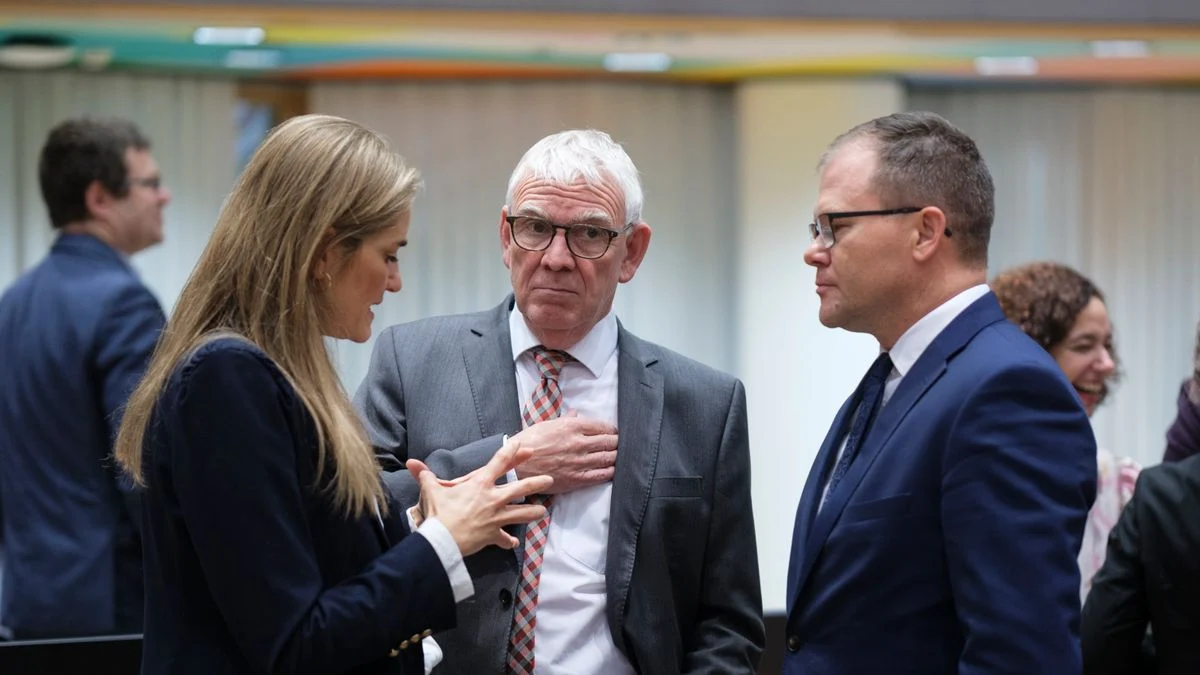
The political landscape in Berlin is currently defined by a high-stakes game of strategic maneuvering and negotiation. Following recent electoral cycles, the city—long a bastion of complex multi-party governance—finds itself at a critical juncture. The question of how to forge a stable, governing majority has moved beyond simple party politics, evolving into a fundamental test of Germany’s democratic consensus mechanisms. As the city faces mounting infrastructure, housing, and administrative challenges, the urgency for a functioning Senate has never been more acute.
Main Facts: The Anatomy of a Political Deadlock
At the heart of the current crisis is the challenge of finding a common denominator among ideological rivals. Berlin’s electoral map has become increasingly fragmented, mirroring a broader trend in European metropolitan politics where no single party commands a clear mandate to govern alone.
The core dilemma centers on whether a "Grand Coalition" or a more experimental multi-party alliance—such as the "Traffic Light" (SPD, Greens, FDP) or other unconventional combinations—can provide the administrative continuity required to run a city-state of four million people. Key policy areas currently held in suspension include the reform of the Berlin administrative bureaucracy, the implementation of rent-control measures, and the acceleration of climate-neutral infrastructure projects.
The political stalemate is not merely a product of ego, but of fundamental disagreements regarding the city’s fiscal priorities. The tension between investment in digital infrastructure and the preservation of social safety nets has created a schism that requires a delicate, and often protracted, negotiation process.
Chronology: A Timeline of Stalled Progress
To understand how Berlin reached this point, one must look at the sequence of events following the most recent legislative elections.
- Phase 1: Post-Election Uncertainty: Immediately following the vote, the initial phase was characterized by "getting-to-know-you" meetings. These sessions were ostensibly designed to establish a baseline of mutual respect and identify overlapping policy interests. However, public rhetoric remained combative, as parties sought to signal their "red lines" to their respective bases.
- Phase 2: The Sondierungsgespräche (Exploratory Talks): These formal, closed-door negotiations marked the transition from campaigning to governing. During this phase, working groups were established to tackle specific portfolios—transport, finance, education, and housing. The chronology of these talks reveals a pattern: initial optimism, followed by a mid-stage collapse in trust when specific budget allocations were debated.
- Phase 3: The Current Impasse: As of this writing, the city remains in a state of administrative limbo. While day-to-day operations continue under a caretaker capacity, major policy initiatives have been effectively frozen. This phase is defined by "leaked" reports of failed compromises, leading to a breakdown in public confidence as voters witness the spectacle of internal party squabbles.
Supporting Data: The Socio-Economic Context
The urgency of the current political negotiation is underscored by several critical indicators. According to the latest municipal economic reports, Berlin’s GDP growth is currently hampered by an inefficient administrative apparatus that delays building permits and business registrations by months.
- Housing Statistics: The gap between housing demand and supply continues to widen by approximately 20,000 units annually. Any delay in government formation directly translates into a delay in new housing projects, exacerbating the cost-of-living crisis.
- Administrative Efficiency: Recent studies have shown that Berlin ranks significantly lower than other German cities in terms of "digital readiness." The inability to finalize a governing coalition prevents the implementation of a unified digital strategy, leaving critical infrastructure services lagging behind international standards.
- Fiscal Constraints: The city’s debt-to-income ratio remains a focal point for the federal government. Negotiations are not just about policy, but about navigating the strictures of the "debt brake," a constitutional constraint that limits the room for maneuvering in social spending.
Official Responses: Voices from the Chamber
The political actors involved in these talks offer a diverse range of justifications for the current state of play.
The SPD Perspective: Leaders within the Social Democratic Party have argued that any coalition must be anchored in social equity. They emphasize that the mandate of the voter was for stability and that rushing into a coalition without a iron-clad agreement would be a disservice to the public.
The Green/Opposition View: Critics of the current process, particularly from the opposition benches, argue that the "Sondierungsgespräche" have become a theater for power-sharing rather than problem-solving. They maintain that the delay is a symptom of a systemic inability to adapt to the realities of a modern, multi-cultural, and rapidly growing city.
The FDP/Independent Stance: Small, pragmatic parties often hold the "kingmaker" position. Their official statements focus on fiscal discipline and the need for private sector integration. Their negotiators have frequently stated that they are prepared to walk away if the ideological demands of their potential partners threaten the city’s economic competitiveness.
Implications: What Lies Ahead for Berlin?
The implications of the ongoing impasse are far-reaching. If a stable government is not formed soon, the city risks a period of "administrative inertia" where only the most essential services are maintained, and strategic long-term planning is abandoned.
The Risk of Voter Apathy
Perhaps the most damaging long-term consequence is the erosion of democratic legitimacy. As voters watch parties engage in what appears to be endless, performative bickering, there is a measurable decline in civic engagement. Should this continue, the risk of a populist backlash—fueled by the perception that the political establishment is incapable of governing—becomes a tangible threat.
The Economic Cost of Inaction
Investors and major employers in Berlin are watching the negotiations with growing concern. Business decisions regarding expansion or relocation are currently being held in a "wait-and-see" mode. In a global economy that rewards speed and transparency, Berlin’s inability to project political stability may lead to a loss of capital investment, which would be difficult to recoup.
The Path Toward Reform
Conversely, some political analysts argue that this crisis could be a necessary catalyst for structural change. The sheer difficulty of forming a coalition may finally force the political class to reconsider the current administrative structure of the city-state. There is growing pressure to decentralize certain municipal functions or to adopt a more agile, project-based governing model that bypasses the traditional "big-tent" coalition requirements.
Conclusion: A City at a Crossroads
Berlin stands at a defining moment in its post-reunification history. The current "Sondierungsgespräche" are more than just a search for a majority; they are a search for a new governing philosophy. The city has evolved from a divided, post-industrial hub into a vibrant, global center of culture and technology, yet its political mechanisms remain anchored in a different era.
The path forward requires more than just political horse-trading; it demands a fundamental commitment to the city’s future over the interests of party machinery. Whether the current actors can rise to this challenge remains the defining question of the year. If they succeed, Berlin will have a blueprint for functional, multi-party governance in a complex urban environment. If they fail, the city will remain trapped in a cycle of instability, waiting for a mandate that the current political landscape seems unable to provide.
The citizens of Berlin, who have shown remarkable resilience through decades of turbulence, are now waiting for the one thing they were promised during the campaign: a government that can govern. As the negotiation tables remain occupied and the clock ticks, the pressure continues to mount. The resolution of this impasse will not only shape the next few years of Berlin’s history but will also signal to the rest of Germany whether the traditional party system is capable of navigating the challenges of the 21st century.