For millions of workers and employers across Germany, the annual uncertainty regarding statutory health insurance premiums has become a source of significant financial anxiety. This week, the Schätzerkreis (the official panel of experts tasked with forecasting the financial state of the Statutory Health Insurance system, or GKV) provided a glimmer of stability, recommending that the average supplementary contribution rate remain unchanged at 2.9 percent for the upcoming year. While this announcement offers a momentary reprieve from the relentless upward pressure on payroll costs, a deeper analysis of the underlying data suggests that the German healthcare system remains in a precarious state of transition.
The Core Facts: A Moment of Fiscal Stability
The decision by the Schätzerkreis, finalized on Wednesday, is rooted in detailed expenditure and revenue projections spanning through 2027. By recommending the maintenance of the 2.9 percent supplementary contribution—a figure that sits atop the standard 14.6 percent contribution rate—the panel aims to signal a cooling of the recent inflationary trends in medical spending.
Under current regulations, the total health insurance burden shared equally by employees and employers stands at 17.5 percent of gross wages. This 17.5 percent is comprised of the static 14.6 percent base rate and the variable supplementary rate. By keeping the latter at 2.9 percent, policymakers are attempting to prevent further erosion of net income for workers and avoid additional non-wage labor costs for businesses, which are already grappling with a sluggish domestic economy.
Chronology of Cost Pressures
To understand why this stability is considered a "success," one must examine the recent history of the GKV. Over the past several years, the German healthcare system has been battered by a "perfect storm" of rising costs:
- The Post-Pandemic Hangover: The immediate aftermath of the COVID-19 pandemic saw a surge in diagnostic and treatment costs that were not fully anticipated by initial budgetary planning.
- The 2025-2026 Shift: In 2026, the average supplementary rate was officially projected at 2.9 percent. However, as the year progressed, reality diverged from the projections. The actual average supplementary rate currently sits at approximately 3.1 percent, reflecting the gap between political forecasting and the harsh realities of hospital and pharmaceutical spending.
- Legislative Intervention: The current state of affairs is heavily influenced by the GKV-Beitragssatzstabilisierungsgesetz (the GKV Contribution Rate Stabilization Act). This piece of legislation was specifically engineered to bridge the fiscal chasm that opened in the mid-2020s, utilizing reserve funds and federal subsidies to prevent a more aggressive spike in rates.
Official Responses and the Political Narrative
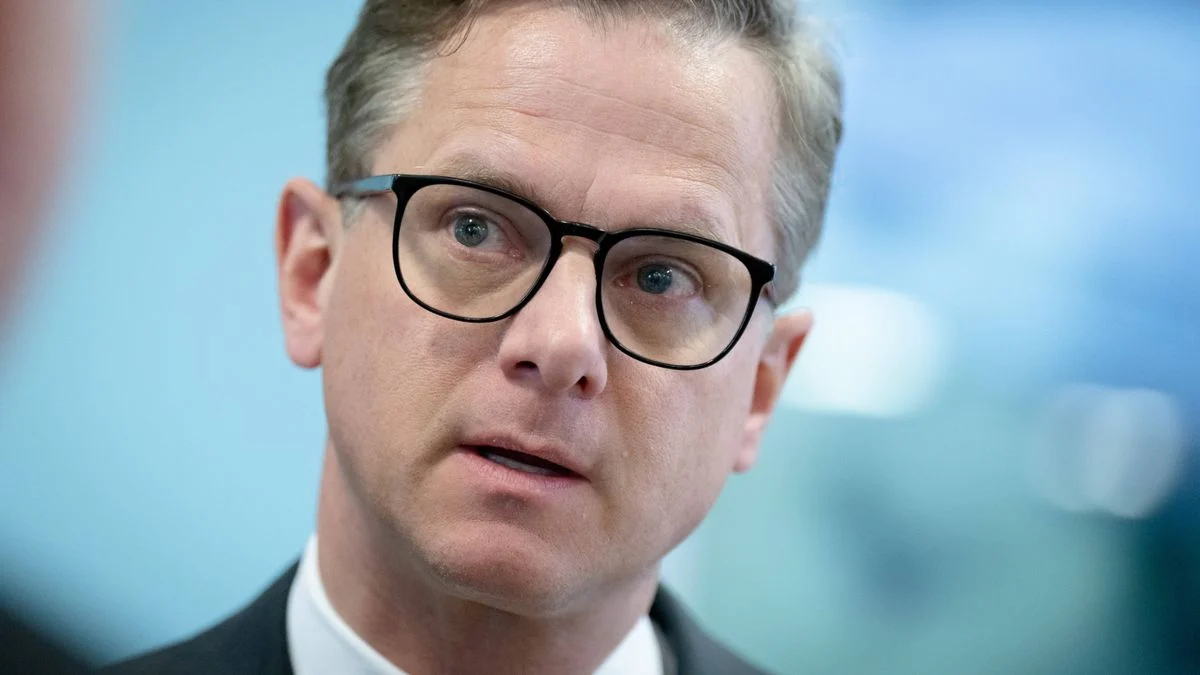
Health Minister Carsten Linnemann has emerged as the primary voice of the government regarding this development. Speaking on Wednesday, Linnemann framed the stability as a direct consequence of strategic legislative intervention.
"The expenditure of the statutory health insurance funds will rise significantly less in the coming year than it did in the current year," Linnemann asserted. He credits the GKV-Beitragssatzstabilisierungsgesetz for providing relief of up to 15 billion euros on the expenditure side. According to the Minister, this achievement is a crucial milestone. "After repeated contribution increases, this is a positive signal for the public," he added.
However, the Minister was careful not to declare victory. The tone of his comments shifted when discussing the long-term horizon. Linnemann acknowledged that despite the current stabilization, the financial foundations of the Krankenkassen remain "strained." His rhetoric underscores a growing consensus in Berlin: that legislative patches—while effective in the short term—are no substitute for fundamental structural reform. "We must solve the structural problems of the statutory health insurance system and place its financing on a permanent, solid footing," he warned.
The Reality Behind the "Average" Rate
While the 2.9 percent figure is being touted as a benchmark, it is vital to distinguish between a political target and the actual experience of the insured. The "average supplementary contribution" is a statistical construct, not a legally binding cap.
In Germany, each of the roughly 90+ individual health insurance funds (Krankenkassen) determines its own supplementary rate based on its specific financial health, the age demographic of its insured members, and its administrative efficiency. Consequently, while the average may hold at 2.9 percent, individual policyholders may see their specific provider increase rates significantly to cover deficits.
This discrepancy between the "average" and the "actual" is a frequent point of frustration for consumers. As seen in the 2026 data, where the target was 2.9 percent but the effective rate climbed to 3.1 percent, the Schätzerkreis recommendations serve more as a guidepost than a guarantee.
Structural Implications and Future Challenges
The reliance on the GKV-Beitragssatzstabilisierungsgesetz raises profound questions about the sustainability of the current model. The German healthcare system is essentially operating on a treadmill where costs are rising faster than the economic output of the contributors. Several factors are driving this structural imbalance:
1. The Demographic Time Bomb
Germany’s aging population is the most significant long-term threat to the GKV. As the "Baby Boomer" generation enters their high-cost years, the ratio of contributors (workers) to beneficiaries (retirees) is shrinking. This puts an inherent upward pressure on costs that cannot be solved by simple legislation.
2. Technological and Pharmaceutical Costs
The rapid advancement in medical technology and the development of high-cost specialty drugs—particularly in oncology and rare disease treatment—are placing unprecedented demands on the insurance funds. While these treatments save lives, they challenge the traditional "pay-as-you-go" model of German social security.
3. Efficiency and Bureaucracy
Critics of the current system point to the fragmented nature of the health insurance landscape. With dozens of funds competing, there are significant administrative overheads that could potentially be consolidated to save billions. However, such moves are often met with fierce political resistance from regional stakeholders and the insurance funds themselves.
The Road Ahead: What Should Insured Citizens Expect?
For the average employee, the immediate takeaway from this week’s announcement is that there will be no "shock" in the upcoming payroll cycle. This allows for a degree of predictability in household budgeting. Yet, the warning from Minister Linnemann should be taken seriously: the system is being held together by temporary measures.
As the government looks toward 2027 and beyond, the debate will likely shift from "contribution rates" to "system reform." Options on the table include:
- Broadening the Revenue Base: Shifting toward a model where capital income and other revenue streams are more heavily taxed to support healthcare.
- Cost Containment in Hospitals: Further implementation of the hospital reform act to reduce redundant capacities and centralize specialized care.
- Digitalization: Leveraging artificial intelligence and digital health records to reduce administrative waste and improve diagnostic efficiency.
Conclusion
The recommendation to keep the supplementary contribution at 2.9 percent is a welcome respite for the German economy, offering a thin shield against the broader inflationary pressures facing households. It represents a tactical win for the current administration and a testament to the effectiveness of recent stabilization laws.
However, the underlying fiscal reality is that the German statutory health insurance system remains in a state of chronic vulnerability. By acknowledging that structural problems persist, the government is signaling that the era of "stable" contributions may be temporary. Without deeper, more painful reforms to address the demographic and technological drivers of healthcare costs, the respite offered today may prove to be merely a brief pause in a much longer, and more difficult, trend of rising costs. For now, workers can breathe a sigh of relief, but they should remain wary of the systemic pressures that continue to simmer beneath the surface of Germany’s social welfare state.