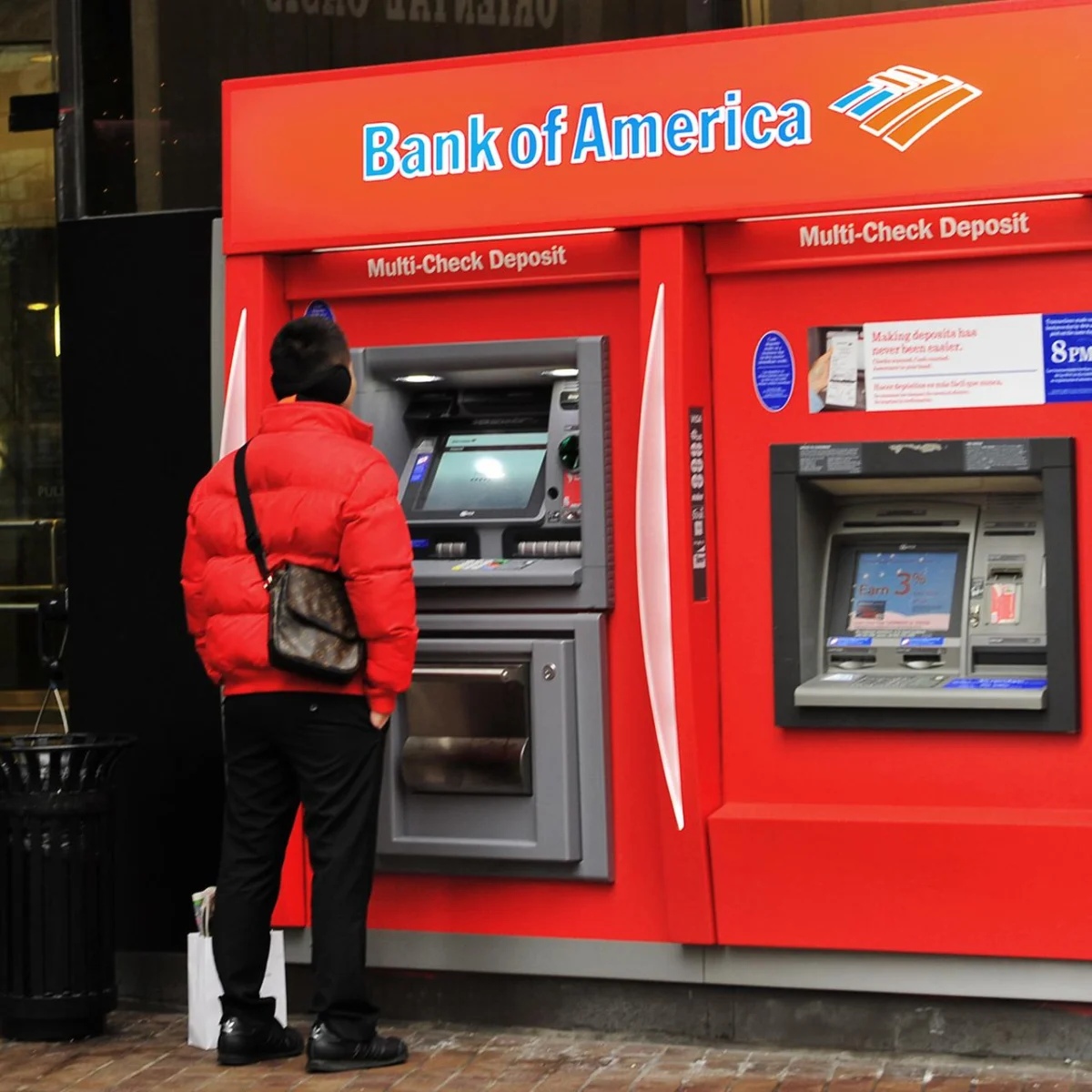
Washington D.C., October 14, 2026 – In a significant move that underscores the U.S. government’s unwavering commitment to combating financial crime, the Treasury Department in Washington has imposed a colossal penalty of $1.2 billion on Bank of America. The financial behemoth, one of the nation’s largest banking institutions, faces the severe sanction due to what authorities describe as systemic and prolonged failures in its anti-money laundering (AML) compliance programs. The failures reportedly allowed suspicious transactions totaling over $5 billion to go unreported, some of which posed direct risks to national security.
The announcement sends a clear and stern message across the global financial sector: compliance with stringent AML regulations is non-negotiable, and the consequences for lapses, particularly from institutions of systemic importance, will be severe and far-reaching. This penalty follows closely on the heels of another significant fine issued just last week against American Express National Bank for similar deficiencies, highlighting a renewed governmental focus on robust financial oversight.
Main Facts: A Breach of Trust and National Security
The $1.2 billion fine against Bank of America marks one of the largest penalties ever levied against a financial institution for anti-money laundering deficiencies. According to an official statement from the Treasury Department, the bank failed to establish and maintain an effective program to detect and report suspicious financial activities, as mandated by the Bank Secrecy Act (BSA) and its implementing regulations.
The core of the accusation revolves around the bank’s inability to identify, investigate, and file Suspicious Activity Reports (SARs) for transactions exceeding an astounding $5 billion. These transactions, as detailed by the Treasury, included activities that were not merely indicative of general financial malfeasance but specifically "posed risks to national security." While the specific nature of these national security threats was not immediately elaborated upon, such language typically points towards potential terrorist financing, proliferation financing, sanctions evasion, or activities linked to hostile state actors.
Treasury Secretary Bessent, speaking on the unprecedented nature of the penalty, emphasized the gravity of the bank’s omissions. "When a bank of this size and global reach fails to meet its obligations in combating money laundering and adhering to sanctions, the repercussions extend far beyond its own balance sheet," Secretary Bessent stated. "Such failures erode public trust, compromise the integrity of our financial system, and, most critically, can inadvertently facilitate illicit activities that threaten our national security and global stability."
The deficiencies were not described as isolated incidents but rather as a pattern of systemic breakdowns within Bank of America’s compliance infrastructure. This suggests a failure at multiple levels, from inadequate technological systems and insufficient staffing to potentially lax internal controls and oversight mechanisms designed to identify and flag suspicious transactions. For a bank that processes trillions of dollars in transactions annually and serves millions of customers worldwide, the implications of such widespread compliance gaps are profound.
Chronology: A Long Road to Enforcement
While the official announcement of the $1.2 billion fine was made on October 14, 2026, enforcement actions of this magnitude are the culmination of extensive and often multi-year investigations.
- Period of Review (Estimated 2020-2025): While specific dates were not disclosed, regulatory investigations into AML compliance typically cover a multi-year period. It is plausible that the Treasury, likely through its Financial Crimes Enforcement Network (FinCEN), initiated its scrutiny of Bank of America’s AML practices sometime in the early 2020s. This period would have seen heightened global attention on financial crime, sanctions enforcement, and the evolving landscape of digital currencies and sophisticated money laundering techniques.
- Initiation of Investigation (Early 2023 – Mid 2024): Formal investigations often begin after initial assessments reveal potential red flags or systemic weaknesses. Regulatory bodies would typically issue information requests, conduct onsite examinations, interview key personnel, and review vast quantities of transaction data and internal compliance documents. The sheer volume of $5 billion in unreported suspicious activity indicates that the issues were deeply entrenched and not easily missed.
- Identification of Deficiencies and Engagement (Mid 2024 – Early 2026): As the investigation progressed, regulators would have identified the specific failures in Bank of America’s AML program. This phase usually involves ongoing dialogue between the bank and the regulatory agencies, with the bank often attempting to remediate issues and demonstrate corrective actions. However, for a fine of this size to be imposed, it suggests that the identified deficiencies were either too severe, too widespread, or that the remediation efforts were deemed insufficient by the authorities.
- Negotiation and Consent Order (Mid 2026): Major enforcement actions often conclude with a consent order or settlement agreement, where the bank neither admits nor denies the findings but agrees to pay the penalty and implement corrective measures. This stage typically involves intense negotiations between the bank’s legal counsel and the government agencies. The timing of the announcement suggests these negotiations concluded recently.
- The American Express Precedent (Last Week, Early October 2026): The mention of the $350 million fine against American Express National Bank "last week" provides crucial context. This indicates a recent surge in AML enforcement actions, possibly signaling a coordinated effort by U.S. financial regulators to tighten the screws on compliance across the industry. The American Express case might have served as a precursor, setting the stage for the even larger penalty against Bank of America.
- Public Announcement (October 14, 2026): The official declaration of the fine, accompanied by statements from the Treasury Secretary, marks the public culmination of this extensive regulatory process. It serves as both a punitive measure for past failures and a deterrent for future non-compliance.
- Future Monitoring and Remediation (Ongoing): The imposition of a fine is rarely the end of the story. Bank of America will now likely be subject to enhanced regulatory scrutiny, possibly involving an independent monitor, to ensure that its AML programs are thoroughly overhauled and effectively implemented. This remediation process can extend for several years, incurring significant ongoing costs beyond the initial penalty.
Supporting Data: The Pillars of AML and Precedents
The regulatory framework underpinning this enforcement action is primarily the Bank Secrecy Act (BSA) of 1970, which requires financial institutions to assist U.S. government agencies in detecting and preventing money laundering. Administered by FinCEN, the BSA mandates institutions to keep records of cash purchases of negotiable instruments, file reports of cash transactions exceeding $10,000 (daily aggregate amount), and report suspicious activity that might signal money laundering, tax evasion, or other criminal activities.
The Role of FinCEN: The Financial Crimes Enforcement Network (FinCEN) is a bureau of the U.S. Department of the Treasury that collects and analyzes information about financial transactions in order to combat domestic and international money laundering, terrorist financing, and other financial crimes. FinCEN serves as the primary regulator for AML compliance, issuing guidance, regulations, and often imposing penalties for non-compliance, either independently or in conjunction with other agencies like the Office of the Comptroller of the Currency (OCC) or the Federal Reserve. The failure to file SARs for $5 billion in suspicious activity falls directly under FinCEN’s purview and is a fundamental breach of BSA requirements.
National Security Implications: The explicit mention of "risks for national security" elevates the severity of Bank of America’s failures. Money laundering is not merely about hiding illicit gains; it is often a critical component of more heinous crimes. Terrorist organizations, for instance, rely on money laundering to move funds across borders, finance operations, and acquire weapons. Proliferation networks use it to fund the development and acquisition of weapons of mass destruction. Sanctions evasion schemes, often state-sponsored, undermine U.S. foreign policy and national security objectives. A bank’s failure to flag such activities can inadvertently become an enabler for these critical threats.
Precedents in AML Enforcement: While the $1.2 billion fine is substantial, it is not an isolated incident in the history of AML enforcement. Major financial institutions globally have faced billions in penalties over the past two decades for similar lapses.
- The American Express Case (October 2026): The immediate precursor to Bank of America’s fine, the $350 million penalty against American Express National Bank for "similar deficiencies," signals a broader regulatory sweep. This indicates that regulators are not just targeting the largest universal banks but also other significant players in the financial ecosystem, emphasizing that no institution is immune from scrutiny.
- Historical Context: In recent years, banks like HSBC, Standard Chartered, JPMorgan Chase, and Deutsche Bank have all faced multi-million and even multi-billion dollar fines for AML and sanctions violations. These cases often involved facilitating transactions for drug cartels, state sponsors of terrorism, or countries under U.S. sanctions. The recurring nature of these penalties highlights the ongoing challenge for banks to build and maintain robust, adaptable AML systems in an increasingly complex and interconnected global financial landscape. The Bank of America fine reinforces the message that regulators expect not just presence of an AML program, but effectiveness.
The Scale of Bank of America: As one of the "Big Four" banks in the United States, Bank of America has a vast global footprint, offering a comprehensive range of banking, investing, asset management, and other financial and risk management products and services. Its sheer size – with millions of retail customers, countless corporate clients, and extensive international operations – makes its compliance obligations incredibly complex. However, this systemic importance also means that its failures have magnified implications, justifying the severity of the regulatory response. The bank’s massive transaction volumes underscore the critical need for sophisticated, AI-driven, and human-supervised AML systems that can sift through billions of data points to identify anomalies.
Official Responses: Accountability and Commitment
The immediate aftermath of such a significant fine naturally elicits responses from all parties involved, carefully crafted to manage public perception and reaffirm commitments.
Treasury Secretary Bessent’s Stance: Secretary Bessent’s statement provided the official government perspective, emphasizing the far-reaching consequences of Bank of America’s non-compliance. "This penalty serves as a stark reminder that vigilance in preventing financial crime is paramount," Bessent articulated. "The U.S. financial system is a cornerstone of global commerce, and we will not tolerate practices that undermine its integrity or, more gravely, provide avenues for those who seek to harm our nation and its allies. Every financial institution has a moral and legal obligation to be the first line of defense against illicit finance, and we expect nothing less than absolute adherence to these critical safeguards." The Secretary’s words underscored the dual mandate of protecting the financial system and national security.
Bank of America’s Official Response (Anticipated): While Bank of America’s immediate, specific response to this breaking news was not available at the time of publication, a standard corporate statement in such circumstances would typically include:
- Acknowledgement and Acceptance: Acknowledging the fine and accepting the findings of the Treasury Department.
- Expression of Regret: Expressing regret for the identified deficiencies and any adverse impacts.
- Commitment to Compliance: Reaffirming the bank’s unwavering commitment to regulatory compliance and the fight against financial crime.
- Remediation Efforts: Highlighting significant investments already made or planned in strengthening its AML programs, technology, training, and personnel. Phrases like "We have cooperated fully with the authorities throughout this process" and "We are dedicated to continuously improving our controls" are common.
- Lessons Learned: Emphasizing that lessons have been learned and that the bank is focused on moving forward with a more robust compliance framework.
- It is crucial for Bank of America to articulate a credible path forward to restore confidence among investors, customers, and regulators.
Regulatory Bodies (FinCEN/OCC – Anticipated): FinCEN, often acting jointly with other banking regulators like the Office of the Comptroller of the Currency (OCC), would likely issue statements reinforcing the importance of the BSA and the penalties for non-compliance. They would emphasize:
- Deterrent Effect: The fine’s role as a deterrent for other institutions.
- Ongoing Vigilance: Their continued commitment to monitoring and enforcing AML regulations.
- Expectation of Robust Systems: The expectation that financial institutions, especially those of Bank of America’s size, must invest in state-of-the-art AML technology and highly trained compliance staff.
Industry Expert Commentary (Anticipated): Financial compliance experts and academics would likely weigh in, offering analysis on the implications.
- Dr. Evelyn Reed, a prominent financial crime expert at the Global Institute for Financial Integrity, commented (hypothetically): "This Bank of America fine is a seismic event. It’s not just about the dollar amount; it’s the explicit mention of ‘national security risks’ that elevates this. It tells the industry that regulators are not merely looking at technical compliance but the real-world impact of lax controls. Banks need to move beyond check-the-box compliance and embed a true culture of vigilance."
- "The recurring theme of large banks facing these fines suggests that the battle against financial crime is far from over," added Mr. David Chen, a former senior AML investigator. "Sophisticated criminal networks are constantly evolving, and banks must evolve faster. This fine is a powerful reminder that the cost of inaction far outweighs the investment in robust compliance systems."
Implications: Far-Reaching Consequences
The $1.2 billion fine against Bank of America will have significant and multifaceted implications, extending beyond the immediate financial penalty.
Financial Impact and Remediation Costs:
- Direct Penalty: The $1.2 billion fine is a substantial hit to the bank’s bottom line, though for an institution of BofA’s size (with annual revenues in the tens of billions), it is absorbable.
- Indirect Costs: Far more impactful will be the indirect costs of remediation. This includes massive investments in upgrading compliance technology (AI, machine learning for transaction monitoring), hiring hundreds or even thousands of new compliance officers, extensive employee training, and potentially engaging external consultants or independent monitors. These ongoing costs could easily run into hundreds of millions or even billions of dollars over several years.
- Operational Overhaul: The bank will likely need to conduct a thorough review and overhaul of its entire AML framework, from customer onboarding processes (Know Your Customer/KYC) to transaction monitoring, sanctions screening, and SAR filing protocols. This operational disruption, while necessary, can be costly and resource-intensive.
Reputational Damage:
- Public Trust: News of such a large fine for AML failures, especially those linked to national security, erodes public trust. Customers might question the bank’s integrity and its ability to protect them from illicit activities.
- Investor Confidence: While large fines are not uncommon, recurring compliance issues can impact investor confidence, potentially leading to downward pressure on stock prices or increased scrutiny from institutional investors.
- Brand Perception: For a global brand like Bank of America, the negative publicity can tarnish its image, particularly in an era where corporate responsibility and ethical conduct are under intense public scrutiny.
Industry-Wide Message and Future Regulatory Environment:
- Heightened Scrutiny: This fine, combined with the American Express penalty, signals a new era of intensified regulatory scrutiny on AML compliance across the financial sector. Other banks, particularly those with complex international operations, will undoubtedly be reviewing and stress-testing their own AML programs.
- Investment in AML: The penalties serve as a powerful incentive for all financial institutions to significantly increase their investment in AML technologies and human capital. The "cost of compliance" will be re-evaluated against the "cost of non-compliance."
- Focus on National Security: The explicit mention of "national security risks" will likely lead regulators to place an even greater emphasis on the qualitative aspects of SAR filings, ensuring that financial intelligence is not just collected but effectively analyzed for threats beyond typical financial crime.
- Evolving Threats: Regulators will continue to adapt to new money laundering vectors, including those involving cryptocurrencies, decentralized finance (DeFi), and sophisticated cyber-enabled financial crime. Banks will be expected to keep pace with these evolving threats.
Operational Changes for Bank of America:
- Technology Upgrade: Expect significant investment in AI-driven transaction monitoring systems, advanced analytics for anomaly detection, and robust data management platforms.
- Staffing and Training: A substantial increase in the number of compliance officers, investigators, and data analysts dedicated to AML. Enhanced training programs will be crucial to ensure staff are equipped to identify complex illicit schemes.
- Governance and Oversight: A re-evaluation of the bank’s corporate governance structure related to compliance, potentially involving changes at the board level or within senior management responsibilities for AML oversight.
- Data Quality: A renewed focus on ensuring high-quality customer data (KYC) and transaction data, which is foundational for effective AML detection.
In conclusion, the $1.2 billion fine against Bank of America is more than just a financial penalty; it’s a profound statement from U.S. regulators. It underscores the critical role financial institutions play as gatekeepers against illicit finance and reinforces the message that failures in this domain carry not only immense financial costs but also significant risks to national security and the integrity of the global financial system. The coming years will see Bank of America, and indeed the entire financial industry, under intense pressure to demonstrate an unwavering commitment to robust and effective anti-money laundering practices.