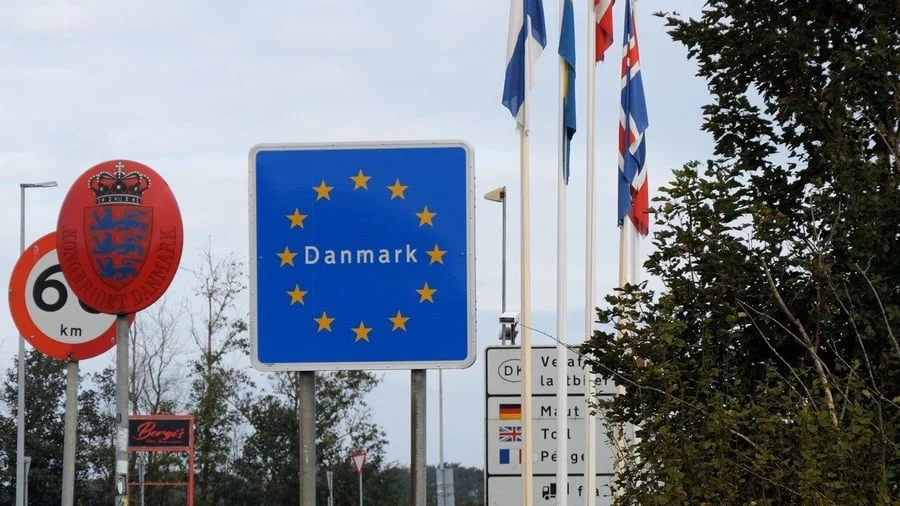
Copenhagen/Berlin – Denmark has announced a significant extension of its temporary border controls with Germany, citing a persistent and grave security threat to the nation. The decision, revealed by Danish Justice Minister Nicolai Wammen, will see the controls, originally set to expire in November, prolonged until May 11, 2027. This unprecedented duration underscores a profound shift in Denmark’s approach to national security and border management within the Schengen Area, a move that reflects broader European anxieties over terrorism, sabotage, and irregular migration.
The Danish Ministry of Justice issued a statement confirming the extension, emphasizing that Danish authorities perceive an "ongoing and current serious threat to Denmark." This assessment forms the bedrock of the government’s justification for maintaining what are ostensibly temporary measures for an unusually extended period, signaling a long-term commitment to enhanced vigilance at its southern frontier. The decision has been formally communicated to the European Commission, as required by Schengen regulations, highlighting the delicate balance between national security imperatives and the principles of free movement within the European Union.
Justice Minister Wammen elaborated on the rationale, pointing to a severe domestic security situation. "There continue to be threats from terrorism and sabotage," Wammen stated, linking the extension directly to these pervasive dangers. Furthermore, the minister referenced recent events at the Spanish enclave of Ceuta, where tens of thousands of migrants crossed from Morocco, as a stark illustration of how rapidly large populations can be mobilized. This incident, while geographically distant, serves as a potent symbol for Copenhagen of the potential for sudden and overwhelming migratory pressures that could impact the entire European continent, including Denmark’s borders.
The prolongation of these controls, which have been a recurring feature of the Danish-German border for several years, represents a continued challenge to the foundational principles of the Schengen Agreement. While the pact generally abolishes internal border checks, it does permit member states to reintroduce them under exceptional circumstances for limited periods. Denmark’s latest decision, extending these measures for an additional six months from their original expiry date in November to an extraordinary target date of May 11, 2027, suggests that what began as an exceptional measure is increasingly being normalized as a long-term strategy for national security and migration control.
Main Facts: A Prolonged Stance on Security
The core of the Danish government’s announcement is the extension of temporary internal border controls with Germany for an extended period, now reaching into 2027. This decision, spearheaded by Justice Minister Nicolai Wammen, is rooted in an official assessment that Denmark faces a "persistent and current serious threat." The nature of this threat is multifaceted, encompassing risks of terrorism and sabotage, which have been significant concerns across Europe in recent years. The explicit mention of the "serious security situation" and the specific threats of "terrorism and sabotage" provides the primary legal and political justification under the Schengen Borders Code for reintroducing and extending internal border controls.
The duration of this extension is particularly noteworthy. While temporary controls are typically approved for periods ranging from a few days to six months, the stated extension until May 11, 2027, from an initial expiry around November 2024, indicates a commitment to prolonged vigilance that goes beyond previous patterns of short, successive extensions. This signals a strategic shift, where Denmark views the current security landscape not as a fleeting crisis but as a sustained challenge requiring a more permanent adaptation of its border management policies. The formal notification to the European Commission is a crucial procedural step, acknowledging the EU framework even while exercising national prerogatives.
Beyond direct security threats, the Danish government has also incorporated concerns related to migration flows into its rationale. The reference to the influx of migrants into the Spanish enclave of Ceuta serves as a cautionary tale, illustrating the potential for sudden and large-scale migratory movements to rapidly challenge national borders. This incident underscores a broader European vulnerability and the perception that even geographically distant events can have continent-wide implications for border security and control. For Denmark, situated at the northern end of a key transit route through Germany, managing these potential flows is seen as integral to national stability and public order.
The ongoing nature of these controls is not new. Both Denmark and Germany have maintained some form of internal border checks for several years. Germany, for its part, implemented stationary controls at its border with Denmark on September 16, 2024, and has subsequently extended them multiple times. Denmark had initiated its own fixed controls at the German border even earlier, on May 12, 2024. These parallel actions highlight a shared regional concern over security and migration, suggesting a degree of mutual understanding between the two Schengen partners despite the inherent challenge to the principle of free movement. The current extension by Denmark thus fits into an established pattern, albeit one that is now set to continue for an unusually long period.
Chronology: A Decade of Shifting Borders
The reintroduction of internal border controls within the Schengen Area is not a new phenomenon, but rather a recurring response to a series of crises that have challenged the very foundations of European free movement over the past decade. Denmark’s latest extension must be understood within this broader historical context, marking another chapter in a period of unprecedented internal border management.
2015-2016: The Refugee Crisis and Initial Controls
The significant influx of refugees and migrants into Europe in 2015 marked a turning point. As hundreds of thousands of people, many fleeing conflict in Syria, Iraq, and Afghanistan, made their way across the continent, several Schengen states, including Denmark, felt immense pressure.
- January 2016: Denmark first introduced temporary border controls with Germany. This move came shortly after Sweden had implemented similar controls on its Øresund Bridge link with Denmark, creating a domino effect as Denmark sought to prevent an unmanageable number of asylum seekers from becoming stranded or unregistered within its borders. The initial justification revolved around maintaining public order and internal security, specifically linked to the management of large-scale migration. These controls, initially for a few days, were repeatedly extended.
2017-2019: Terrorism Concerns and Continued Extensions
Following a series of high-profile terrorist attacks across Europe, the focus of border controls began to broaden beyond migration to include counter-terrorism efforts.
- Denmark, along with other countries like Germany, Austria, Sweden, and Norway, continued to extend their controls, citing persistent threats from international terrorism. The legal basis shifted to encompass Article 25 and 29 of the Schengen Borders Code, which allow for controls in the event of a serious threat to public policy or internal security. The European Commission, while often expressing concerns about the cumulative effect on Schengen, generally acknowledged the exceptional circumstances.
2020-2023: The Pandemic and Evolving Threats
The COVID-19 pandemic introduced an entirely new dimension to border management, with health considerations temporarily overriding many traditional arguments for free movement. However, even after the pandemic-related restrictions eased, the underlying concerns that had driven pre-pandemic controls — migration and terrorism — resurfaced.
- Denmark’s controls, though sometimes adjusted, largely remained in place, with official justifications continuing to highlight both the ongoing threat of terrorism and the potential for secondary migration movements.
- Throughout this period, the concept of "hybrid threats" – encompassing state-sponsored sabotage, cyberattacks, and foreign influence operations – began to feature more prominently in national security assessments, adding another layer of complexity to border security considerations.
2024: Escalating Tensions and Renewed Focus
The year 2024 has seen a heightened sense of insecurity across Europe, driven by geopolitical instability, the ongoing war in Ukraine, and renewed concerns over irregular migration routes.
- May 12, 2024: Denmark commenced a new phase of fixed controls at its border with Germany, reflecting an intensified focus on national security.
- September 16, 2024: Germany, responding to its own security and migration challenges, introduced stationary controls at its border with Denmark, subsequently extending them. This bilateral symmetry underscores a shared perception of risk in the region.
- November 2024 (projected expiry): The current temporary controls by Denmark were set to expire around this time.
- November 2024 (announcement): Justice Minister Nicolai Wammen announces the extension, pushing the duration until May 11, 2027. This latest extension is notable for its explicit mention of "terrorism and sabotage" and the reference to the Ceuta migration incident, indicating a multi-pronged justification that reflects the complex threat landscape Europe faces. The extraordinary length of this extension (to 2027) suggests a more permanent policy shift rather than a series of short-term reactions.
This chronology illustrates a gradual but significant erosion of the "border-free" ideal within Schengen, as states increasingly rely on national border controls to manage a persistent array of security and migration challenges. Denmark’s move is a continuation of this trend, but its unusually long proposed duration signals a new level of commitment to this strategy.
Supporting Data: Unpacking the Justifications
The Danish government’s decision to extend border controls is predicated on a complex interplay of security assessments, migration trends, and geopolitical considerations. Understanding the "serious security situation" requires delving into the specific data and events that inform such a robust response.
National Security Threats: Terrorism and Sabotage
Denmark, like many European nations, has faced persistent threats from international terrorism. The Danish Security and Intelligence Service (PET) regularly assesses the threat level, which has remained "serious" for an extended period. This assessment is not abstract; it is based on intelligence regarding:
- Radicalization: The presence of individuals and networks within Denmark and Europe susceptible to radical ideologies, particularly Islamist extremism, but also right-wing extremism.
- Foreign Fighters: The return of individuals who have fought in conflict zones, posing a potential threat upon re-entry.
- Lone Wolf Attacks: The increasing difficulty in detecting and preventing attacks by individuals acting alone, often inspired by extremist propaganda.
- Geopolitical Instability: The war in Ukraine and other international conflicts have intensified concerns about state-sponsored sabotage and espionage. Critical infrastructure, including energy grids, digital networks, and transportation hubs, are seen as potential targets. Denmark, with its strategic location and advanced infrastructure, is particularly vigilant against such threats. The Justice Ministry’s explicit mention of "sabotage" reflects this heightened awareness of non-traditional security challenges.
Past incidents, both in Denmark and neighboring countries, reinforce these concerns. For instance, Denmark has experienced terror-related incidents, and plots have been foiled. The broader European context, with attacks in cities like Paris, Brussels, Berlin, and Vienna, serves as a constant reminder of the volatile security environment. Border controls, in this context, are viewed as a tool to disrupt the movement of potential perpetrators, weapons, or materials that could facilitate such acts.
Migration Pressures: The Ceuta Precedent and Broader Trends
The reference to the situation in Ceuta is a critical piece of supporting evidence for the Danish government’s argument regarding migration.
- The Ceuta Incident (May 2021): This event saw approximately 12,000 migrants, including many minors, cross from Morocco into the Spanish autonomous city of Ceuta within a span of 48 hours. The sheer speed and scale of this influx overwhelmed Spanish border defenses and humanitarian capacities. For Denmark, this incident is not just a distant news story; it represents a tangible example of how rapidly migratory pressures can escalate and how vulnerable even well-guarded borders can be. It underscores the potential for large, uncontrolled movements of people to challenge national sovereignty and strain resources.
- Secondary Movements: While Denmark’s external borders are well-managed, the country is concerned about "secondary movements" – migrants who arrive in other EU countries and then travel onward through the Schengen Area. Germany, as a central transit country, often experiences significant flows, and Denmark’s border with Germany is a primary route for those seeking to reach Scandinavia. The Danish government’s policy aims to regulate these flows and ensure that asylum applications are processed in the first country of entry, in line with the Dublin Regulation, thereby preventing an undue burden on Danish systems.
- Rising Asylum Applications: While specific numbers for migration into Denmark via Germany fluctuate, the overall trend of asylum applications across Europe has seen increases in recent years. This general upward trend fuels concerns about the capacity of national systems to cope and reinforces the perception that stricter border controls are necessary.
The Schengen Context and Legal Basis
The Schengen Borders Code (Regulation (EU) 2016/399) explicitly allows for the temporary reintroduction of internal border controls under specific conditions:
- Article 25: Permits controls for a limited period (initially 30 days, extendable up to six months) in the event of a "serious threat to public policy or internal security."
- Article 29: Allows for longer extensions (up to two years) in "exceptional circumstances where the overall functioning of the area without internal border control is put at risk."
Denmark’s successive extensions, and particularly the proposed duration until 2027, fall under these provisions. However, such prolonged measures inevitably raise questions about the long-term viability of the border-free zone. The European Commission has consistently called for a return to full Schengen functionality, urging member states to prioritize common European solutions for external border management over internal controls. Yet, the persistent use of these provisions by multiple states, including France, Austria, Norway, and Sweden, alongside Germany and Denmark, demonstrates a collective European struggle to balance security and freedom of movement in the face of evolving threats. The Danish decision is thus not an isolated act but part of a wider trend within the Schengen Area, reflecting a consensus among certain member states that national interests sometimes necessitate these deviations from the ideal.
Official Responses: A Tapestry of Concerns and Understandings
The decision by Denmark to extend its border controls with Germany has elicited a range of responses from relevant stakeholders, reflecting both national security priorities and the broader implications for European integration.
Danish Government: Unwavering Commitment to National Security
Justice Minister Nicolai Wammen’s statements have consistently emphasized the Danish government’s unwavering commitment to national security. The decision is framed as a necessary and proportionate response to a demonstrably serious threat.
- Prioritizing Citizen Safety: Wammen has articulated that the primary duty of the government is to ensure the safety and security of its citizens. In this context, border controls are seen as a vital tool to mitigate risks from terrorism, sabotage, and uncontrolled migration.
- Long-Term Threat Perception: The unusually long extension until May 2027 suggests that the Danish government perceives the current threat landscape not as a temporary anomaly, but as a structural challenge that requires sustained vigilance. This implies a strategic shift from reactive, short-term measures to a more proactive, long-term approach to internal border management.
- Compliance with EU Law: The Danish government has been careful to state its adherence to the legal framework of the Schengen Borders Code, particularly its provisions for temporary reintroduction of controls under exceptional circumstances. The notification to the EU Commission underscores this commitment to transparency and legal compliance within the European framework. While acknowledging the spirit of Schengen, Denmark asserts its sovereign right to protect its borders when national security is at stake.
German Government: Shared Concerns and Pragmatic Acceptance
Germany, which itself maintains internal border controls with several neighbors, including Denmark, generally shows understanding for Denmark’s position. Both countries share similar security concerns and face parallel challenges related to migration.
- Mutual Understanding: Given Germany’s own experience with internal border controls, particularly at its southern border with Austria and more recently with Denmark, there is a degree of pragmatic acceptance. German officials often acknowledge the complex security environment and the legitimate need for national measures.
- Bilateral Cooperation: Despite the controls, bilateral cooperation between German and Danish police and border authorities remains strong. There is a mutual interest in combating cross-border crime, terrorism, and managing migration flows effectively. The controls, in this sense, can also be seen as enhancing joint security efforts rather than solely hindering movement.
- Call for European Solutions: While understanding national exigencies, German officials, including the Interior Minister, have consistently advocated for comprehensive European solutions to migration and security challenges. This includes stronger external border protection, more efficient asylum procedures, and enhanced data sharing and police cooperation across the EU, aiming to eventually make internal controls superfluous.
European Union: Upholding Schengen Principles While Acknowledging Realities
The European Commission’s stance on internal border controls is a complex balancing act. On one hand, it is the guardian of the treaties and a staunch defender of the Schengen Area, a cornerstone of European integration. On the other, it must acknowledge the legitimate security concerns of member states.
- Preserving Free Movement: The Commission’s consistent message is that temporary internal border controls should remain exceptional, proportionate, and limited in time. Prolonged controls are seen as detrimental to the single market, cross-border communities, and the fundamental right to free movement.
- Monitoring and Assessment: The Commission scrutinizes member states’ justifications for reintroducing and extending controls, assessing their necessity and proportionality. It encourages member states to explore alternative, less restrictive measures.
- Push for Comprehensive Reforms: The EU actively promotes reforms to the common European asylum system and strengthens the European Border and Coast Guard Agency (Frontex) to manage external borders more effectively. The aim is to address the root causes that lead member states to resort to internal controls. While not directly condemning Denmark’s latest decision, the Commission will likely reiterate its call for a swift return to a fully functioning Schengen Area without internal border checks, emphasizing that true security lies in shared responsibility and robust external border management.
Opposition and Civil Society: Concerns over Rights and Economic Impact
While the national security narrative often garners broad political support, there are voices within civil society, business communities, and opposition parties that raise concerns.
- Erosion of Rights: Civil liberties groups often highlight the erosion of fundamental rights, particularly the freedom of movement, and the potential for discrimination and inconvenience for ordinary citizens.
- Economic Impact: Business associations, particularly those involved in cross-border trade and logistics, frequently point to the economic costs of delays at borders, increased administrative burdens, and reduced efficiency. Commuters and tourists also face added inconvenience.
- Effectiveness Debate: Some critics question the actual effectiveness of internal border controls in stopping determined terrorists or large-scale migratory flows, arguing that such measures often displace problems rather than solve them, and that resources might be better allocated to intelligence gathering and external border management.
The official responses reveal a complex landscape where national security priorities, regional cooperation, and the foundational principles of European integration are constantly negotiated. Denmark’s decision, while rooted in national concerns, resonates across the continent, highlighting the ongoing challenges to the future of the Schengen Area.
Implications: A Shifting European Landscape
Denmark’s extended border controls are more than just a national policy decision; they carry significant implications for the future of the Schengen Area, bilateral relations, European security, and the very concept of free movement within the EU.
For the Schengen Area: Erosion of a Cornerstone
The most profound implication is the continued erosion of the Schengen ideal. The principle of border-free travel is a tangible benefit of EU membership and a powerful symbol of integration. When internal borders become normalized, even temporarily, the functional and symbolic value of Schengen diminishes.
- "Patchwork" Borders: Europe is increasingly becoming a "patchwork" of internal border controls, with various states maintaining checks for different durations and reasons. This creates uncertainty for travelers and businesses, undermining the predictability that Schengen was designed to provide.
- Precedent for Prolongation: Denmark’s unusually long proposed extension until 2027 sets a precedent for member states to maintain internal controls for significantly longer periods, potentially shifting the understanding of "temporary" within the Schengen Borders Code. This could lead other states to seek similar long-term authorizations, further entrenching a system of internal checks.
- Challenge to EU Authority: While member states are within their legal rights to implement these controls under specific articles, the cumulative effect and extended duration challenge the European Commission’s vision of a fully functioning border-free area. It highlights the tension between national sovereignty and the shared responsibilities of EU membership.
For Denmark-Germany Relations: A Managed Disruption
While the controls undeniably create friction, the relationship between Denmark and Germany is unlikely to be severely strained. Both countries are close allies and major trading partners.
- Mutual Understanding: As Germany also maintains its own controls, there is a degree of mutual understanding regarding the security and migration pressures faced by both nations.
- Practical Cooperation: Despite the checks, cooperation between border authorities, police, and intelligence services remains robust. Both countries have a vested interest in cross-border security and crime fighting.
- Economic Impact: The primary impact will be felt by cross-border commuters, businesses, and the tourism sector. Delays at the border, even minor ones, can accumulate to significant economic costs for freight and logistics, and inconvenience for daily travelers. However, both economies are resilient, and these impacts are generally considered manageable in light of perceived security benefits.
For European Security: National vs. Integrated Approaches
The Danish decision underscores a broader trend towards national security measures within Europe, even as the continent strives for integrated security responses.
- National Prioritization: The prolonged controls suggest a prioritization of national security interests over a purely integrated European approach, at least for the time being. This reflects a lack of full confidence in collective European mechanisms to manage all aspects of security and migration.
- Effectiveness Debate: The effectiveness of internal border controls in preventing terrorism and managing irregular migration remains a subject of debate. Critics argue that determined individuals or groups will find alternative routes, and that resources might be better allocated to enhanced intelligence sharing, external border protection, and targeted policing. Proponents, however, contend that they provide a crucial layer of defense and act as a deterrent.
- Need for Holistic Solutions: The persistence of these controls highlights the urgent need for a more comprehensive and robust EU-level strategy for external border management, asylum processing, and counter-terrorism. Without such holistic solutions, individual member states will likely continue to resort to national measures.
Future Outlook: A New Normal?
The extension until 2027 prompts a crucial question: are these "temporary" controls becoming the "new normal" for Europe’s internal borders?
- Conditions for Lifting: The conditions under which these controls would be lifted remain vague, largely dependent on a significant and sustained improvement in the security situation and a more stable migration landscape. Given current geopolitical uncertainties, such conditions may not materialize quickly.
- Political Will: The political will to fully restore Schengen without internal borders may also be waning in some capitals, as governments prioritize domestic security perceptions.
- Impact on European Identity: The gradual re-establishment of internal borders could subtly alter the European identity, moving away from the seamless continent envisioned by the architects of Schengen towards a more fragmented reality. This necessitates a renewed debate on the future direction of European integration and the delicate balance between security, sovereignty, and freedom.
In conclusion, Denmark’s decision is a stark indicator of the ongoing challenges facing the European Union. While rooted in legitimate national security concerns, its unusually long duration raises fundamental questions about the future of free movement and the practical viability of the Schengen Area. It compels Europe to confront whether the current "temporary" measures are becoming permanent fixtures, necessitating a rethinking of how security is managed in an increasingly complex and volatile world.