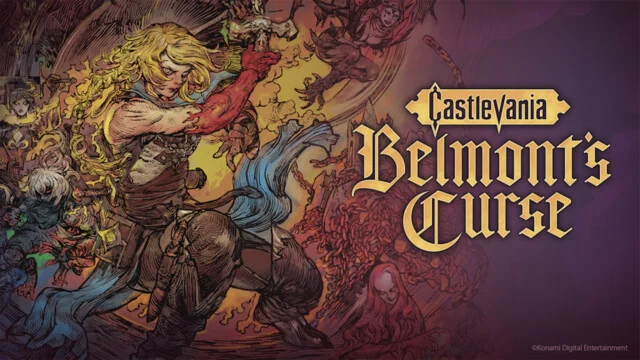
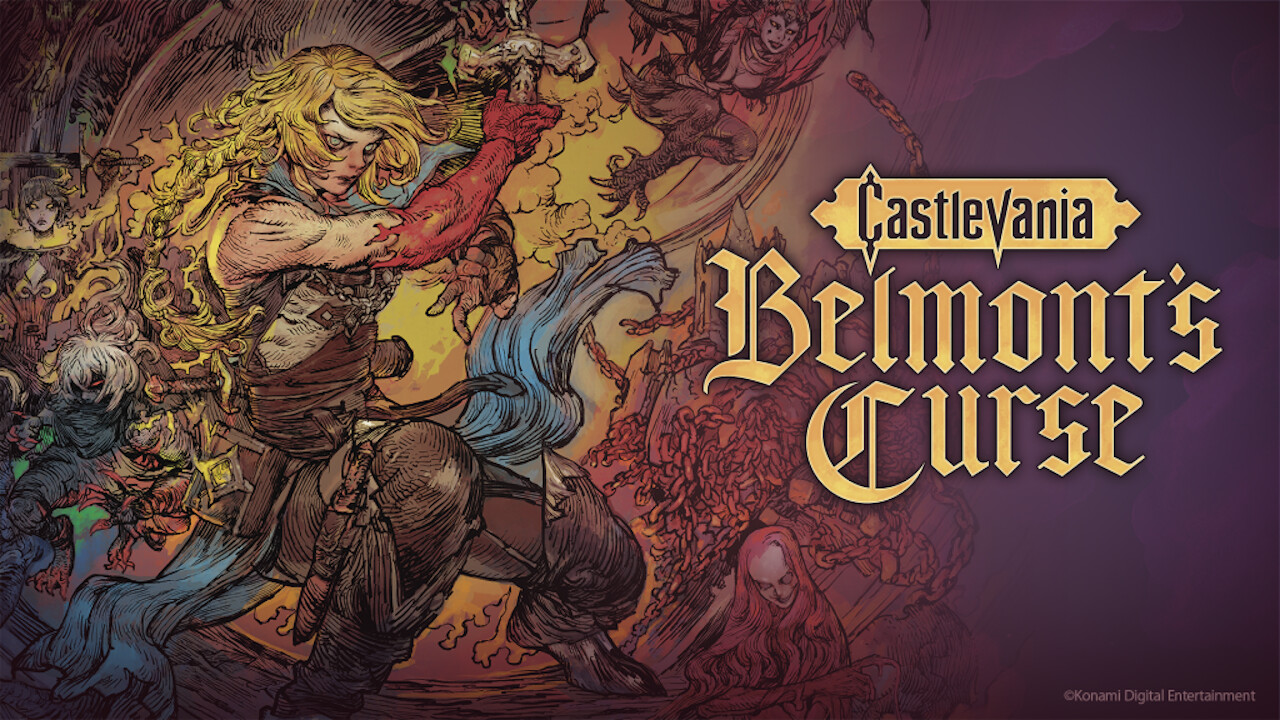
After a decade-long hiatus from original 2D entries, the legendary Castlevania franchise is making a triumphant, albeit debated, return. On October 15, Konami officially launches Castlevania: Belmont’s Curse, a title that seeks to bridge the gap between the series’ classic roots and the modern expectations of the Metroidvania genre. As the gaming community dissects the first wave of reviews, it is clear that while the franchise’s DNA remains potent, the execution has sparked a spirited debate among critics and fans alike.
The Return to Form: Main Facts and Context
Castlevania: Belmont’s Curse arrives during a landmark year for the series, marking its 40th anniversary. For many long-time fans, the release is significant not just for its gameplay, but for its structural return to the 2D sidescrolling roots that defined the franchise in the 80s and 90s. The last original 2D installment, Castlevania: Lords of Shadow – Mirror of Fate, was released in 2013, followed shortly by the 3D-focused Lords of Shadow 2 in 2014. Since then, Konami has primarily relied on re-releases, collections, and licensing deals to keep the Belmont name in the public consciousness.
Developed by Evil Empire—a studio with deep pedigree in the genre, having worked on Dead Cells and The Rogue Prince of Persia—in collaboration with Motion Twin, Belmont’s Curse is a deliberate departure from the roguelite mechanics the developers are known for. Instead, it offers a sprawling, interconnected world where exploration, ability-gating, and permanent progression are the cornerstones of the experience.
The game follows Rose Belmont, the daughter of the iconic monster hunter Trevor Belmont, as she traverses a gothic, monster-infested Paris in the year 1499. The core loop involves navigating labyrinthine environments, unlocking traversal abilities to reach previously inaccessible areas, and engaging in a sophisticated combat system that integrates a unique Tarot card mechanic. By defeating bosses, players claim these cards, which grant supernatural abilities and strategic advantages, adding a layer of depth that distinguishes it from its predecessors.
A Chronological Perspective: From Silence to Spotlight
The journey toward Belmont’s Curse has been a slow burn. Following the 2014 release of Lords of Shadow 2, the Castlevania series entered a period of relative dormancy regarding original software. While the Castlevania Anniversary Collection and Advance Collection kept the flame alive for enthusiasts, the lack of a "new" entry left a void in the market that was increasingly filled by independent "Igavania" titles.
Konami’s strategy shifted with the announcement of Belmont’s Curse, signaling a desire to reclaim the genre they helped define. The promotional rollout began in earnest with the release of a playable demo on October 1, 2026. This move served a dual purpose: it allowed players to sample the tight controls and atmospheric art direction, and it provided a safety net for developers by allowing progression to carry over into the full retail release.
By October 13, the review embargo lifted, two days ahead of the global launch. The initial reception provided a fascinating snapshot of how modern critics evaluate a legacy franchise attempting to modernize its formula. With the game now rolling out across PlayStation 5, Xbox Series X|S, Nintendo Switch, and PC, the stage is set for a major commercial test of Konami’s revitalized strategy.
Supporting Data: The Critical Landscape
The critical consensus, as tracked by Metacritic and OpenCritic, paints a picture of a high-quality production that nonetheless struggles to please everyone. On PlayStation 5, the game currently sits at an 86/100, with similar scores reported for the PC version (85/100) and the platform-agnostic aggregator OpenCritic (85/100).
The Highs: Why Critics are Enthralled
GameSpot, one of the most prominent voices in the industry, awarded the title a perfect score. Their review highlights the "versatile combat mechanics," the "acrobatic movement," and the clever integration of the Tarot card system as the defining successes of the title. For those critics, the game represents the series at its absolute best, successfully marrying classic challenge with modern quality-of-life improvements.
IGN, while slightly more measured, awarded the game an 8/10. Their analysis focused on the "high tempo" of the gameplay and the "precise, responsive controls," which are essential for any Metroidvania title. However, they noted a slight lack of the "traditional Castlevania charm"—the gothic, orchestral weight that defined games like Symphony of the Night.
The Lows: Where the Friction Lies
Conversely, Video Games Chronicle (VGC) offered a more critical assessment, awarding the game 3 out of 5 stars (60/100). While their reviewers praised the audio-visual presentation—noting that the game looks and sounds like a AAA project—they found the core gameplay loop to be somewhat derivative. Their critique specifically pointed to "frustrating boss fights" and the necessity of "backtracking" through already-visited areas, which they felt lacked the structural elegance of the genre’s best entries.
GameSpew echoed some of these concerns, highlighting an "uneven difficulty curve" that might alienate newcomers. Despite these critiques, they still landed on an 8/10, suggesting that the game’s merits—its world-building and combat depth—ultimately outweigh its structural hurdles.
Official Responses and Developer Intent
Konami’s role in this project has been that of a publisher and curator, entrusting the heavy lifting to Evil Empire. By bringing in a team that had already mastered the "feel" of modern action-platformers through Dead Cells, Konami clearly signaled that they wanted Belmont’s Curse to be more than a nostalgia trip.
Evil Empire has emphasized that while the game features the signature "feel" of a Metroidvania, the inclusion of the Tarot system was intended to provide a tactical layer that keeps combat fresh throughout the 15-to-20-hour campaign. In various developer interviews, the team has pushed back against the "roguelite" comparisons, stressing that the world design is deliberate, interconnected, and static, designed to reward the player’s mastery of the map rather than randomized generation.
The Broader Implications: What This Means for the Franchise
The release of Castlevania: Belmont’s Curse carries significant weight for both Konami and the gaming industry at large.
- Genre Relevancy: The success of Belmont’s Curse proves that even after a decade, the "Metroidvania" genre is not oversaturated, provided the execution is high-quality. However, it also highlights the "legacy trap"—the difficulty of releasing a new entry that satisfies the nostalgia of the core fanbase while also appealing to a modern audience used to the innovations of indie titles like Hollow Knight or Blasphemous.
- The Publishing Strategy: Konami’s choice to outsource development to a specialist studio suggests a new internal philosophy. By partnering with studios that possess proven expertise in specific sub-genres, Konami can iterate on its vast back catalog without the massive risk of internal production bottlenecks. If this model succeeds, we may see further revivals of dormant Konami properties.
- Pricing and Accessibility: With the base version priced at 29.99 Euro and a "Midnight Edition" at 39.99 Euro, Konami is positioning this as a "mid-budget" title. This is a crucial market segment that has been largely ignored by major publishers in favor of either $70 blockbusters or small-scale indie projects. The commercial performance of this title will likely serve as a litmus test for whether there is a sustainable middle ground for legacy franchises.
Conclusion: A Worthy Heir?
Castlevania: Belmont’s Curse is not the revolutionary leap that Symphony of the Night was in 1997, but it does not need to be. In a landscape dominated by massive, open-world games, there is a clear appetite for the focused, intricate, and challenging design of a high-quality 2D sidescroller.
Whether the game is a masterpiece or a flawed homage depends heavily on what a player values most: if you are looking for tight, responsive combat and a sprawling world to explore, Belmont’s Curse is likely to satisfy. If you are looking for the exact, idiosyncratic charm of the 90s entries, the shift toward a more modern, tactical, and perhaps colder aesthetic might feel like a minor loss.
Ultimately, the release is a success for Konami, as it reintroduces the Belmont family to a new generation of players. As the game hits digital shelves on October 15, the true verdict will be delivered not by the critics, but by the players who explore the monster-filled streets of 1499 Paris. For a franchise that has been effectively haunting the sidelines of the industry for years, Belmont’s Curse is a welcome and vital return to the spotlight.