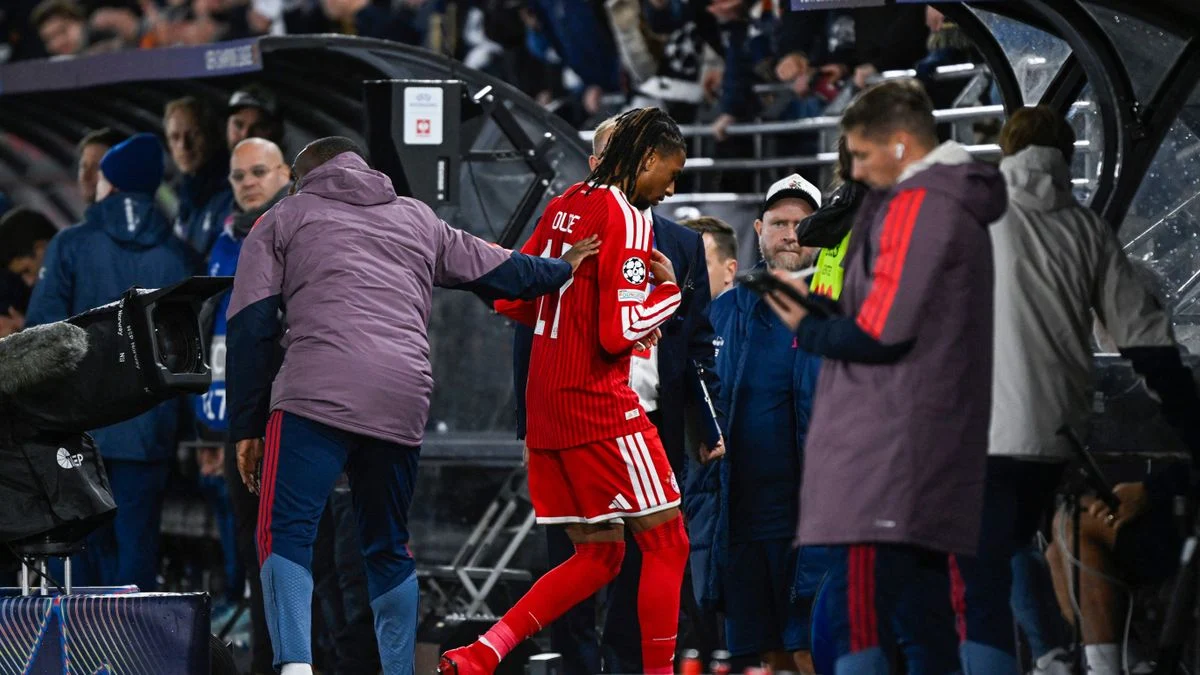
In the high-stakes theater of the UEFA Champions League, the line between competitive fire and self-destructive impulse is often razor-thin. For Bayern Munich’s rising star Michael Olise, a recent encounter against Norwegian side Bodø/Glimt and their cunning playmaker, Aron Dønnum (referred to as Tripic in local contexts), served as a harsh, visceral lesson in the dark arts of modern football. As Bayern navigates a pivotal stretch of their European campaign, the incident has sparked a widespread debate regarding player composure, tactical manipulation, and the psychological warfare that defines the elite level of the sport.
The Catalyst: A Calculated Game of Shadows
The incident, which saw Olise lose his composure under the relentless harassment of his opponent, was not a spontaneous outburst but the culmination of a meticulously orchestrated psychological campaign. According to internal reports and post-match admissions, the provocation began long before the final whistle.
Tripic, acting as the primary agitator, focused his energy on unsettling the French winger. Throughout the match, the Norwegian utilized a series of "small, nasty" tactics—calculated fouls, verbal barbs, and theatrical displays—designed to goad the Bayern star into a reaction. The most notable instance occurred when Tripic attempted to manufacture a red card for Bayern’s Ismael Saibari. After a physical challenge in which Saibari made contact with the Norwegian’s body, Tripic immediately collapsed, clutching his face in a performance that drew a yellow card for the Bayern player.
For the watching audience and even seasoned professionals like Christoph Kramer, the tactics were clear. Kramer noted that Tripic possessed a "nasty" demeanor on the pitch, one that forces opponents to think, "Man, you are really getting on my nerves." Kramer went as far as to express sympathy for Olise, admitting that he, too, had been in situations where the sheer frustration of being targeted by a "prowling" opponent could trigger an impulsive reaction.
Chronology of the Conflict
The tension built in increments throughout the 90 minutes.
- Early Phase: Tripic initiates a series of off-the-ball irritations, ensuring Olise is constantly aware of his presence.
- The Mid-Game Escalation: The attempt to bait the referee into sending off Ismael Saibari served as a turning point. It highlighted that the opponent was willing to cross the threshold of sportsmanship to disrupt Bayern’s rhythm.
- The Breaking Point: Eventually, the persistent pestering succeeded. Olise, reacting to the cumulative pressure, engaged in a manner that caught the referee’s attention, resulting in a disciplinary action that carries significant weight for the upcoming European schedule.
- Post-Match Admission: Following the game, Tripic was remarkably candid with Norwegian broadcaster TV2, admitting that the provocations were a deliberate strategic choice. "He shouldn’t have it too comfortable here," Tripic stated. "I have the feeling of having won this duel."
Tactical Implications: Bayern’s Impending Crisis
The immediate consequence of Olise’s lapse in judgment is a suspension for the upcoming clash against English giants Arsenal. This is no minor footnote; the match represents one of the most significant fixtures in Bayern’s group stage campaign.
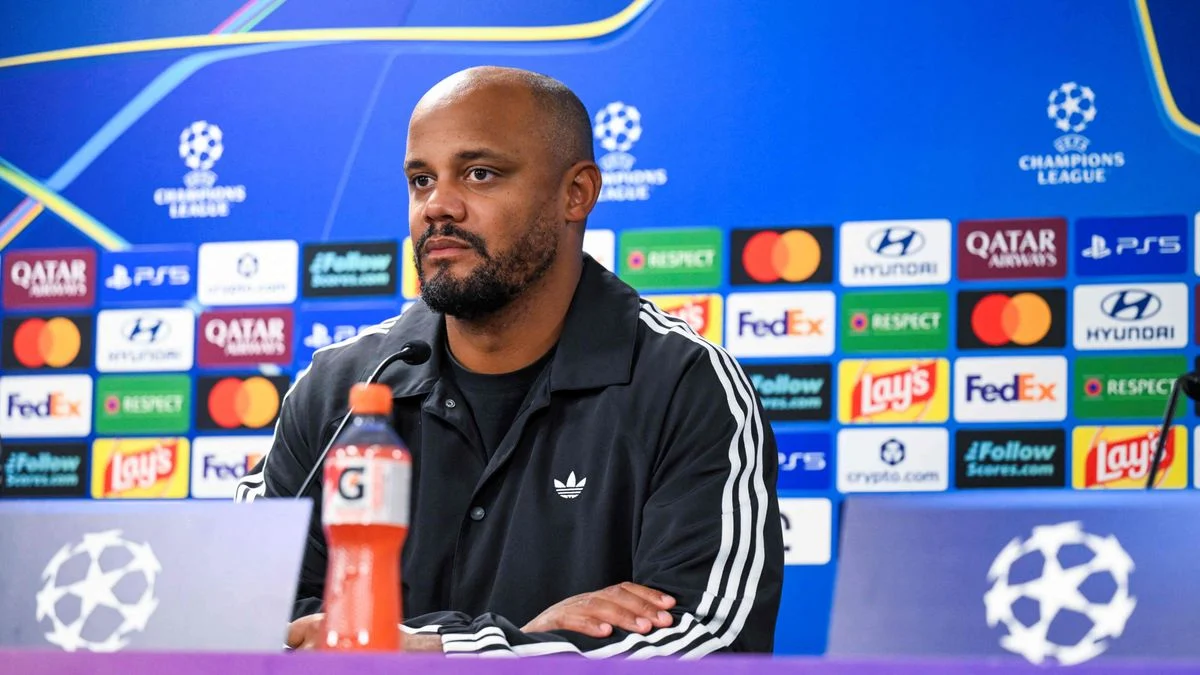
Manager Vincent Kompany, while acknowledging the talent of his young winger, was firm in his assessment of the incident. "I told Michael that the number ten [Tripic] was smarter," Kompany stated in the aftermath. "Hopefully, this belongs to a moment where one says, ‘We learned from this and became stronger.’ Today was not a final, not a semi-final. But these moments are decisive in a season."
The absence of a creative force like Olise against a team as disciplined as Arsenal places an added burden on Harry Kane and the rest of the Bayern attacking unit. The tactical reshuffle required to compensate for his absence could potentially alter the team’s fluidity during a crucial period where points are at a premium.
The Psychological Dimension: Kane’s Leadership
Harry Kane, acting in his capacity as a senior leader and the team’s primary goal-scorer, did not mince words regarding his teammate’s behavior. While sympathetic to the emotional volatility of the game, he emphasized the necessity of accountability.
"Michael is totally crushed, but he has to take responsibility. He has to learn from this," Kane remarked. Recognizing the gravity of the upcoming Champions League fixtures, Kane added, "We have big games ahead of us. He will be devastated that he misses these, but that’s football."
Kane’s commentary reflects a broader philosophy at Bayern: that individual talent is insufficient if it cannot be shielded by mental discipline. The club is positioning this incident as a formative moment, a "baptism of fire" that, if processed correctly, could forge a more resilient version of Olise.
The "Ballon d’Or" Narrative: A David vs. Goliath Mental Map
Perhaps the most fascinating element of the entire saga was Tripic’s post-match reflection. In his interview with TV2, he addressed the power dynamic, noting the irony that a player of Olise’s potential—someone tipped by many to be a future Ballon d’Or winner—could be so thoroughly rattled by a player from the small Norwegian towns of Oftebro and Lyngdal.
"It is great that such a player—who will most likely win the Ballon d’Or at some point—gets annoyed by a boy from Oftebro and Lyngdal," Tripic reflected. This statement underscores a fundamental truth in elite football: on any given night, the pedigree of a club or the market value of a player means nothing if the mental discipline required to stay focused is absent. For Tripic, the success was not in the scoreline alone, but in the successful psychological dismantling of a superior individual talent.
Lessons Learned: Building Resilience for the Future
As the dust settles, the implications for Bayern Munich are twofold. First, they must adapt their tactical approach to ensure that individual players are not isolated and left vulnerable to "dark arts" tactics in future matches. This involves better defensive cover for star creators and a heightened awareness of refereeing patterns during high-intensity games.
Second, the club is embarking on a period of mental coaching for Olise. The goal is to ensure that he recognizes the "Tripics of the world" not as irritants to be fought, but as obstacles to be bypassed through technical excellence and cold, calculated indifference.
The Champions League is a tournament that punishes emotional fragility. Every match, every card, and every suspension serves as a filter, removing those who cannot maintain their composure under fire. For Michael Olise, missing the Arsenal game is a heavy price to pay, but it is one that may ultimately save his career from future similar mistakes.
In the high-stakes environment of professional football, talent is the entry ticket, but discipline is the currency of longevity. Bayern Munich, under the stewardship of Kompany and the mentorship of Kane, is now tasked with ensuring that Olise understands this distinction. The "lesson" mentioned by his manager is not just about the rules of the game; it is about the mastery of the self in the face of calculated provocation. As the team prepares for London, they do so with a reminder that in Europe’s elite competition, the most dangerous opponent is often not the one standing in front of you, but the reaction you carry within yourself.