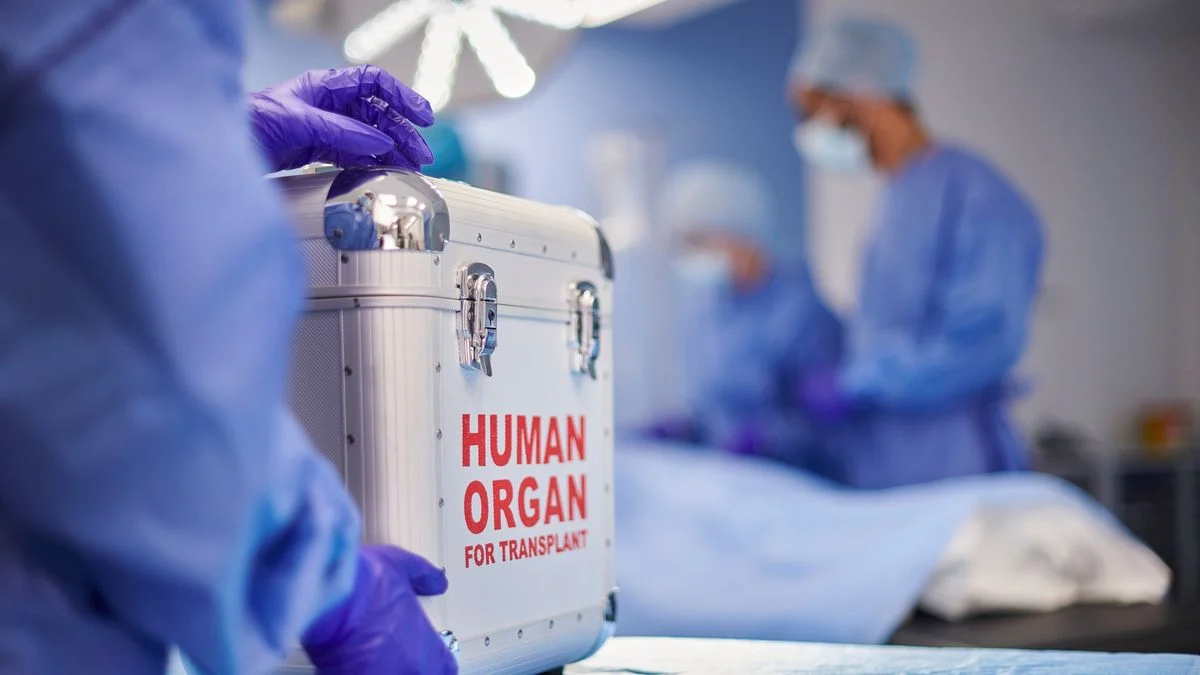
In Germany, the intersection of ethics, medical necessity, and personal liberty has once again taken center stage in the halls of the Bundestag. As thousands of patients remain trapped in the agonizing limbo of waiting lists for life-saving organ transplants, a cross-party coalition of lawmakers is spearheading a third attempt to fundamentally overhaul the country’s organ donation framework. At the heart of this legislative struggle is the "Widerspruchslösung"—or the "opt-out" system—a model that would classify every adult as a potential organ donor unless they explicitly state otherwise.
The Critical Situation: A Medical Crisis of Scarcity
The urgency of the debate is underscored by grim statistics. While 2025 saw the highest number of organ donors since 2012—with 985 individuals donating organs after their death—the supply remains woefully insufficient to meet the demand. According to the German Organ Transplantation Foundation, approximately 8,200 people are currently waiting for a kidney, liver, heart, or lung. For many, this wait is a death sentence; the gap between the number of available organs and the number of patients in need is a perennial crisis that has sparked decades of political deadlock.
Chronology: A History of Legislative Impasse
The current push for the opt-out system is not a new endeavor, but rather the latest chapter in a long-standing political drama.
- 2020: The First Defeat: A major push to introduce the opt-out system was heavily debated in the Bundestag but ultimately failed to secure a parliamentary majority. Opponents argued that organ donation is a deeply personal act of solidarity that cannot be "assumed" by the state.
- 2025: The Interrupted Initiative: A second attempt was gaining momentum, but the abrupt dissolution of the governing coalition and the subsequent call for early elections meant that the proposal never reached the floor for a final vote.
- 2025/2026: The Third Way: Now, a revitalized, cross-party coalition—including heavyweights such as former Health Minister Jens Spahn (CDU) and current Health Minister Karl Lauterbach (SPD)—has brought the proposal back to the table. The draft law is scheduled for its first reading in the Bundestag this Thursday, setting the stage for a final vote anticipated by the end of the year.
The Mechanics of the Opt-Out System
Under the proposed legislation, the fundamental premise of organ donation in Germany would shift from "explicit consent" to "presumed consent." Currently, a person must proactively register their willingness to donate. The new proposal suggests that every citizen would be a donor by default, provided they do not register a formal objection.
Proponents argue that this change is not merely about procedure but about shifting the cultural burden of the decision. By requiring individuals to actively "opt out" if they are uncomfortable with donation, the state would theoretically remove the ambiguity that currently plagues many families in the wake of a relative’s death. The bill also includes provisions for enhanced public awareness campaigns to ensure that citizens are fully informed of their rights and the process for opting out.
Official Responses and Political Polarization
The political landscape is deeply divided, mirroring the broader societal debate over the limits of state intervention in bodily autonomy.
The Proponents: A Moral Imperative
Green Party politician Ricarda Lang, a vocal supporter of the initiative, addressed the issue in a recent interview on ARD’s "Morgenmagazin." Lang emphasized that while the state should not force someone to be a donor against their will, it is reasonable to expect every citizen to engage with the topic at least once in their lifetime.
"Nobody should be forced to be an organ donor against their will," Lang stated. "But it is reasonable for each of us to deal with this topic once in our lives. By doing so, we can save lives." She noted that the current system often places an unfair, traumatic burden on grieving families who are forced to make a decision in their most vulnerable moment, often without knowing the deceased’s true wishes.
The Opponents: The Sanctity of Self-Determination
Conversely, a second, cross-party group of lawmakers remains staunchly opposed to the opt-out model. They advocate for a strategy centered on intensified information campaigns and mandatory prompts to make a decision—without the presumption of consent.
CDU politician Michael Brand is one of the most prominent critics of the opt-out system. During his appearance on the "Morgenmagazin," he warned that the state has no authority to interpret silence as consent. "It is about the integrity of one’s own body, about one’s own life," Brand argued. He cautioned that the opt-out system could generate public distrust and lead to a backlash, potentially causing more people to register a formal "no" than would have otherwise existed under a voluntary system.
The opposition’s counter-proposal aims to require all citizens to declare their position—choosing "Yes," "No," or "Undecided"—shortly after their 18th birthday. Their argument rests on the principle that the right to self-determination must include the right not to decide, without the state imposing a default choice.
Supporting Data and Current Reality
The landscape of organ donation is shifting, albeit slowly, due to digital innovation. As of March 2024, Germany introduced an online "Organ Donation Register," which allows citizens to document their preferences digitally.
Recent data from the Federal Institute for Drugs and Medical Devices provides a snapshot of the current public mood:
- Total Registered: Approximately 633,000 declarations have been recorded in the digital register.
- High Approval: Among those who have registered, 82% have provided unrestricted consent for organ removal.
- Limited Consent: A segment of registrants has opted for partial consent, allowing only specific organs to be donated.
- Explicit Refusal: Only 8.7% of those registered have explicitly chosen to opt out.
These figures suggest that while a significant majority of those who actively engage with the registry are willing to donate, the sheer number of registered individuals remains a fraction of the total German population. This disparity is the primary ammunition for proponents of the opt-out system, who argue that the "silent majority" is willing to donate but simply fails to navigate the current bureaucratic hurdles.
Implications for German Society and Policy
The outcome of the upcoming vote will have profound implications for German public health policy and the nation’s ethical identity.
The Ethical Dilemma
At its core, the debate forces Germany to weigh the collective right to health and life against the individual right to physical integrity. If the opt-out system passes, the state is effectively claiming a stewardship over the body after death. For some, this is a necessary evolution to solve a life-or-death crisis. For others, it represents a dangerous slippery slope where the individual is treated as a resource for the state.
The Administrative Challenge
Regardless of which model prevails, the challenge of implementation is significant. If the opt-out system is adopted, the government will face the monumental task of ensuring that all citizens—including those with language barriers, the elderly, and those living in remote areas—are aware of their right to opt out. A failure to communicate this clearly could lead to severe social friction and legal challenges regarding informed consent.
The Path Forward
As the Bundestag prepares for the final vote, the political climate remains volatile. With 254 MPs currently backing the opt-out initiative and 58 supporting the counter-proposal, the outcome is far from certain. The remaining members of the 630-seat parliament will likely be swayed by the intensity of the public debate over the coming months.
The final decision, expected at the end of the year, will likely define the legacy of the current legislative period. Whether Germany moves toward a system of presumed altruism or doubles down on the importance of active, documented consent, the fundamental goal remains the same: to find a path that honors the complexity of the human experience while addressing the desperate needs of those whose survival depends on the generosity of others.
As the debate reaches its zenith, the question is no longer just about medicine or law; it is about the social contract. How much of ourselves do we owe to the community, and where does the state’s reach end? For the 8,200 people on the waiting list, the answer cannot come soon enough.