As global temperatures climb, the cryosphere—the frozen water part of the Earth’s system—is undergoing a profound and irreversible transformation. While the general phenomenon of glacier retreat is well-documented, a groundbreaking new digital tool now provides a granular, terrifying look at the future of individual glaciers. Developed by a team of researchers at ETH Zurich, this interactive map serves as a stark warning: the ice is not just melting; it is disappearing at a rate that threatens global water security and mountain ecosystems.
The Digital Chronicle of Extinction
For decades, glaciology has been a field defined by satellite imagery, field sensors, and complex mathematical models. However, these data points have often remained locked within academic circles. Now, a team led by Lander Van Tricht at the Swiss Federal Institute of Technology (ETH) Zurich has bridged the gap between scientific modeling and public accessibility.
The researchers have launched an interactive world map that allows anyone with an internet connection to zoom in on virtually any glacier on the planet. The level of detail is startling; users can navigate to specific mountain huts, high-altitude hiking trails, and the jagged, thinning edges of ice masses across the globe. By selecting different climate warming scenarios—ranging from a 1.5°C increase to a catastrophic 4°C rise above pre-industrial levels—users can witness the predicted timeline of extinction for over 200,000 individual glaciers.
This tool does not merely present abstract averages; it offers a localized perspective on a global crisis, transforming the "climate change" narrative from a distant, invisible threat into a tangible, visual reality.
A Chronology of Retreat: The Fate of Germany’s Ice
The severity of the situation is perhaps most poignantly illustrated by the fate of Germany’s remaining glaciers. Germany currently hosts four distinct glaciers: the Southern Schneeferner, the Höllentalferner, the Blaueis, and the Watzmanngletscher.
According to the new data, all four are colored in shades of red or orange, signaling that their existence is nearing a definitive end. The Höllentalferner, located on the slopes of the Zugspitze, serves as a grim case study. Under a "best-case" scenario of 1.5°C global warming, the glacier is projected to disappear within the next 22 years. Should temperatures follow the current trajectory—a more realistic 2.7°C increase—the glacier is expected to vanish in just 18 years.
This chronology is not a speculative "what if"; it is the result of rigorous modeling that accounts for mass balance, surface area loss, and the compounding effects of increased solar absorption as dark, rocky terrain is exposed beneath the retreating ice.
Supporting Data: The Alpen and Global Projections
The situation in the Alps is emblematic of a broader, systemic collapse. The data provided by the ETH Zurich team presents a sobering outlook for one of the world’s most studied mountain ranges:
- At 1.5°C of warming: The Alps will retain approximately 12% of their current glacial mass by the year 2100.
- At 2.0°C of warming: That figure drops to roughly 8%.
- At 4.0°C of warming: The Alps are projected to be almost entirely free of glaciers by the end of the century.
This trend is not confined to the temperate zones of Europe. The map illustrates that even the massive ice fields of Greenland and the Antarctic Peninsula are subject to the same atmospheric physics. While the sheer volume of ice in the polar regions provides a different buffer than the smaller mountain glaciers, the trajectory remains consistent. The "tipping points" being reached in smaller mountain ranges are merely precursors to the larger, more catastrophic losses expected in the polar regions, which have direct consequences for global sea-level rise.
The Scientific Consensus: Drivers of Decay
The primary driver of this rapid retreat is the anthropogenic increase in greenhouse gas emissions. Glaciers are essentially frozen reservoirs that exist in a delicate state of equilibrium; they accumulate mass through snowfall in the winter and lose it through melt in the summer.
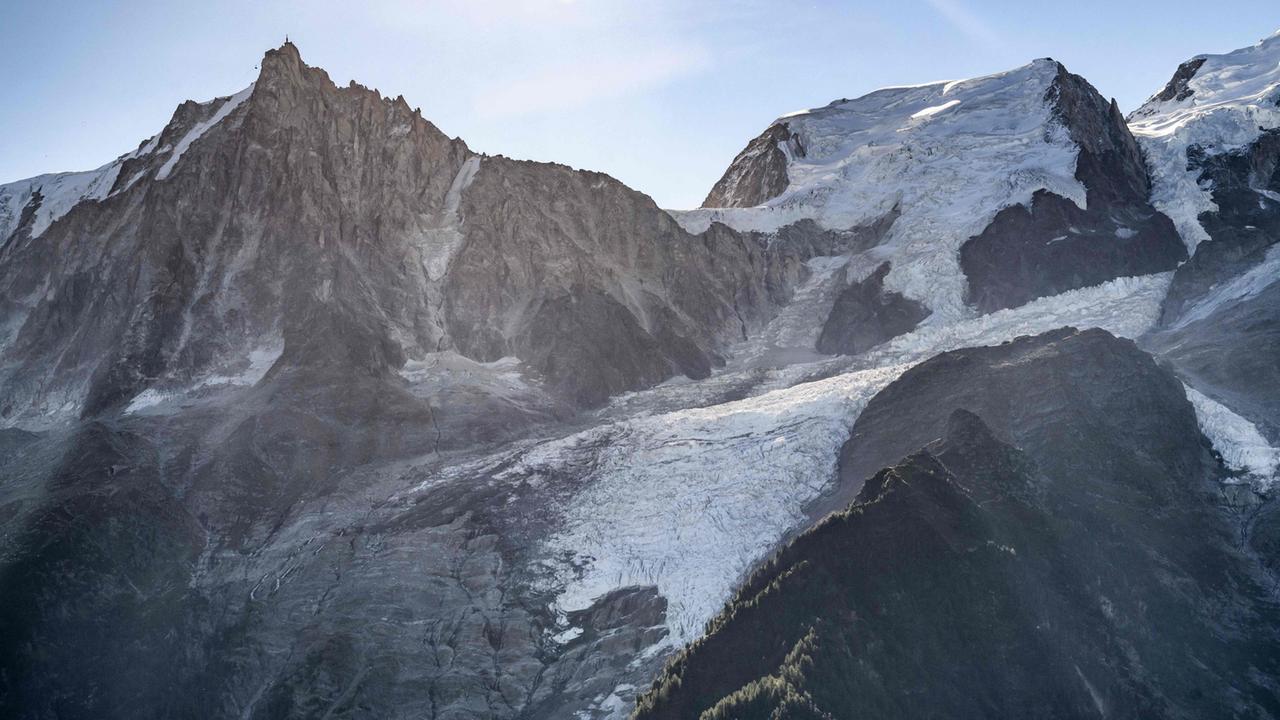
When global temperatures rise, the summer melt period extends, and the altitude at which snow turns to rain—the "snowline"—climbs higher. This means glaciers are no longer receiving enough replenishment to offset their annual loss. The ETH Zurich study underscores that the velocity of this process is directly tethered to human activity. Every fraction of a degree in temperature mitigation equates to decades of extra life for these ice bodies.
Implications: The Loss of the "Water Towers"
Beyond the aesthetic and cultural loss of these majestic landscapes, the disappearance of glaciers presents a severe socioeconomic and ecological crisis. Lander Van Tricht describes glaciers as the "world’s natural water towers."
1. Water Security and Agriculture
In many parts of the world, including the Andes, the Himalayas, and parts of the Alps, glacier melt is a critical source of freshwater during the dry summer months. As these glaciers shrink, the seasonal water cycle is disrupted. Initially, this may cause increased runoff and flooding, but as the glaciers continue to thin, the long-term result is a significant reduction in water availability for agriculture, livestock, and drinking water.
2. Energy Production
Many nations, particularly in Europe and South America, rely heavily on hydropower. Glaciers act as natural, high-altitude regulators for these systems, ensuring a steady flow of water to turbines even during prolonged heatwaves. The loss of this regulatory mechanism forces energy providers to rely more heavily on fossil fuels or nuclear energy, creating a dangerous feedback loop.
3. Ecosystem Collapse
Mountain ecosystems are highly sensitive to temperature fluctuations. Glaciers create microclimates that support unique alpine flora and fauna. As the ice retreats, these habitats are replaced by barren rock, leading to a loss of biodiversity. Furthermore, the stabilization of mountain slopes, which often rely on permafrost and ice-anchored debris, is compromised, leading to an increase in landslides and rockfalls.
Official Responses and the Need for Action
The release of this interactive map has garnered attention from environmental policy makers and climate scientists alike. The consensus is clear: while the glaciers are indeed dying, the "speed of death" is a variable that remains within human control.
Environmental organizations and researchers are using these findings to lobby for more aggressive emission reduction targets. The argument is no longer just about preventing future warming; it is about "glacier preservation." Even if we cannot save all of them, the difference between a 1.5°C and a 3°C world is the difference between a planet with some remnants of its glacial heritage and one that is fundamentally stripped of its cryosphere.
Conclusion: A Mirror to Our Future
The interactive map from ETH Zurich is more than a technical achievement; it is a mirror. By zooming in on a specific glacier, we are effectively zooming in on our own choices. The red and orange markers on the map are not just data points—they are countdown clocks.
As we look toward the end of the century, the evidence presented by Van Tricht and his colleagues is incontrovertible. We are witnessing the final chapter of a geological era defined by the presence of these ice giants. While the loss of many glaciers may now be inevitable due to the carbon already trapped in our atmosphere, the preservation of the remaining ice depends entirely on our ability to decarbonize our energy systems. The glaciers are telling us their story; the question is whether we have the resolve to change the ending.