By Editorial Staff
Published: September 23, 2026
Introduction: A Language of Connection
For millions of people worldwide, communication is taken for granted as an auditory experience. However, for the Deaf and hard-of-hearing community, language is a visceral, visual dance of hands, facial expressions, and spatial grammar. As the world marks the International Day of Sign Languages, the focus shifts from mere awareness to the active pursuit of societal integration. From the high-pressure environment of live television newsrooms to the emotive performances of inclusive choirs, sign language is increasingly recognized not just as a tool for translation, but as a bridge to true social participation.
The High-Stakes World of Live Translation
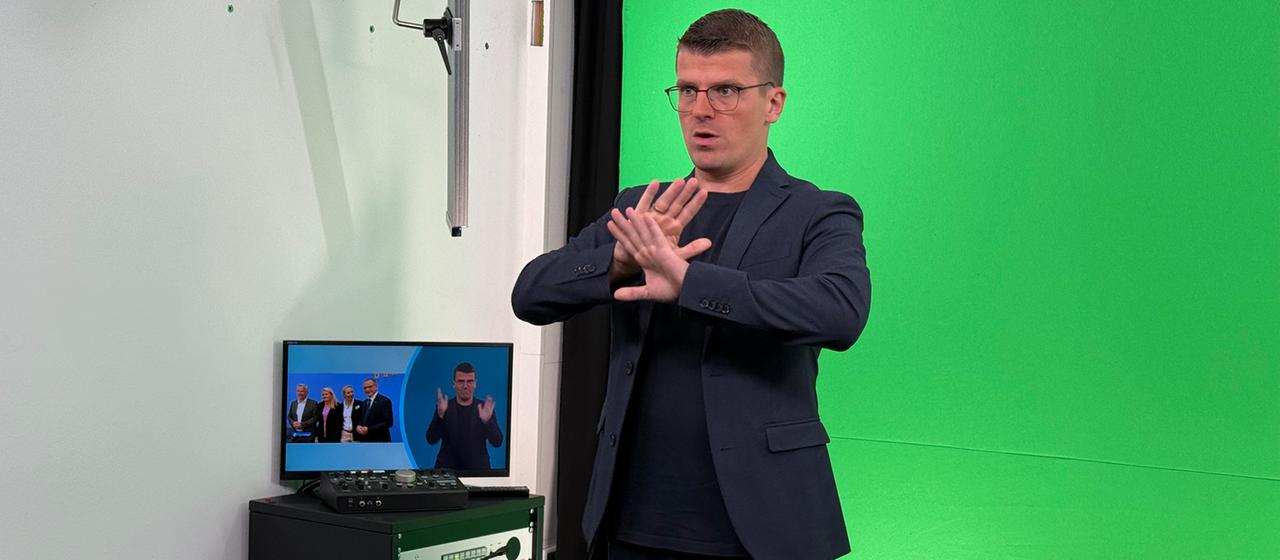
In a bustling television studio in Cologne, minutes before the 8:00 PM Tagesschau goes live, the atmosphere is electric. Marcel Zamojski, a professional sign language interpreter, stands under the bright studio lights. Unlike the news anchors, Zamojski does not have a teleprompter or a pre-prepared script. He relies entirely on his reflexes, linguistic expertise, and the immediate audio feed from the news presenters.
"I know the broad themes of the day, and that’s it," Zamojski explains. "The rest is pure improvisation based on what I hear in real-time."
This is the reality for interpreters working for the channel Phoenix, which provides simultaneous sign language translation for Germany’s most-watched news program. Zamojski, who grew up as a native user of sign language because his parents are deaf, notes that the complexity of the job is immense. Tagesschau requires navigating dense political terminology, rapidly changing global place names, and complex bureaucratic jargon.
Chronology of an Evolution: From Marginalization to Media Presence
The journey of sign language into the mainstream media has been long and arduous. For decades, sign language was viewed by many as a "supplement" rather than a fully developed language. It wasn’t until the late 20th century that the linguistic community widely acknowledged that sign languages possess their own independent grammars, syntactical structures, and cultural histories.
- The Early Years: Sign language was often relegated to short, low-budget segments or educational programming for children.
- The Digital Turning Point: With the advent of social media and high-speed internet, the Deaf community began to self-organize, creating standardized signs for new technology, viral phenomena, and modern political figures.
- The Current Era: Broadcasters have moved from "optional accessibility" to "mandatory inclusion," with legal frameworks in many countries now requiring sign language interpretation for public service broadcasting.
The Linguistic Complexity: A Grammar of Space
One of the most profound misconceptions about sign language is that it is simply a "manual version" of spoken language. In reality, it is a three-dimensional language.
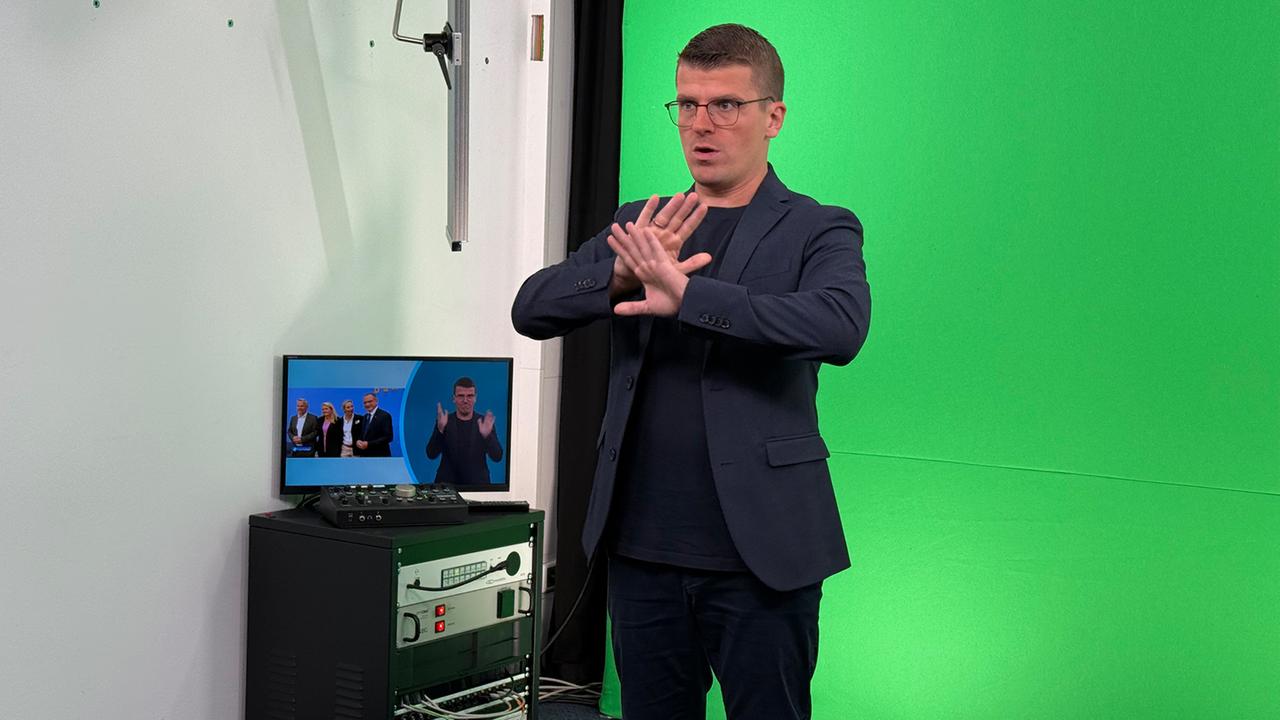
"The grammar is entirely different," Zamojski points out. "In German, the verb might come in one position, but in sign language, the verb often anchors the sentence at the end. This means I have to listen to the entire phrase, process the meaning, and then construct the sign sequence accordingly."
This process requires high-level cognitive multitasking. The interpreter must manage the "Fingeralphabet" (manual alphabet) for proper nouns while simultaneously utilizing facial cues to convey tone, urgency, or sarcasm—elements that are conveyed through vocal inflection in spoken language. As the world evolves, so does the language; when new public figures emerge, such as a new national football coach, the interpreter community often collaborates in real-time to decide on a "name sign" that is both respectful and easily recognizable for the community.
Supporting Data: The Scope of Need
The necessity for these services is underscored by demographic data. According to the German Deaf Association (Deutscher Gehörlosen-Bund), there are approximately 80,000 deaf individuals in Germany. However, this figure only scratches the surface. When including the estimated 140,000 people who suffer from severe hearing impairments, the cohort of citizens who rely on, or significantly benefit from, sign language interpretation reaches a substantial portion of the population.
When these individuals are left without access to sign language, they are effectively excluded from the democratic process, emergency information, and cultural participation. The data suggests that where accessibility is high, the "participation gap"—the divide between disabled and non-disabled citizens—shrinks significantly.
Cultural Expression: The "TonZeichen" Phenomenon
Inclusion is not just about news and information; it is about art. In Essen, the choir "TonZeichen" is redefining what it means to participate in musical culture. Christiane Terveen, a singer who has been hard-of-hearing since birth, describes the frustration of being told that music was "not for her."
"The stigma is always that because you cannot hear the music perfectly, you cannot enjoy it," Terveen says. "But that is a narrow view of what music is."
At a recent inclusive church service in Essen, the choir demonstrated their unique approach: they sang while simultaneously performing the lyrics in sign language. The impact on the audience was palpable. Martina Meurer, chair of the Evangelical Deaf Association in Essen, notes that these events provide a vital sense of community. "For deaf people, these spaces are not just about church or music; they are about belonging to a group where they don’t have to struggle to be understood."
Implications: Overcoming the "Isolation in the Crowd"
The implications of the current push for inclusion extend far beyond the stage or the television screen. The core issue remains social isolation. Terveen highlights a paradox of modern life: "It is often easier to endure loneliness within your own four walls than to experience the feeling of being alone while surrounded by a group of people who are communicating in a way you cannot access."
This "isolation in the crowd" is the primary barrier to true societal integration. When a public event—a lecture, a concert, or a political debate—lacks an interpreter, the message is clear: you are not the intended audience.
Official Responses and Future Outlook
Governmental bodies and public institutions are under increasing pressure to standardize sign language services. The push for "Universal Design" in public policy is gaining momentum. The goal is to move beyond the current model, where sign language is an "add-on," to a model where it is integrated into the architecture of public life.
Experts suggest that the future lies in:
- Technological Integration: Utilizing AI and machine learning to assist in real-time sign language captioning, though experts warn this cannot replace the nuance of human interpreters.
- Educational Reform: Incorporating sign language into national school curriculums so that the hearing population grows up with a baseline understanding of the language.
- Mandatory Accessibility: Strengthening legislation to ensure that every public institution, from courts to hospitals, provides 24/7 access to qualified interpreters.
Conclusion: A Shared Language
As we look toward the future, the work of individuals like Marcel Zamojski and groups like "TonZeichen" serves as a reminder that language is the ultimate tool for equality. By breaking the silence and building these visual bridges, we create a society that is not only more accessible but more deeply connected. Inclusion is not an act of charity; it is an act of justice. As the community continues to advocate for its rights, the message remains clear: a language that connects everyone is a language worth fighting for.