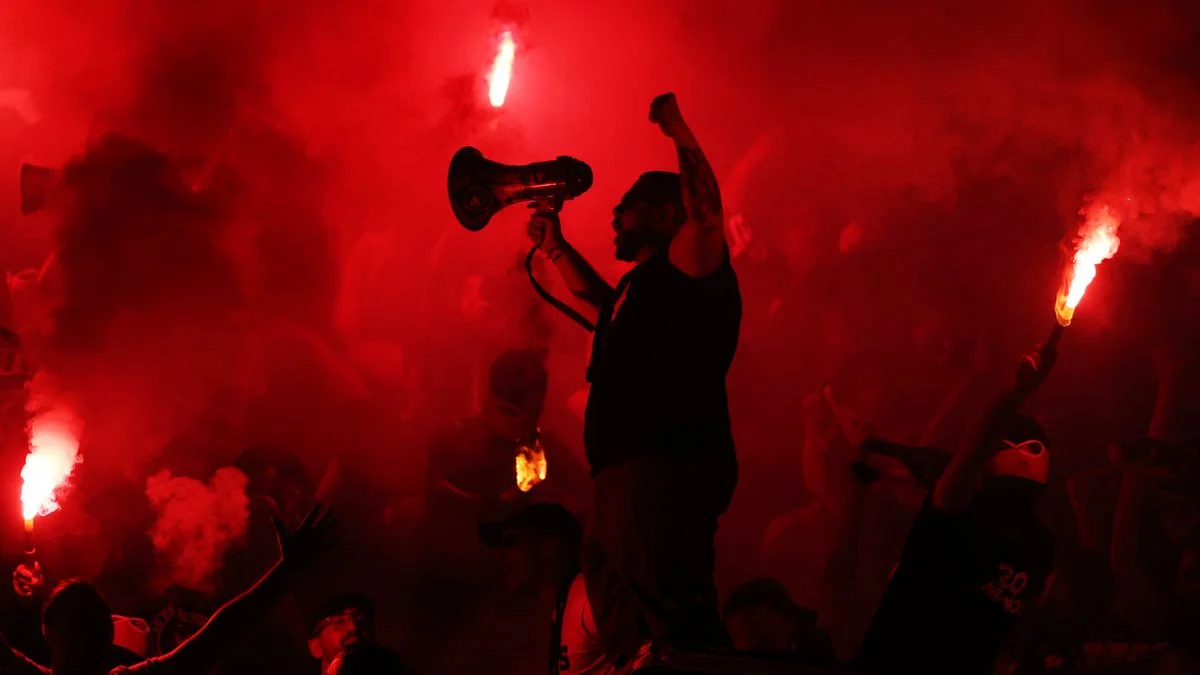
BERLIN — A wave of student-led protests swept across Germany this week, marking a significant escalation in the ongoing national debate over the future of the Bundeswehr and the role of youth in national defense. On September 25, 2026, over 45,000 students in approximately 100 cities took to the streets to voice their opposition to the government’s new military service regulations and the looming specter of a full-scale reinstatement of mandatory conscription.
The protests, organized under the banner of the "School Strike Against Conscription" movement, represent a growing rift between the German government’s strategic defense ambitions and the sentiments of the generation being asked to fulfill them. While the government maintains that the current system is based on voluntary participation, critics argue that the mandatory registration and assessment processes are merely a "backdoor" to compulsory military service.
The Core of the Conflict: The 2026 Wehrdienst Act
To understand the scale of the current unrest, one must examine the legislative framework that triggered it. In January 2026, the German Bundestag implemented the new "Wehrdienstgesetz" (Military Service Act). This legislation was born from a pressing geopolitical necessity: the need to bolster the Bundeswehr’s personnel numbers in an increasingly unstable security environment.
The act mandates that all young men starting from the 2008 birth cohort must participate in a standardized assessment process—a modern version of the historic Musterung. While the government emphasizes that the actual service remains voluntary for now, the law contains a "fail-safe" mechanism: should the recruitment of volunteers fall below specific targets, the Bundestag reserves the right to trigger a full return to mandatory conscription.
For many students, this represents a fundamental shift in their civic obligations. "The government is testing the waters," said Bela Breitner, a spokesperson for the Schulstreik gegen Wehrpflicht initiative. "The high volume of negative feedback on the registration questionnaires proves that our generation does not want to be forced into a military structure. They are trying to normalize the idea of service before they legally mandate it."
A Day of Mobilization: Chronology of the Protests
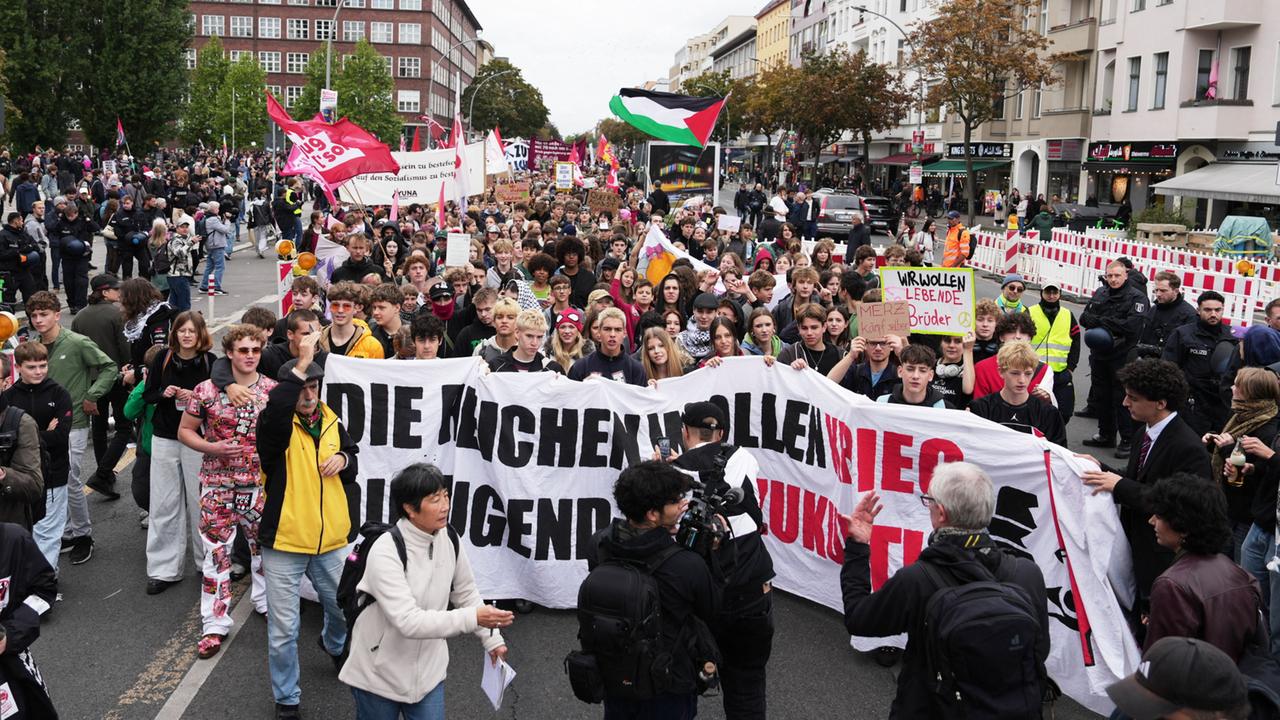
The protests on September 25 were marked by high organization and widespread geographical distribution. By mid-morning, major urban centers across Germany saw students walking out of classrooms to gather in public squares, carrying placards and chanting slogans against the militarization of their education.
Berlin: The Epicenter
The largest demonstration took place in the capital, specifically in the Wedding district. According to local police reports, roughly 2,400 students gathered to march. The atmosphere was described as determined but peaceful, with speakers highlighting the contrast between the government’s rhetoric of "defensive readiness" and the reality of the draft.
Regional Snapshots
The movement proved that it was not merely a metropolitan phenomenon. Police data from various regions confirmed the following attendance figures:
- Munich: 700 protesters.
- Nuremberg: 400 protesters.
- Stuttgart: 200 protesters.
- Frankfurt: 180 protesters.
- Hamburg: Several hundred gathered near the central railway station, echoing the sentiments seen in the south.
The sheer reach of these protests—spanning over 100 cities—suggests that the anxiety regarding military service is deeply embedded in the national youth consciousness, transcending regional differences.
Supporting Data: The Numbers Behind the Policy
The government’s push for recruitment is rooted in a clear, stated goal: to increase the number of active-duty soldiers to between 255,000 and 270,000 by the year 2035.
According to data released by the Federal Ministry of Defense in August 2026, the Bundeswehr has made significant progress, reaching its immediate personnel goal of 186,000 soldiers as of July 31. This figure represents the highest recruitment level in 13 years, a statistic the government cites as proof that the "voluntary" approach is working.
However, the "School Strike" movement disputes the interpretation of this data. They argue that if the target was met through voluntary means, the maintenance of the mandatory assessment system is redundant and serves only to pressure individuals. The conflict, therefore, is as much about the philosophy of the draft as it is about the necessity of the soldier count.
Official Responses and Political Implications
The federal government remains steadfast in its position. The Ministry of Defense maintains that in an era of renewed European security threats, Germany has a sovereign duty to ensure its military readiness. Officials argue that the mandatory registration process is a neutral, administrative step that provides young people with information about the Bundeswehr as an employer—an employer that offers training, education, and career security.
Yet, the political cost of this policy is becoming clearer. The student movement is successfully framing the debate around "bodily autonomy" and the right to choose one’s path after secondary education.
The Legislative "Trigger"
The most contentious element remains the potential for the Bundestag to act unilaterally if recruitment targets are missed. This "sword of Damocles" effect is what fuels the protest movement. If the military fails to hit its internal benchmarks, the legal framework is already in place to pivot to mandatory service without the need for a lengthy new legislative process. This lack of a "hard stop" against conscription is the primary driver of public skepticism.
The Path Forward: Implications for German Society
The student protests of September 2026 highlight a profound generational divide. Older generations, who may remember the period before the suspension of conscription in 2011, often view military service as a stabilizing force and a civic duty. Conversely, the youth of 2026, raised in a globalized, post-conscription environment, view mandatory military participation as an antiquated intrusion into their personal lives and academic aspirations.
Potential Future Scenarios
- De-escalation: The government could amend the legislation to remove the "trigger" clause for mandatory conscription, potentially placating the protesters while maintaining the voluntary recruitment system.
- Increased Polarization: If the government remains firm, the protest movement is likely to radicalize or expand, potentially finding allies in teacher unions and parental organizations, leading to nationwide school strikes that disrupt the education system.
- The "Soft Draft": Should the government continue the mandatory assessments, they risk creating a "soft draft"—a system where the pressure to sign up becomes so socially and administratively heavy that it effectively functions as conscription in all but name.
A Question of National Identity
Ultimately, this crisis is about more than just numbers on a balance sheet. It is a fundamental question about the relationship between the German state and its citizens. As the country navigates the security challenges of the mid-2020s, it must decide whether it can achieve its defense goals through incentives and voluntary service, or if the cost of its security will be the loss of the consensus that has defined German civil-military relations for over a decade.
As the "School Strike Against Conscription" movement continues to organize, the government faces a daunting challenge: how to build an army large enough to deter external threats without alienating the very population it seeks to defend. The events of September 25 have sent a clear message that the youth of Germany are not ready to be drafted—and they are willing to make their voices heard until the threat of forced service is removed entirely.