By Global News Desk
October 3, 2026
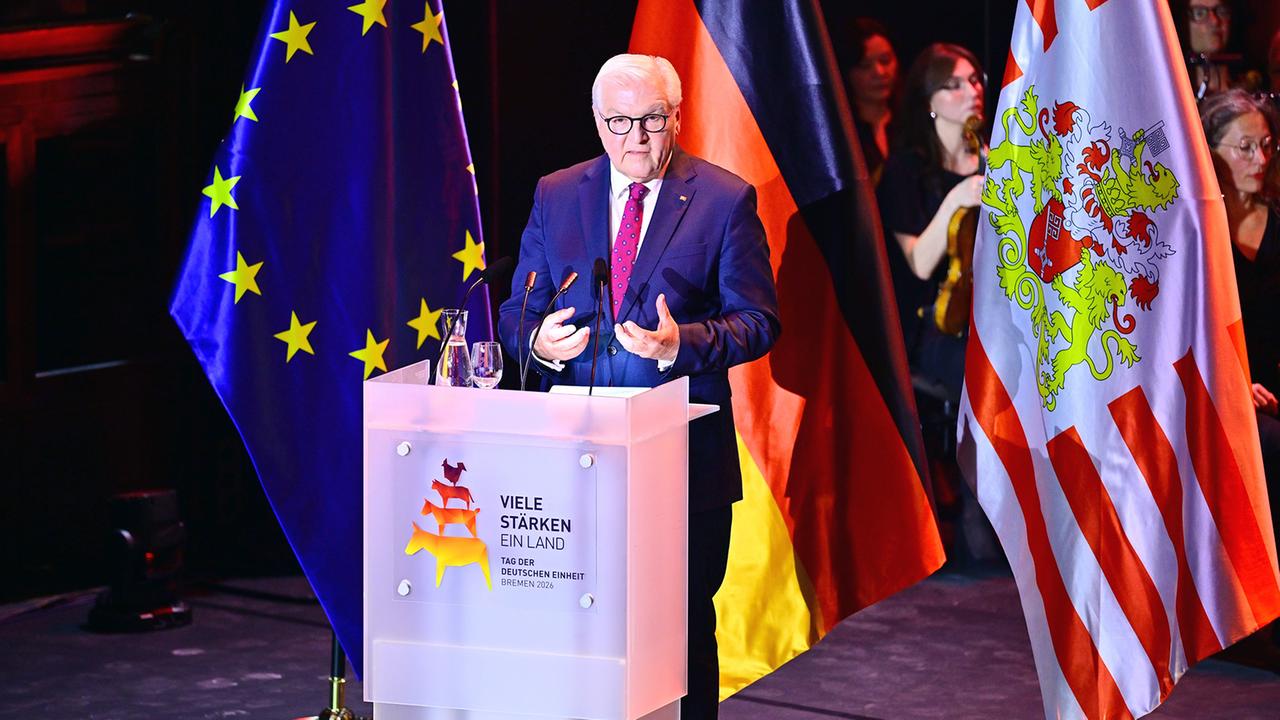
In a poignant and sobering address marking the 36th anniversary of German reunification, President Frank-Walter Steinmeier utilized the central state ceremony to issue a stark warning regarding the fragility of the nation’s democratic foundations. Speaking before an audience of political leaders and citizens, Steinmeier, who is set to depart his office in March 2027, framed the current state of Germany as a pivotal moment of "self-assertion" for the republic.
His address did not merely celebrate the historical triumph of 1990; it served as a diagnostic assessment of a nation struggling with deep-seated polarization, the rise of political extremism, and a growing disconnect between the citizenry and the political establishment.
Main Facts: A Call to Defend the Republic
The central thrust of Steinmeier’s final Day of Unity speech was the defense of the constitutional order. The President, who has served as a central figure in German politics for nearly four decades, characterized the rise of extremist political rhetoric as a direct threat to national cohesion.
"The intolerable political demagoguery of extremist forces, which live out a desire for destruction and mock and threaten other people, endangers not only freedom and democracy today. It endangers our unity," Steinmeier declared.
The President highlighted a troubling statistic: a significant portion of the electorate—roughly one-quarter of the population—now expresses clear skepticism toward the fundamental political structure of the Federal Republic. This, he argued, is not a minor grievance but a fundamental drift away from the democratic consensus that has governed Germany since the collapse of the Berlin Wall.
Chronology of the German Narrative
To understand the gravity of the current moment, Steinmeier drew a direct line from the "peaceful revolution" of 1989 to the challenges of 2026.
- October 3, 1990: The formal reunification of Germany, a day representing the culmination of the courage of citizens who stood up against the SED dictatorship.
- The Post-Unification Era: A period of unprecedented investment, reconstruction, and integration.
- The Modern Crisis (2020–2026): A period defined by the rise of social media-driven polarization, the resurgence of antisemitic sentiment, and a breakdown in civil discourse.
- March 2027: The scheduled end of President Steinmeier’s tenure, marking the close of a career that spanned the reunification process, his time as Foreign Minister, and his two terms as Head of State.
Steinmeier insisted that the "lucky moment" of 1990 must never be forgotten. "Forgetfulness would be betrayal," he warned, urging the public to remember the cost of the freedom they currently enjoy.
Supporting Data: The Erosion of Trust
The President’s address was punctuated by a blunt call for self-reflection among the political class. He acknowledged that the rise of populism is not a phenomenon occurring in a vacuum; it is the result of long-standing failures.
"We should ask ourselves, without sparing any feelings, what the federal and state governments have failed to do over the past three and a half decades that has caused so many people to turn away and extremist movements to gain such resonance," he remarked.
Steinmeier pointed to systemic issues that have fueled this disillusionment:
- Economic Disparities: The persistent, albeit narrowing, economic gap between the former East and West, and the failure to provide adequate employment security for all regions.
- Representation: The historic underrepresentation of East Germans in high-ranking administrative and political positions, which has created a perception of a "second-class" citizenship.
- The Digital Echo Chamber: The impact of social media in amplifying "absurd idiocies" and the blurring of lines between human discourse and machine-generated misinformation.
Official Responses and Political Implications
Steinmeier’s speech functioned as both a resignation of sorts—a final reflection on his legacy—and a mandate for his successor. He noted that the office of the President is becoming increasingly "strenuous and demanding."
The President was unequivocal in his rejection of any "bridge" between democratic norms and extremist ideology. He drew a hard line: "There must be no bridge between the law and contempt for the law, between the effort for truth and the readiness to lie, between argument and demagoguery."
His remarks on antisemitism were particularly forceful. He expressed horror that in modern Germany, Jewish citizens are again forced to fear for their safety, noting that he had previously believed the lessons of the Holocaust were permanently ingrained in the national psyche—a belief he now recognizes as naive.
The Path Forward: "Have Courage for Renewal"
Despite the grim assessment, the core message of the speech was one of resilience. Steinmeier called for a culture of "reform and renewal," arguing that the current crisis is a test that the country can pass if it is willing to abandon "entrenched routines."
"We cannot gain new growth if everything remains as it is," he stated. He urged the current government to maintain its course of reform despite the "wind blowing in our faces." For Steinmeier, the future of Germany depends on the citizenry’s ability to take its destiny into its own hands.
Implications for the Future of the German State
The implications of Steinmeier’s final Unity Day speech are profound. By framing the current era as a struggle for the "self-assertion of democracy," he is setting the agenda for the next administration.
The speech highlights three critical shifts in the German political landscape:
- The End of Institutional Complacency: The days of assuming that the German democratic model is self-sustaining are over. Future leaders will be expected to actively defend the state against internal erosion.
- The Necessity of Regional Reconciliation: The "East-West" divide, which many thought would disappear with time, remains a potent political force. Addressing the "dignity" and "representation" of the East is now a prerequisite for national stability.
- The Normalization of Crisis: Steinmeier has effectively prepared the public for a future defined by perpetual reform. He suggests that the "easy years" of the post-Cold War era are behind Germany, and that the next decade will be defined by the hard work of maintaining social cohesion in an increasingly fractured digital and political landscape.
As Steinmeier prepares to leave the Bellevue Palace in March, his final message to the nation is one of caution mixed with an insistent call for courage. He leaves behind a Germany that is wealthier and more connected than the one that reunified in 1990, but one that is also more uncertain about its place in the world and the stability of its own internal peace.
The task of the next President will not be to manage the status quo, but to steer a nation that is, in Steinmeier’s words, "deeply unsettled." The success of that endeavor will determine whether the unity celebrated on October 3rd remains a cornerstone of the European project or becomes a memory of a time when the republic was, as the President feared, "newly contested."