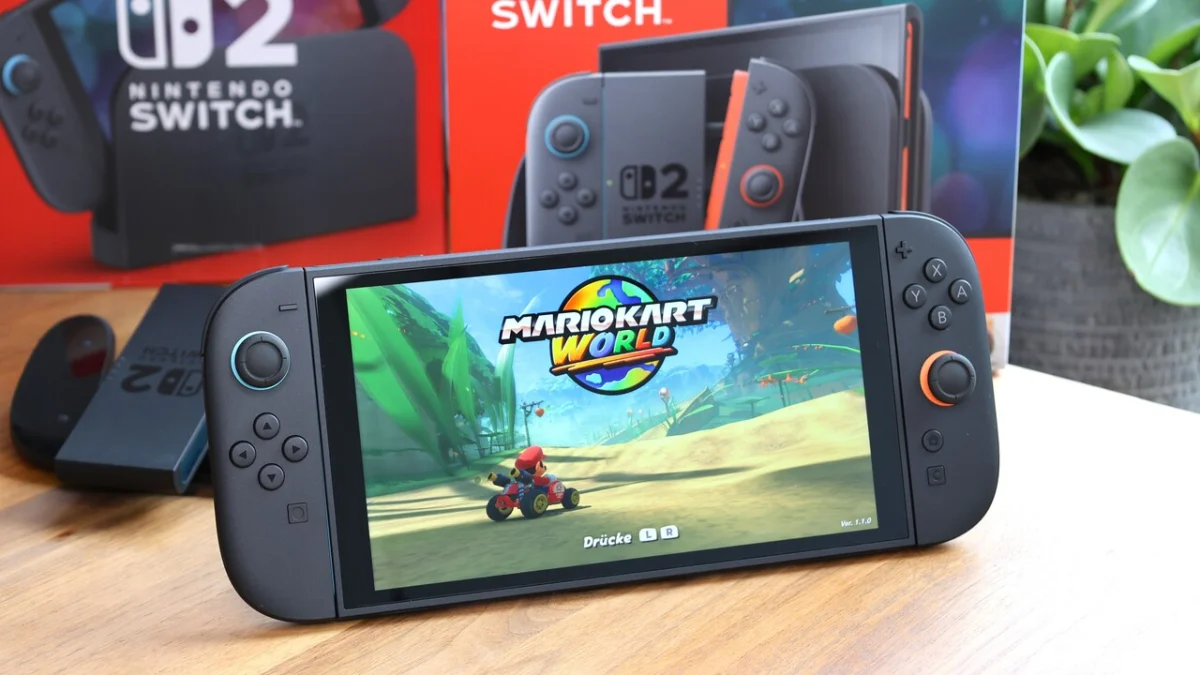
In an industry increasingly obsessed with the efficiencies of cloud-based services and digital-only ecosystems, Nintendo stands as a curious, deliberate outlier. While competitors move aggressively toward a future defined by software-as-a-service (SaaS) and digital-only hardware revisions, Nintendo has reaffirmed its commitment to the tangible. According to Bill van Zyll, Vice President and General Manager for Latin America, the company has no current plans to abandon physical media for the Switch 2. This stance offers a glimmer of hope for collectors, retailers, and players who value the autonomy that comes with a physical cartridge.
The Core Statement: Nintendo’s "Agnostic" Approach
The clarity of Nintendo’s position was brought to the forefront during a recent interview with Coelho. Addressing the growing industry-wide speculation regarding the sunsetting of physical media, van Zyll emphasized that Nintendo’s philosophy is rooted in consumer preference rather than internal mandates to pivot toward digital exclusivity.
"Historically, we’ve been very agnostic, right?" van Zyll stated. "We go off what the consumer prefers, and take that into account very heavily. We also have a platform that was just launched. We’re barely just over a year into the Switch 2. It’s got both digital and physical, that capability. There’s no plans to ditch physical. We know how much the fans like it as well, so our position has been to be agnostic."
This statement serves as a significant anchor for the current market. By identifying as "agnostic," Nintendo is positioning itself as a platform holder that facilitates the customer’s choice rather than dictating the delivery method. For the Switch 2, this means that the hybrid nature of the console—which supports both digital downloads and physical game cards—remains a cornerstone of the user experience.
A Comparative Landscape: The Divergence from Sony
To understand the significance of Nintendo’s position, one must look at the widening chasm between it and its primary competitor, Sony Interactive Entertainment. The gaming landscape is currently experiencing a tectonic shift, with major players betting heavily on the cost-saving potential of digital distribution.
In a move that sent shockwaves through the community, Sony has officially confirmed that it will cease the production of physical game discs for its consoles starting in January 2028. This decision represents a strategic abandonment of the secondary market and the traditional "ownership" model that defined gaming for decades. The fallout from this announcement has been substantial, with both consumers and industry veterans voicing concerns.
Even internal figures have expressed reservations. Shawn Layden, the former head of PlayStation Worldwide Studios, has been a vocal critic of this trend. Layden has publicly warned that the total abandonment of physical media is a potential mistake, noting the loss of cultural preservation and the inherent risks of a digital-only ecosystem where access is entirely dependent on the platform holder’s servers. While Sony moves to streamline its business model, Nintendo is clearly observing the backlash and opting to maintain a dual-track strategy as long as the market demands it.
The Evolution of the "Physical" Format: Cartridges vs. Key Cards
While Nintendo remains committed to physical media, it is important to acknowledge that the definition of "physical" is evolving. The Switch 2 ecosystem currently utilizes two distinct formats: the traditional game cartridge and the "Game Key Card."
The traditional cartridge remains the gold standard for collectors—a self-contained unit that houses the game data, allowing for offline play and ease of resale. However, the rise of the Key Card has complicated the landscape. In this format, the physical card functions more like a digital voucher; inserting the card into the console triggers a download of the game data from the internet.
This hybrid format has drawn criticism from the gaming community, particularly among collectors who view it as a "half-measure" that fails to provide the true benefits of a physical copy (i.e., data independence and preservation). While Nintendo continues to support traditional cartridges, the existence of Key Cards indicates that the company is experimenting with how to bridge the gap between physical distribution and modern download sizes. For now, however, players retain the agency to choose their preferred method, a luxury that is rapidly disappearing elsewhere in the industry.
Chronology: The Slow Fade of the Disc
The industry’s transition away from physical media has not been an overnight occurrence. It has been a decade-long drift driven by bandwidth improvements and the profit margins associated with digital storefronts.
- 2013–2017: The rise of digital storefronts (PlayStation Store, Xbox Live) begins to supplement retail sales, though physical copies remain the dominant format for major AAA releases.
- 2020: The release of the PlayStation 5 and Xbox Series X/S marks a turning point. Both manufacturers release "Digital Edition" consoles, signaling that a physical-less future is an active design goal.
- 2023–2024: Industry data indicates that digital revenue consistently outpaces physical retail sales across all major markets.
- 2025 (Present): Nintendo confirms the continued support for physical media for the Switch 2, while Sony sets a hard deadline of 2028 for the end of disc production.
This timeline reveals that while the industry is collectively moving toward digital, Nintendo is moving at its own pace. The company recognizes that a significant portion of its demographic—ranging from younger children who rely on giftable physical cards to adult collectors—considers physical media a vital part of the Nintendo identity.
Implications for the Future: Preservation and Ownership
The decision to retain physical media has profound implications for game preservation. In the digital age, the concept of "buying" a game has increasingly become a "licensing" agreement. When a digital store closes or a server is shuttered, access to content can be permanently lost.
By supporting physical cartridges, Nintendo ensures that games remain playable long after the company decides to sunset online services. This is particularly relevant for the Nintendo brand, which has a storied history of back-catalog longevity. If the Switch 2 were to go fully digital, thousands of titles would eventually become "abandonware" once the eShop infrastructure eventually degrades.
Furthermore, the physical market is the primary driver of the pre-owned game economy. Retailers like GameStop and local independent shops rely on the trade-in cycle of physical games to sustain their business models. By maintaining physical support, Nintendo is essentially supporting an entire secondary ecosystem that keeps the hobby accessible and affordable for a wider range of players.
The Financial Realities
Despite the clear benefits to the consumer, the transition to digital is driven by cold, hard financial logic. Digital distribution eliminates the costs of manufacturing, shipping, warehousing, and the "middleman" cut taken by retail giants like Amazon or Walmart.
However, Nintendo’s "agnostic" strategy suggests that the company sees value in physical media that transcends simple unit-cost reduction. Physical boxes act as "billboards" on store shelves, keeping the brand visible to the general public. Additionally, physical sales are often driven by gifts—during holiday seasons, parents are far more likely to purchase a physical game box to wrap than a digital download code. For a company that relies heavily on family-friendly, multi-generational appeal, the physical box is a marketing tool that a digital code cannot replicate.
Conclusion: A Strategy of Measured Persistence
As the industry marches toward a future where "owning" your games may soon become a relic of the past, Nintendo’s stance serves as a reminder of the value of choice. Bill van Zyll’s comments provide a clear directive: Nintendo will continue to support the physical format as long as the demand exists.
While this does not guarantee that physical games will exist on every future Nintendo console, it provides a firm assurance for the current generation. For now, the Switch 2 remains a console for the traditionalist and the digital enthusiast alike. Whether this "agnostic" strategy will survive the inevitable pressure of rising logistics costs and the industry-wide shift toward pure digital profit remains to be seen. But for the millions of players who still love the ritual of popping a cartridge into a console, Nintendo has provided the answer they were hoping for: the physical game is not dead yet.