As the 2026 Nobel Prize season commences, the world turns its eyes once again to Stockholm and Oslo. For over a century, these accolades have stood as the ultimate pinnacle of human achievement. But what is it that sustains the prestige of this 125-year-old institution, and how does the process of crowning the world’s greatest minds actually work?
The Genesis of a Global Legacy
On November 27, 1895, Alfred Nobel—the Swedish chemist, engineer, and inventor of dynamite—signed his final will and testament at the Swedish-Norwegian Club in Paris. Troubled by the destructive potential of his inventions and seeking to leave a positive mark on history, Nobel directed that the bulk of his substantial fortune be converted into a fund. The interest from this fund was to be distributed annually as prizes to those who, during the preceding year, had conferred the "greatest benefit to humankind."
When the first Nobel Prizes were awarded in 1901—five years after his passing—they covered five distinct categories: Physics, Chemistry, Physiology or Medicine, Literature, and Peace. While the foundation remained true to these original pillars for decades, the Nobel Prize in Economic Sciences was established later, in 1969, by the Sveriges Riksbank (Sweden’s central bank). Today, a Nobel Prize is more than just a gold medal and a cash award; it is the definitive global stamp of intellectual authority.
Chronology: From 1901 to the Modern Era
The history of the Nobel Prize is essentially a timeline of the 20th and 21st centuries.
- 1901: The inaugural ceremony. Wilhelm Röntgen receives the first Physics prize for the discovery of X-rays.
- 1903: Marie Curie becomes the first woman to win a Nobel Prize (Physics), later winning a second in 1911 (Chemistry), remaining the only woman to win in two different fields.
- 1921: Albert Einstein is finally recognized for his work on the photoelectric effect, cementing the prize’s association with theoretical brilliance.
- 1969: The introduction of the Economic Sciences prize marks the first expansion of the original categories.
- 2001: The Nobel Foundation celebrates its centenary, reflecting on 100 years of scientific and cultural progress.
- 2026: As we reach the 125th anniversary, the awards continue to navigate a complex, hyper-connected, and increasingly politicized global landscape.
Why the Nobel Remains the "Gold Standard"
According to Ralph Burmester, a prominent exhibition curator and science historian at the Deutsches Museum, the Nobel Prize’s unparalleled status is no accident. Its global reach was baked into the design from the very beginning. While other scientific prizes of the early 1900s were strictly nationalistic, the Nobel Prize was explicitly international, transcending borders.
The Power of Neutrality
The selection of the award locations—Stockholm for science and literature, and Oslo for peace—was a strategic masterstroke of neutrality. At the turn of the century, Sweden and Norway were not entangled in the great power alliances that were driving Europe toward the First World War. This neutrality fostered a sense of objective authority. Even as empires fell and ideologies clashed, the Nobel Committee remained a "neutral" arbiter of excellence, a status it has maintained through two World Wars and the Cold War.
The "Spotlight" Effect
The fame of the prize is also heavily tied to its early laureates. Names like Einstein, Curie, and Ehrlich became household synonyms for genius. By consistently identifying individuals who would go on to shape the future of their respective fields, the Nobel committees built a brand of predictive accuracy.
In the realms of literature and peace, the committee has often used its platform to highlight marginalized or overlooked voices, effectively using the "spotlight" to shift the global discourse. As Burmester notes, "The Academy doesn’t just record history; they set social and political impulses by choosing who receives the recognition."
Behind the Scenes: How Winners Are Selected
The process of choosing a Nobel laureate is a year-long, rigorous exercise in academic diplomacy and peer review. For each category, a dedicated committee is formed, consisting of experts appointed by the Royal Swedish Academy of Sciences, the Karolinska Institute, or the Norwegian Nobel Committee.
The Nomination Pipeline
Heiner Linke, a professor of nanophysics and a member of the committee that evaluates candidates for the Chemistry prize, explains that the work for the following year begins almost immediately after the current year’s winners are announced.
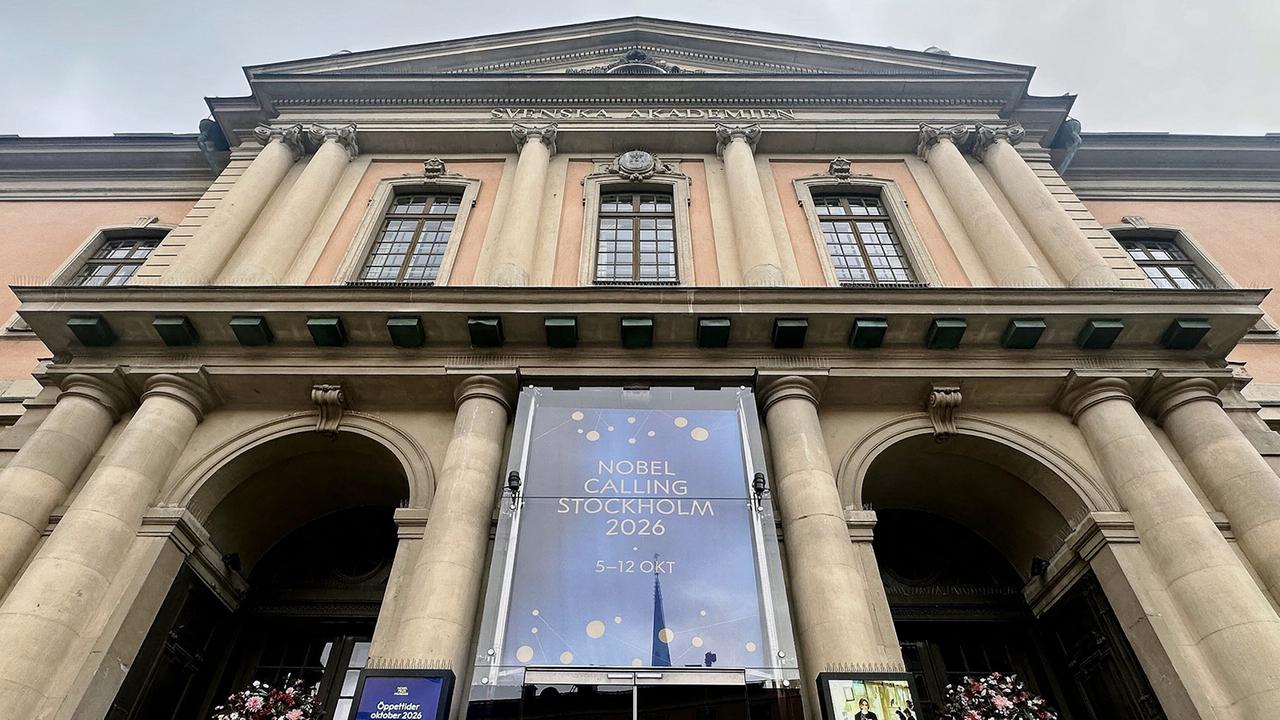
"Every autumn, thousands of scientists, university professors, and past laureates from across the globe are invited to submit nominations," says Linke. This decentralized nomination process ensures that the committee receives a vast array of candidates from every corner of the earth. Once the list is compiled, the committees, often assisted by external subject-matter experts, begin the arduous task of narrowing down the field.
The Final Decision
The selection process is shrouded in secrecy. The committee debates the merits of the short-listed candidates throughout the spring and summer. The final, definitive decision is only made on the morning of the announcement itself. This tradition of suspense and the "cloak-and-dagger" nature of the deliberations adds to the aura of the prize. It transforms the announcement into a global media event, where the suddenness of the revelation captures the world’s imagination.
Supporting Data and Statistical Trends
Over the past 125 years, the demographics and fields of the Nobel Prize have shifted significantly:
- Collaborative Science: Early prizes were often awarded to single individuals. In recent decades, the complexity of research—particularly in physics and medicine—has led to a rise in shared prizes, often split between three researchers.
- The Gender Gap: While the number of female laureates has increased since the late 20th century, there remains a persistent disparity in the sciences, a topic of ongoing critique and internal review within the Nobel Foundation.
- Geographic Concentration: Historically, the prize has been dominated by Western universities, particularly those in the United States, the UK, and Germany. However, recent years have seen a broader distribution, reflecting the global expansion of high-level research.
Official Responses and Institutional Reflection
The Nobel Foundation acknowledges that its role has changed. In recent statements, representatives have emphasized that while the core of the prize—recognizing excellence—remains, the context has evolved.
"The way science is perceived by society has changed," says Heiner Linke. "Today, we have to explain why science matters in a world of information saturation. The Nobel Prize serves as a vital bridge between the laboratory and the public, proving why these discoveries are not just academic exercises, but foundations for our future survival and prosperity."
The Foundation has also taken steps to ensure transparency in its selection criteria, particularly in the sciences, to combat claims of bias or exclusionary practices. By diversifying the pool of nominators and ensuring that regional scientific bodies are represented, the committee aims to maintain its relevance in an increasingly multi-polar scientific world.
Implications for the Future
As we look toward the next 125 years, the Nobel Prize faces the challenge of remaining relevant in an era of rapid technological change and geopolitical instability.
The Challenge of Artificial Intelligence
One of the most pressing questions for the committee is how to handle research conducted by or heavily reliant on Artificial Intelligence. Can a machine be a co-author? How does the prize recognize the human element in an era of automated discovery? These are the debates currently taking place within the walls of the Swedish Academy.
Societal Relevance
The prize for Peace and Literature remains the most "political" in nature. As global conflicts proliferate and the digital age reshapes how we consume literature and truth, the committee’s choices will continue to be scrutinized. The ability of the Nobel to remain a symbol of "the greatest benefit to humankind" depends on its capacity to adapt to these new realities without losing the prestige established in 1901.
Ultimately, the Nobel Prize is more than a list of names; it is a mirror of our collective progress. By honoring those who push the boundaries of the known, it reminds humanity that even in our darkest hours, the pursuit of knowledge, peace, and cultural depth remains our most noble endeavor. As the 2026 announcements begin, we are not just witnessing the honoring of a few individuals; we are celebrating the resilience of human curiosity.