

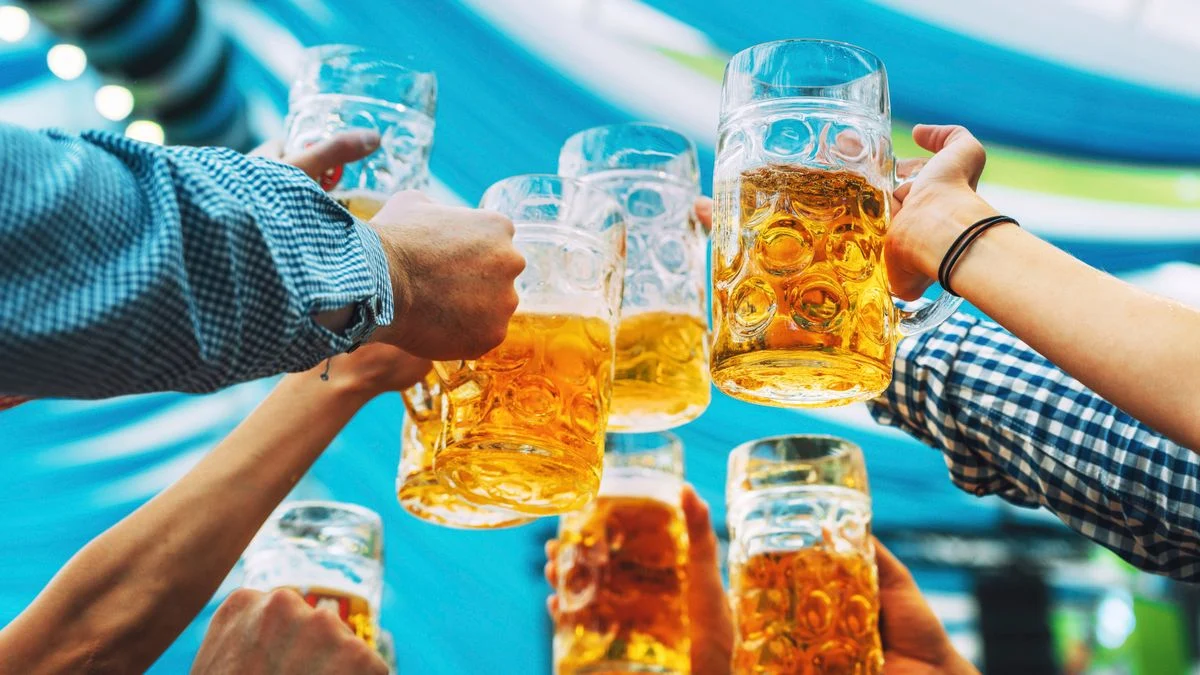
Every autumn, millions of visitors descend upon Munich’s Theresienwiese for the Oktoberfest. It is a spectacle of cultural heritage, Bavarian tradition, and massive beer consumption. However, beneath the jovial atmosphere of the beer tents and the clinking of heavy glass steins lies a persistent, invisible challenge: the transmission of infectious diseases. As the largest public festival in the world, the Oktoberfest acts as a massive social incubator, where thousands of people from across the globe gather in confined, high-density environments.
The question of whether one might leave the Wiesn with more than just a hangover—specifically, a respiratory infection or a gastrointestinal bug—has long been a subject of both public concern and scientific inquiry. This article examines the intersection of public health, hygiene standards, and the reality of germ transmission at the world’s most iconic folk festival.
Main Facts: The Anatomy of a High-Risk Environment
The fundamental challenge of the Oktoberfest is its sheer scale. During the two-week event, the festival grounds host roughly six million visitors. The environment is characterized by several high-risk factors for the spread of pathogens:
- High-Density Proximity: Within the tents, guests are seated shoulder-to-shoulder on long wooden benches. This proximity facilitates the rapid transmission of airborne viruses, such as influenza or SARS-CoV-2, through respiratory droplets.
- The Shared Surface Dilemma: While the Maßkrug (the one-liter beer mug) is cleaned in high-temperature industrial dishwashers, the process relies on the efficiency of the tent’s logistics. The handling of thousands of mugs per hour by waitstaff, often with limited opportunity for handwashing between tasks, creates a chain of potential contamination.
- Aerosol Concentration: In the enclosed, crowded environment of a tent, the air quality is affected by the collective breathing, singing, and shouting of thousands. When coupled with the consumption of alcohol, which can suppress immune responses, the threshold for infection becomes significantly lower than in open-air environments.
Chronology: A History of Health Concerns at the Wiesn
The history of the Oktoberfest is largely a history of adaptation. While the festival originated in 1810 as a royal wedding celebration, the modern era of mass-tourism has necessitated a continuous evolution of hygiene protocols.
Early 20th Century: Public health concerns were primarily focused on food safety, specifically the regulation of food stalls and the handling of raw meats. The establishment of the Munich Health Department (Gesundheitsreferat) provided the first formal framework for festival inspections.
The 1970s and 80s: With the surge in international tourism, the "Wiesn-Grippe" (Oktoberfest flu) became a recognized phenomenon. Epidemiologists began observing distinct spikes in seasonal influenza cases in Munich during and immediately following the festival.
The Post-2020 Paradigm: The COVID-19 pandemic represented the most significant disruption in the history of the Oktoberfest. The cancellation of the festival in 2020 and 2021 forced a radical rethinking of sanitary infrastructure. Upon the festival’s return in 2022, the City of Munich implemented enhanced ventilation standards and encouraged the use of contactless payment methods to reduce the handling of shared surfaces.
Supporting Data: What Does the Science Say?
Epidemiological studies focusing on large-scale events suggest that the risk of infection at the Oktoberfest is not merely anecdotal.
Respiratory Pathogens
Research indicates that the "Wiesn-Grippe" is not a myth but a measurable public health event. Data from the Robert Koch Institute (RKI) often shows a correlation between the festival’s duration and an uptick in respiratory illness reports in the Munich metropolitan area. The high concentration of individuals in poorly ventilated tents allows for "super-spreader" dynamics, where a single individual can inadvertently infect dozens of others over the course of an evening.
Bacterial Contamination and Surface Hygiene
A critical area of study is the survival rate of bacteria on surfaces. While the beer itself—due to its acidity and alcohol content—is relatively inhospitable to many harmful bacteria, the glass rims of the mugs and the shared tables are a different story. Studies conducted by local hygiene institutes have found that while industrial dishwashing is highly effective, the "handover" process—where a mug is passed through a crowded tent—remains a vulnerability. The hands of guests, which may have touched contaminated surfaces or been used to cover coughs, are the primary vectors.
Official Responses: Managing the Millions
The City of Munich, in collaboration with the Verein Münchener Brauereien (Association of Munich Breweries), employs a rigorous inspection regime.
The Inspection Regime
Before a single drop of beer is served, the Referat für Gesundheit und Umwelt (Department of Health and Environment) conducts extensive site visits. This includes:
- Water Quality Testing: Ensuring the integrity of the temporary plumbing systems that serve the tents.
- Kitchen Audits: Strict enforcement of temperature controls for food storage and the implementation of HACCP (Hazard Analysis and Critical Control Points) protocols.
- Staff Hygiene Training: All service personnel are required to undergo briefings on food handling and personal hygiene, with specific emphasis on frequent hand sanitization.
Infrastructure Upgrades
In recent years, the investment in tent infrastructure has focused heavily on ventilation. Modern tents are designed to facilitate high rates of air exchange, moving air from the floor level toward the roof to disperse aerosols. While this does not eliminate the risk, it significantly reduces the concentration of viral particles in the breathing zone.
Implications: The Future of Public Health at Large Festivals
The challenge for the future is finding a balance between the "Gemütlichkeit" (coziness and conviviality) that defines the Oktoberfest and the modern necessity for health security.
The Responsibility of the Individual
Health authorities emphasize that the individual visitor plays a role as important as the state’s regulators. Recommendations for the modern Wiesn visitor include:
- Vaccination: Ensuring flu and COVID-19 vaccinations are up-to-date before attending.
- Hand Hygiene: Utilizing the increasing number of hand sanitizer stations located throughout the festival grounds.
- Symptom Awareness: The most significant shift in post-pandemic culture is the social expectation that those who feel ill—even with minor symptoms—should refrain from attending.
Technological Innovations
Looking forward, we may see the integration of smart-hygiene technology. This could include sensors that monitor air quality in real-time, adjusting ventilation fans based on the density of the crowd. Furthermore, the push for digital payments is likely to continue, minimizing the exchange of cash, which is known to be a surface that harbors bacteria.
Conclusion
The Oktoberfest remains a cornerstone of Bavarian culture, a resilient event that has survived wars, economic downturns, and global pandemics. While the "Wiesn-Virus" is a reality that attendees should be aware of, it is a risk that can be managed through a combination of institutional vigilance and personal responsibility.
The festival serves as a microcosm of global health challenges: how do we maintain our social connections and cultural traditions while operating within the parameters of modern medical understanding? By treating hygiene not as an intrusion upon the fun, but as a prerequisite for it, the organizers and the millions of guests who flock to Munich each year ensure that the Oktoberfest remains the world’s greatest—and safest—celebration of tradition.
As we look toward future iterations of the festival, the lesson remains clear: the survival of the Oktoberfest depends on its ability to protect its participants as effectively as it preserves its beer. With ongoing cooperation between the city, the brewers, and the public, the Wiesn will continue to thrive, provided we all play our part in keeping the "Wiesn-Virus" at bay.






















