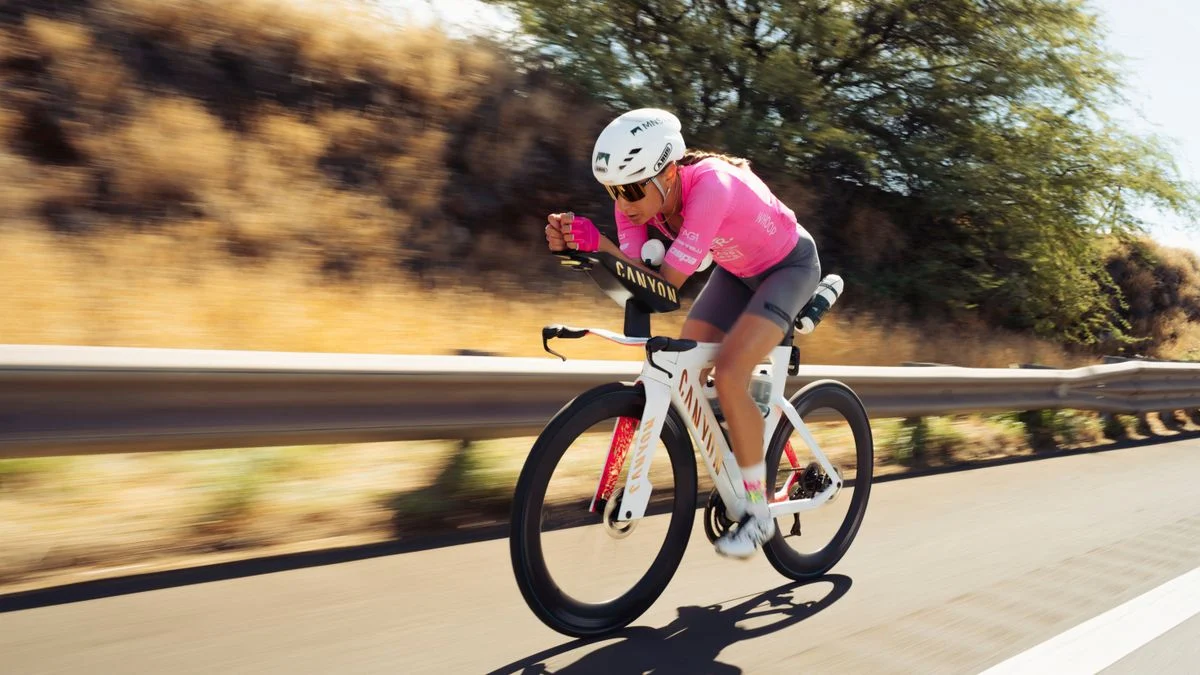
In the grueling world of professional triathlon, where the margin between victory and defeat is often measured in seconds, few athletes possess the analytical rigor of Laura Philipp. As Germany’s preeminent female triathlete, Philipp has not only dominated the Ironman circuit but has redefined what it means to train as a high-performance endurance athlete. Her approach, a fusion of empirical data, physiological discipline, and psychological resilience, offers a blueprint for modern sports excellence.
Main Facts: The Methodology of a Champion
Laura Philipp is not merely an athlete; she is a student of her own physiology. Her success at the highest levels of the Ironman series is rooted in a highly personalized training regimen that prioritizes recovery as much as intensity.
At the core of her training is the concept of "metabolic flexibility." By monitoring her blood glucose levels and utilizing real-time biometric tracking, Philipp ensures that her body is optimized for fat oxidation during long-course racing. This allows her to sustain high outputs without the common pitfalls of glycogen depletion—the dreaded "bonk" that plagues many endurance competitors.
Her training cycle is divided into distinct micro-cycles that focus on building aerobic capacity during the off-season, transitioning into race-specific intensity as the Ironman European and World Championships approach. Unlike traditional training programs that emphasize "more is better," Philipp utilizes a polarized training model. This involves spending approximately 80% of her time in low-intensity, steady-state training, while the remaining 20% is reserved for high-intensity threshold efforts that push her lactate tolerance to the limit.
Chronology: From Academic Interest to World-Class Dominance
The trajectory of Philipp’s career is a testament to the power of structured progression.
- The Early Years (2012–2015): Philipp entered the sport with a background in health science. She initially treated triathlon as a passion, using her academic knowledge to experiment with training loads. Her rapid ascent in the amateur ranks quickly signaled that she had the potential for professional success.
- The Professional Breakthrough (2016–2018): Turning professional, Philipp began to see consistent podium finishes on the 70.3 circuit. It was during this period that she refined her swim stroke and invested heavily in aerodynamic testing for her cycling setup.
- The Ironman Transition (2019–2021): Scaling up to the full Ironman distance (3.8km swim, 180km bike, 42.2km run) required a complete overhaul of her nutritional strategy. This period saw her document her learnings, focusing on gut training—the practice of training the digestive system to process high volumes of carbohydrates under physical stress.
- The Championship Era (2022–Present): Philipp has firmly established herself as a top-three contender globally. Her recent performances in Kona and Nice underscore her ability to compete against the strongest fields in the world, often out-running competitors who were faster in the swim and bike legs.
Supporting Data: The Numbers Behind the Effort
To understand Philipp’s success, one must look at the data points that dictate her daily life. On average, she logs between 20 to 28 hours of training per week.
The Composition of a Typical Training Week:
- Swimming: 15–20 kilometers, focused on technique drills and threshold sets (400m repeats).
- Cycling: 300–450 kilometers, including specific sessions on a power trainer to isolate wattage output.
- Running: 60–90 kilometers, incorporating "brick" sessions (running immediately off the bike) to simulate the physiological shock of race day.
The data reveals a consistent trend: her heart rate variability (HRV) is monitored daily. If her HRV drops, indicating systemic fatigue, her coaching team automatically adjusts the following day’s workout. This "coaching by data" approach minimizes the risk of overtraining syndrome, which has historically ended the careers of many elite athletes.
Official Responses and Expert Analysis
The sports science community has taken note of Philipp’s methodology. Dr. Elena Richter, a prominent physiologist specializing in endurance sports, notes: "Laura represents the new generation of athletes who treat their body like a high-performance machine. She is not relying on ‘feel’ alone; she is relying on the objective truth provided by blood lactate testing and metabolic carts."
Philipp herself has been vocal about the mental aspect of this data-driven life. In recent interviews, she emphasized that while the numbers provide the map, they do not provide the engine. "You can have the perfect power file, but if you don’t have the mental capacity to suffer when your legs are burning at kilometer 35 of the marathon, the data means nothing," she stated.
Her team, including her husband and coach, Philipp Seipp, has maintained that the goal is not to reach "maximum" training volume, but "optimal" training volume. They argue that many athletes fall into the trap of training too hard on easy days, effectively ruining their ability to perform on the days that actually matter.
Implications for the Future of Triathlon
Laura Philipp’s success has wider implications for the sport of triathlon. Firstly, it democratizes the "pro" approach. As wearable technology becomes more accessible, age-group athletes are increasingly adopting the polarized training models and glucose-monitoring techniques that Philipp pioneered.
Secondly, her career path highlights the necessity of longevity in the sport. By focusing on injury prevention and physiological balance, Philipp has avoided the common cycle of burnout. Her success suggests that the window for a peak professional career is widening; athletes no longer need to sacrifice their long-term health for short-term gains.
Finally, the shift toward a more scientific approach has altered the landscape of professional competition. The "grit-only" era of the 1990s and early 2000s, characterized by extreme overtraining, has been replaced by an era of precision. Athletes who fail to integrate technology and nutritional science into their regimens are finding it increasingly difficult to keep pace with the leaders.
Conclusion: The Endurance Standard
Laura Philipp’s rise to the pinnacle of triathlon is not the result of a single breakthrough, but the cumulative effect of thousands of small, disciplined decisions. Her commitment to the intersection of human performance and data science serves as a gold standard for endurance sports.
As she looks toward future world titles, her focus remains clear: refine, iterate, and execute. Whether she is in the pool, on the bike, or navigating the final miles of a marathon, Philipp demonstrates that while talent may get an athlete to the start line, it is the science of training that gets them to the podium.
For those looking to improve their own performance, her journey offers a vital lesson: success is not about training harder than everyone else; it is about training smarter, recovering better, and listening to the internal and external data that informs the path to greatness. As the sport continues to evolve, Philipp stands as a beacon of what is possible when human potential is paired with an uncompromising commitment to the science of excellence.