As the crisp autumn air descends upon the Ore Mountains (Erzgebirge), the town of Altenberg undergoes a quiet but rigorous transformation. While most of Germany is still adjusting to the transition from the golden hues of October to the early gray of late autumn, the staff at the world-renowned Altenberg Bob, Luge, and Skeleton Track have already shifted their focus to the "winter mode." It is a delicate, precise, and highly technical operation that signals the official countdown to the international sliding sports season.
The preparation of the track is not merely a task for maintenance crews; it is a specialized craft, overseen by the Eismeister—the Master of Ice—whose expertise determines the safety and speed of the athletes who will soon be hurtling down the concrete curves at speeds exceeding 120 kilometers per hour.
The Science of the Track: A Precise Engineering Feat
The Altenberg track, a staple in the international FIBT and FIL circuits, represents a pinnacle of winter sports engineering. Preparing the track for the arrival of the first frosts is a multi-stage process that begins long before the first snowflakes fall.
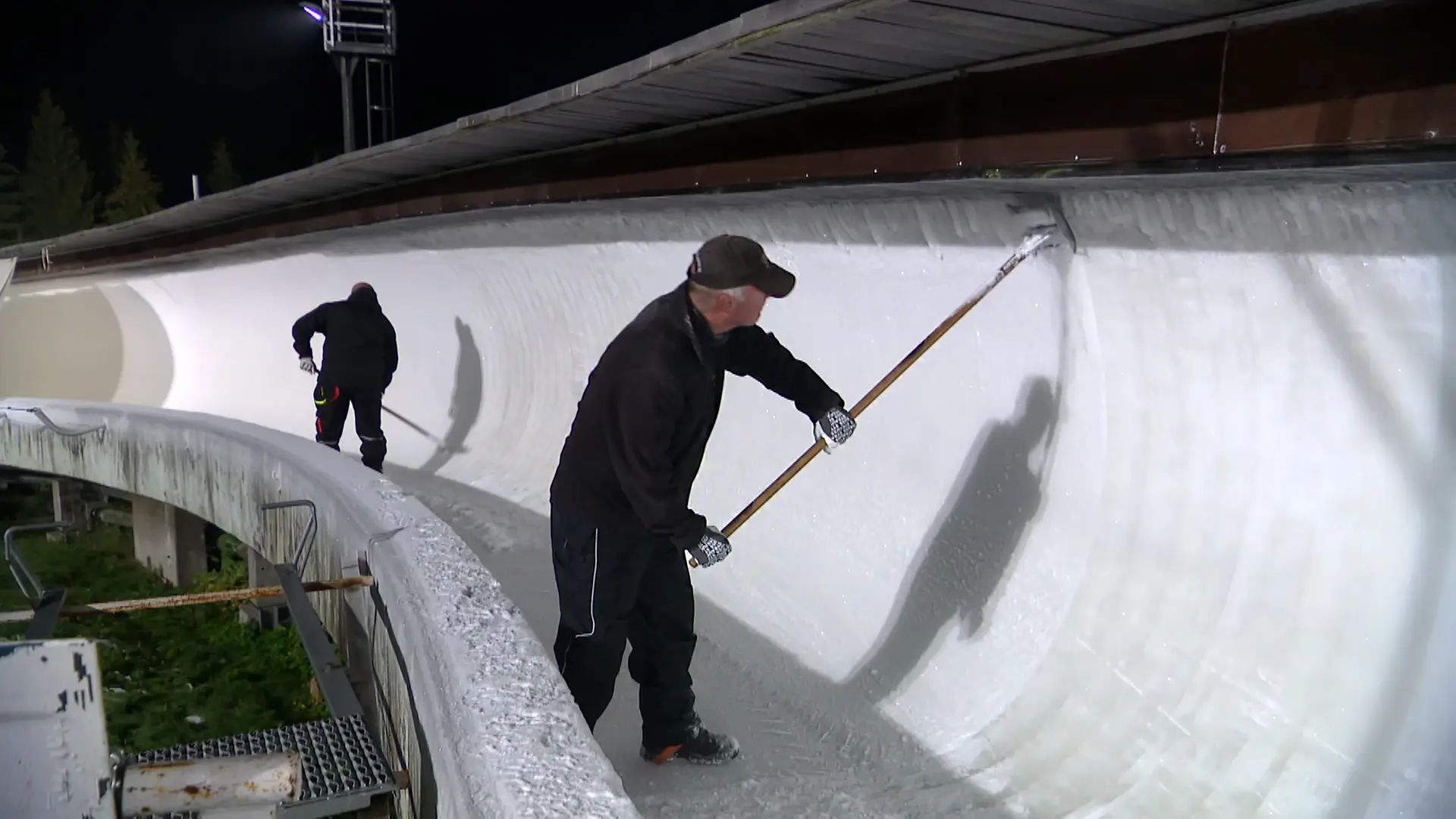
The "winter mode" involves a complex cooling system that runs beneath the concrete structure. This ammonia-based refrigeration plant must be meticulously calibrated. If the ice is too thick, the track becomes sluggish; if it is too thin, the concrete surface poses a significant safety hazard. The Eismeister, working in the early, freezing hours of the morning, monitors the humidity, the ambient temperature, and the surface temperature of the concrete to ensure that the initial layer of "base ice" is perfectly uniform.
This process is a battle against nature. Even with modern cooling, the track is subject to the whims of the Ore Mountains’ climate. Sunlight hitting a specific curve during the day can cause uneven melting, requiring constant vigilance and manual adjustments to the cooling output.
Chronology of the Winter Transition
The transition to the winter season is a structured, time-bound progression:
- Late September: The initial cleaning of the track surface. Any debris, moss, or remnants from the summer season must be removed to prevent imperfections in the ice layer.
- Early October: The refrigeration system is fully activated. The concrete is cooled to temperatures just above freezing to prepare the substrate.
- Mid-October: The first "water phase." Using precision nozzles, the crew applies a fine mist to the track. This creates a foundational layer of ice, which is then carefully scraped and leveled by hand and with specialized machinery.
- Late October: Training sessions for local youth and national squads begin. The Eismeister performs daily "readings" of the ice, checking for cracks, ripples, or soft spots that could compromise the integrity of the line.
- November/December: Full operational status. The track is ready for international competition, with the Eismeister transitioning from "preparer" to "custodian," maintaining the surface quality between individual heats.
Supporting Data and Technical Challenges
The demands placed on the Altenberg track are immense. Unlike some modern, indoor-controlled environments, Altenberg’s outdoor nature makes it one of the most technically challenging tracks in the world.
Data from previous seasons indicates that the track requires a consistent temperature differential. The ice surface is typically maintained at approximately -8 to -10 degrees Celsius, regardless of the outside air temperature. This requires the refrigeration plant to work significantly harder during the "warm" spells of late autumn than during the deep freeze of January.
Furthermore, the track features 17 curves, each with varying degrees of banking and pressure. The physical force exerted by a four-man bobsleigh on these curves can reach up to 5g. Consequently, the ice in the high-pressure zones of the curves must be denser and more resilient than the ice on the straights. The Eismeister’s team uses specialized, heated tools to "weld" the ice into these specific profiles, a technique that has been refined over decades of experience.
Official Responses and Strategic Importance
The management of the track has emphasized that the transition to winter is not just about sport; it is about economic and regional stability. The track is a major employer in the Altenberg region and a centerpiece of local tourism.

"Our goal is to provide the safest, fastest, and most consistent surface for the world’s best athletes," says the track’s Lead Coordinator. "The preparation phase is the most critical time of the year. If we get it right now, we can maintain that standard through the harsh winter months. If we fail here, the entire season is compromised."
Regional officials in Saxony have also noted the importance of the facility. As the state continues to invest in winter sports infrastructure, the Altenberg track serves as a magnet for international visitors, bringing significant revenue to the local hospitality and service sectors during the off-peak tourist months.

Broader Implications for the Region
The "winter mode" at the bobsleigh track is emblematic of a broader trend in the Ore Mountains. The region is currently balancing its rich industrial heritage with a pivot toward high-performance sports and sustainable tourism.
The Role of Modernization
While the bobsleigh track relies on traditional knowledge, it is increasingly being integrated with modern digital monitoring systems. Sensors embedded within the concrete walls now feed real-time data to the Eismeister’s tablet, allowing for instantaneous adjustments to the cooling system. This blend of "gut feeling" and "data-driven precision" is becoming the hallmark of German winter sports management.
Environmental Considerations
The energy-intensive nature of the track is a subject of ongoing debate. Efforts are currently underway to improve the energy efficiency of the refrigeration plants. Modernization projects, such as the one recently completed at the Bautzen correctional facility (which, while unrelated to sports, highlights the state’s push for infrastructure upgrades), are pushing the region to adopt greener technology. The bobsleigh track is exploring ways to capture and repurpose waste heat from the refrigeration plant to provide hot water for the facility’s administrative buildings and athlete accommodations.
Community and Youth Development
The transition to winter also signals the start of training for local youth clubs. The facility is not merely for the elite; it is a nursery for future Olympians. By maintaining the track to the highest standards, the management ensures that the next generation of sliders learns on a surface that is both challenging and fair.

Conclusion: A Symphony of Ice and Steel
As the winter season approaches, the work at the Altenberg track serves as a testament to the dedication required to maintain world-class sports facilities. It is a grueling, often overlooked process that demands the expertise of dedicated professionals.
The Eismeister and his team are the unsung heroes of the bobsleigh world. They work in the shadows of the early morning, far from the flashbulbs and the roar of the crowds, to ensure that when the first sled drops into the start house, the ice is perfect.
For the people of Altenberg, the sound of the refrigeration plant humming into life is more than just a mechanical noise; it is the heartbeat of their town. It signals that winter has arrived, the season of speed has begun, and the Ore Mountains are once again ready to take their place on the world stage of winter athletics.
Appendix: Contextual Developments in the Region
While the winter sports sector prepares for the season, other parts of Saxony are seeing significant changes:

- Infrastructure Upgrades: The modernization of the JVA Bautzen, which recently opened its new facility kitchen, underscores the state’s broader commitment to updating essential public infrastructure.
- Environmental Responsibility: Authorities are currently addressing the issue of illegal green waste disposal in the region’s nature reserves, reminding residents that the preservation of the landscape is a shared responsibility, whether for sports or environmental protection.
- Economic Innovation: The "Fairwerk" project in Dresden is providing a blueprint for flexible industrial architecture, allowing businesses to adapt their spaces to changing needs—a philosophy that is also being mirrored in the modular approach to maintaining sporting facilities across the state.
- Cultural and Social Life: Beyond the track, the region continues to thrive with diverse community events, from the Halloween festivities in Belantis to the ongoing efforts to support local animal sanctuaries in Oschatz.
As the cold deepens, these disparate threads—sports, infrastructure, environmental stewardship, and community life—come together to define the unique character of Saxony in the winter.