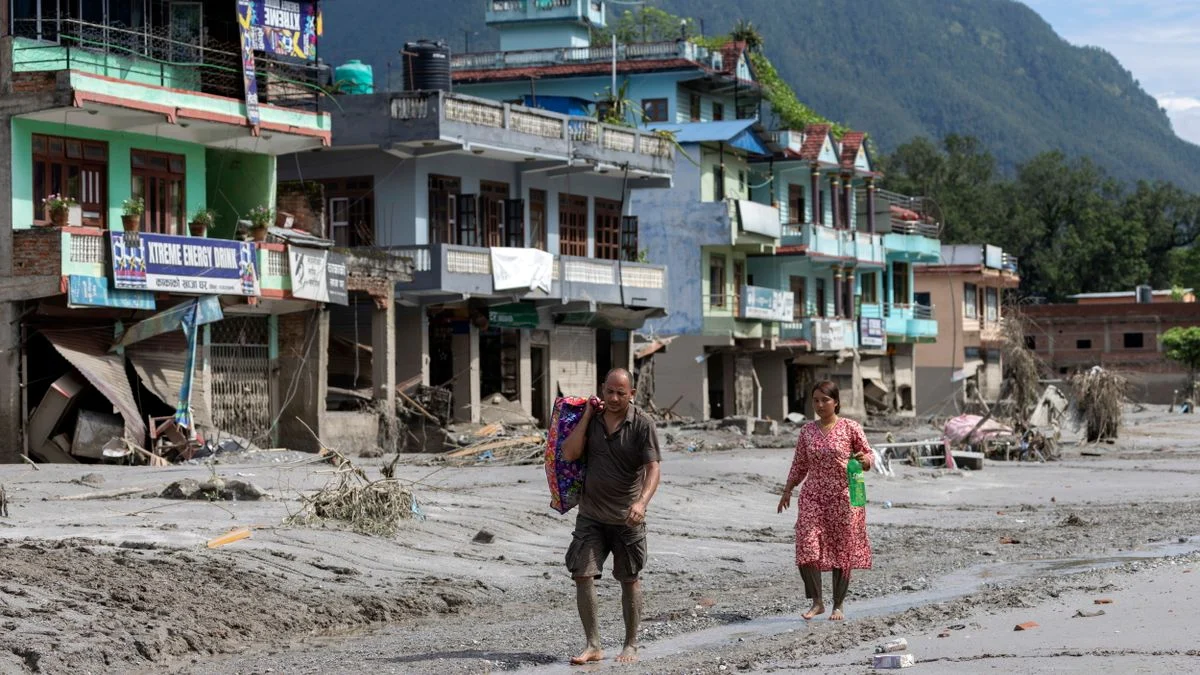
The catastrophic flood that recently devastated communities in the high Himalayas serves as a grim harbinger of the accelerating climate crisis. What began as an seemingly stable glacial landscape transformed, in a matter of minutes, into a torrent of mud, rock, and ice—a "mountain tsunami" that caught residents off guard and left little time for evacuation. As the echoes of the disaster fade, the focus turns to the underlying causes, the fragility of high-altitude infrastructure, and the growing vulnerability of populations living in the shadows of the world’s tallest peaks.
Main Facts: A Disaster of Unprecedented Speed
In the high-altitude regions of the Himalayas, the sudden failure of a glacial dam—or the collapse of a hanging glacier—triggered a massive surge of water and debris. Unlike traditional flooding caused by monsoon rains, this event was sudden, localized, and characterized by immense kinetic energy.
The "explosion" described by survivors was, in scientific terms, a Glacial Lake Outburst Flood (GLOF). These events occur when the natural barriers—often made of loose rock, ice, and moraine—that contain glacial meltwater become unstable. When these barriers fail, the resulting release of millions of cubic meters of water scours the valleys below, picking up boulders and sediment, effectively creating a slurry that acts like a wrecking ball against human infrastructure.
The destruction was absolute. Bridges were swept away like twigs, hydroelectric projects were inundated, and entire settlements were blanketed in meters of silt. The speed of the event was the primary factor in the high casualty count; with early warning systems largely absent or ineffective in the most remote regions, the residents had mere minutes to react.
Chronology of the Event: The Critical Minutes
To understand the scale of the tragedy, one must look at the timeline of the collapse:
- T-Minus 30 Minutes: Satellite imagery and seismic sensors later confirmed that micro-fractures in the glacial wall were already showing signs of instability. However, on the ground, life continued as normal.
- The Breach: The primary glacial dam reached its critical stress point. A massive section of the ice-rock interface gave way, sending a pulse of water down the narrow, steep-sided valley.
- The Impact: As the water moved downstream, it accelerated, gaining volume by eroding the riverbanks. The sound, described by witnesses as an "explosion" or a "freight train," served as the only warning.
- The Aftermath: Within 15 minutes of the initial breach, the flood reached the first major residential clusters. The evacuation window was effectively zero.
- The Rescue Window: In the hours that followed, the immediate priority shifted from disaster response to survival. Power grids were severed, and communication towers were destroyed, isolating the affected valleys and complicating the arrival of emergency services.
Supporting Data: A Warming World and Unstable Peaks
The Himalayas are home to the "Third Pole," containing the largest reserve of freshwater outside the polar regions. However, this region is warming at a rate significantly higher than the global average.
The Science of Glacial Instability
Research indicates that rising mean temperatures have led to the rapid thinning of glaciers. As these glaciers retreat, they leave behind "proglacial lakes" held back by unstable moraines. Data from regional meteorological stations shows that the freezing level in the Himalayas is shifting upward, exposing higher-altitude slopes to rain rather than snow. This liquid precipitation adds hydraulic pressure to glacial lakes, significantly increasing the probability of a catastrophic breach.
Infrastructure Vulnerability
The push for hydroelectric development in the Himalayas has led to the construction of dams and tunnels in high-risk zones. While these projects are vital for the region’s energy needs, they often lack the engineering resilience to withstand GLOFs. The recent flood demonstrated that standard structural integrity is insufficient when faced with the immense debris load of a glacial surge.
Official Responses and Political Repercussions
In the wake of the disaster, local and national governments have faced intense scrutiny. The official narrative initially focused on the "unprecedented nature" of the weather event. However, environmental groups and opposition parties have argued that the disaster was "man-made" in its severity.
The Government Stance
State authorities have emphasized the logistical challenges of operating in such a rugged environment. They have pledged an investigation into the stability of other glacial lakes in the region and have promised to expedite the installation of more robust early warning sensors. Furthermore, the government has announced a compensation package for the families of the victims and the displaced.
The Critics’ View
Environmental scientists argue that the government has ignored warnings regarding the ecological fragility of the Himalayan corridor. Critics point to the clearing of forests and the intensive blasting for road and dam construction, which have destabilized the slopes. There is a growing call for a moratorium on large-scale infrastructure projects in high-risk glacial zones until comprehensive, peer-reviewed risk assessments are completed.
Implications: A Future Defined by Adaptation
The Himalayan flood is not an isolated incident; it is a preview of the climate reality for mountainous regions globally.
The Need for Early Warning Systems (EWS)
The current lack of real-time monitoring systems is a major policy failure. Investing in satellite-based radar, seismic vibration sensors, and automated water-level gauges is no longer a luxury but a fundamental necessity. These systems must be linked to community-based alert networks that can trigger sirens and mobile notifications in real-time.
Rethinking Development
The region must transition toward a "climate-resilient" development model. This includes:
- Zoning Restrictions: Prohibiting permanent human habitation in identified high-risk flood plains.
- Sustainable Hydropower: Moving away from large-scale, high-impact dams in favor of smaller, decentralized energy solutions that have a smaller environmental footprint.
- Ecological Restoration: Replanting native flora to help stabilize slopes and mitigate the speed of runoff.
The Human Cost of Inaction
Beyond the statistics, the disaster has left deep psychological and social scars. Families have lost homes, livelihoods, and, most tragically, their loved ones. For the communities of the Himalayas, the mountains are no longer just a source of spiritual or economic strength—they have become a source of existential threat.
As the international community watches, the lessons from this catastrophe are clear. Climate change is not a future threat; it is a present force that is reshaping the physical and human geography of the world. The Himalayas, once considered the "abode of snow," are undergoing a transformation that demands a radical shift in how we build, live, and prepare for the volatility of the coming decades.
The recovery will take years, but the true test of the region’s resilience will be whether it learns to coexist with the changing dynamics of the mountains, or whether it continues to challenge the limits of nature at the cost of its most vulnerable citizens.