

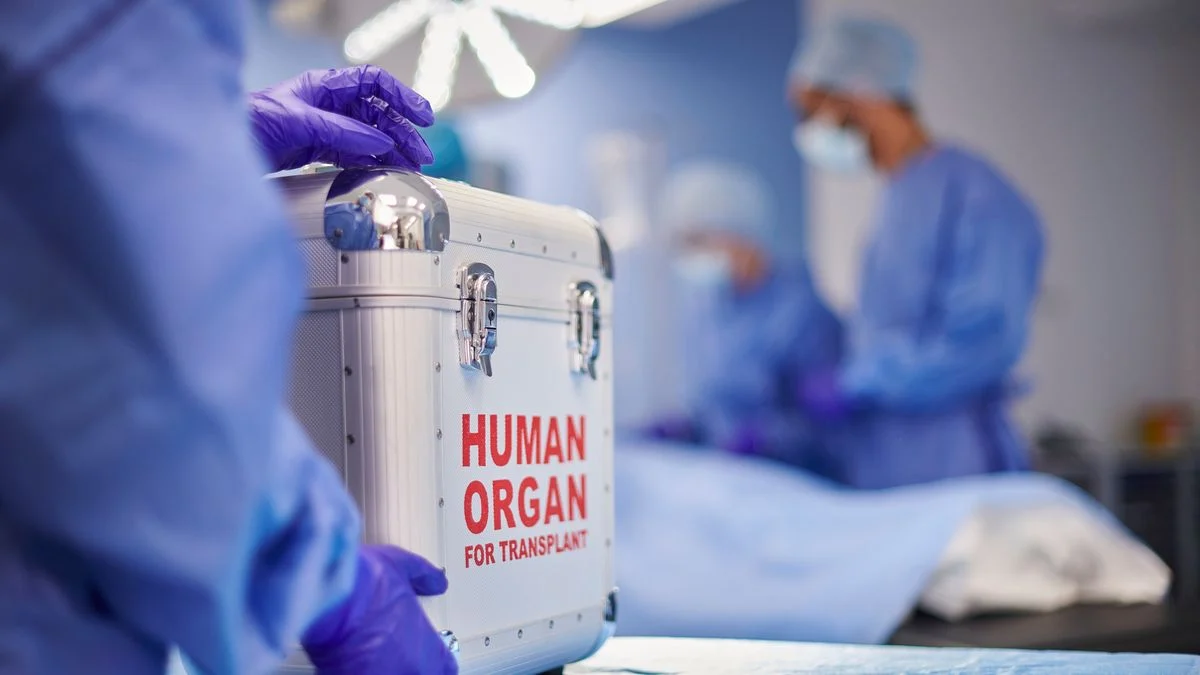
Every year, thousands of individuals across Germany face a harrowing reality: the ticking clock of organ failure, coupled with a chronic shortage of available donors. Despite the advancements in medical technology and transplant surgery, the gap between the demand for organs—such as kidneys, livers, and hearts—and the actual supply remains cavernous. As the Bundestag prepares for a pivotal debate this Thursday, the German political landscape is once again embroiled in a deeply personal and ethical struggle over the future of the nation’s organ donation system.
At the center of this legislative storm is the "opt-out" (Widerspruchslösung) model. Proponents argue it is the only way to save lives, while opponents maintain that the state must not encroach upon the fundamental right to bodily integrity.
The Core of the Conflict: Consent vs. Presumed Will
Currently, Germany operates under a system of explicit consent. For an organ to be harvested after death, the deceased must have registered their willingness, or their family must grant permission. This system has been criticized for creating a passive environment where, despite high public support for donation, few people take the administrative steps to document their intent.
The proposed "opt-out" model would fundamentally shift this paradigm. Under the new legislation, every adult would be considered a potential organ donor by default. If an individual does not wish to donate, they would be required to explicitly opt out. Proponents argue this would transform the "silent majority" of supporters into registered donors, removing the burden of decision-making from grieving families who are often caught off guard during their darkest hours.
A Chronology of Stalled Progress
The path to this week’s debate has been long and marked by previous failures. This marks the third significant attempt by a cross-party group of lawmakers to modernize the organ donation framework.
- 2020: The First Defeat. A high-profile attempt to introduce an opt-out system was rejected by the Bundestag. Despite the lobbying efforts of then-Health Minister Jens Spahn, the proposal failed to secure the necessary majority, reflecting deep-seated cultural reservations about state-mandated organ retrieval.
- 2025: The Interrupted Attempt. A second initiative was gaining momentum, but the sudden collapse of the government and the subsequent calling of early elections effectively stalled the legislative process, forcing the proposal off the table.
- 2026: The Third Wave. Today, a coalition of MPs from the CDU, CSU, SPD, the Left, and the Greens—including heavyweights like former Health Ministers Jens Spahn (CDU) and Karl Lauterbach (SPD)—are spearheading a renewed push. With 254 MPs formally supporting the current motion, the debate is set to culminate in a final vote by the end of the year.
Supporting Data: A Growing Disparity
The statistical reality underlying the political debate is stark. According to the German Organ Transplantation Foundation (DSO), 2025 saw the highest number of organ donors since 2012, with 985 individuals donating one or more organs. While this represents a positive trend, it is vastly overshadowed by the need. At the close of 2025, approximately 8,200 patients remained on the waiting list for life-saving transplants.
The introduction of the online Organ Donation Register in March 2024 was intended to simplify the process. As of the most recent data from the Federal Institute for Drugs and Medical Devices, approximately 633,000 declarations have been recorded. Of those, 82 percent expressed full consent, while 8.7 percent opted to file a formal objection. However, in a nation of over 80 million people, these numbers illustrate how far Germany is from achieving a comprehensive, population-wide understanding of individual organ donation preferences.
Official Responses: The Ethical Divide
The debate has split the political class along ideological lines, transcending traditional party allegiances.
The Case for Opt-Out
Green politician Ricarda Lang, speaking on the ARD "Morgenmagazin," articulated the moral imperative driving the supporters: "Nobody should be forced to become an organ donor against their will," she noted. "However, it is reasonable to expect every one of us to engage with this topic once in our lifetime."
Lang emphasized the emotional toll the current system takes on families. "At the moment, we are forcing relatives to make a choice in a moment of grief, in a moment of total uncertainty. By implementing an opt-out system, we remove that traumatic burden while simultaneously increasing the pool of available life-saving organs."
The Case for "Informed Decision-Making"
Opposing the opt-out model is a coalition of MPs who argue for an "educational and motivational" approach. This group, including CDU politician Michael Brand, warns against the risks of "presumed consent."
"The state cannot equate silence with consent," Brand argued. "We are talking about the integrity of one’s own body, about one’s own life. Organ donation is a deeply personal, intimate decision." Brand and his colleagues fear that a mandatory opt-out system could backfire, creating public distrust and potentially fostering a culture of reflexive opposition rather than altruistic cooperation.
Their counter-proposal suggests that every citizen, upon turning 18, should be formally invited to register their choice—a decision that would include "undecided" as a valid, non-punitive option. They argue that this respects bodily autonomy while ensuring that the question of organ donation becomes a standard societal rite of passage.
The Wider Implications for German Society
The outcome of this vote will have profound implications for the German medical and ethical landscape. If the opt-out legislation passes, it would bring Germany into alignment with several European neighbors, such as Spain and Austria, which have long utilized opt-out systems with higher donor rates. However, the move would also signal a significant shift in the German social contract, where the individual’s right to "do nothing" regarding their organs is subordinated to the collective need for medical resources.
Furthermore, the debate highlights the complexity of modern bioethics. Should the state take a paternalistic role in ensuring the supply of vital medical resources, or is the sanctity of individual bodily autonomy absolute, even at the cost of human life?
As the Bundestag prepares for the session this Thursday, the tone is one of cautious intensity. With 630 members of parliament weighing their votes, the final decision—expected late this year—will likely be determined by how members reconcile the practical, life-saving necessity of more donors against the philosophical commitment to personal liberty.
Ultimately, both sides of the aisle agree on one thing: the current status quo is failing thousands of people. Whether the solution lies in a structural, state-led opt-out system or a revitalized, education-heavy approach to individual decision-making remains the defining question of the year. For the 8,200 people on the waiting list, the parliamentary maneuvers are not just political theater; they are a matter of survival.


























