
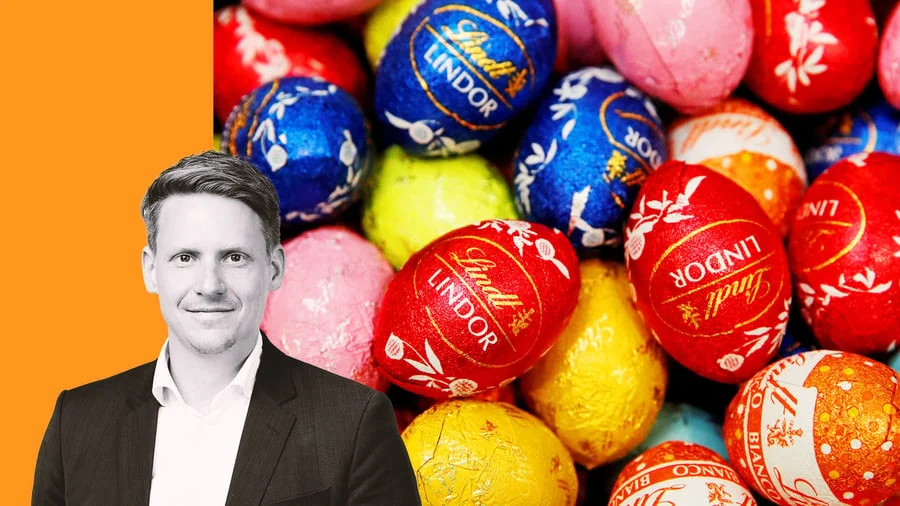
For decades, the Swiss chocolate giant Lindt & Sprüngli has been the gold standard for quality, consistency, and premium market positioning. Often cited as the "blue chip" of the confectionery world, the company’s stock was long considered an untouchable asset for conservative investors seeking steady, compounding growth. However, the current market reality tells a different story.
Lindt & Sprüngli is currently navigating an uncharacteristic and sustained weakness in its share price. For shareholders who have become accustomed to the company’s near-invincible reputation, the current trend is both alarming and perplexing. As of early August 2026, the stock is trading at levels that have not been seen in years, marking a significant departure from its historical performance. This analysis explores the factors driving this decline, the underlying market dynamics, and whether this represents a temporary correction or a deeper shift in the company’s growth narrative.
Main Facts: A Valuation Under Pressure
The numbers are difficult to ignore. Over the trailing twelve-month period, the Stammaktie (registered shares) of Lindt & Sprüngli have depreciated by approximately 10 percent. When adjusted for the strength of the Swiss Franc against the Euro, the decline is even more pronounced, hovering around 18 percent.

Since reaching an all-time peak in July 2025, the company has shed roughly 35 percent of its market capitalization. This sell-off has brought the stock price down to the 95,000 Swiss Franc mark—a psychological threshold that has not been breached with such consistency since the pre-inflationary cycles of the early 2020s. The stock is now hovering uncomfortably close to its five-year low of 90,800 francs, erasing years of steady capital appreciation.
For the retail and institutional investors who held Lindt as a "safe haven" asset, this volatility represents a fundamental challenge to the "buy-and-hold-forever" thesis that has defined the stock for a generation.
Chronology: The Erosion of the Premium Shield
To understand the current malaise, one must look at the timeline of the company’s recent struggles.

- Mid-2025: The stock hits its historical zenith. Market optimism is fueled by strong post-pandemic demand and the brand’s ability to pass on significant price increases to consumers without eroding volume.
- Late 2025: The first signs of consumer fatigue appear. As global inflation bites into disposable income, even loyal customers of premium goods begin to trade down to private-label alternatives or mid-market competitors.
- Early 2026: Raw material costs, specifically the record-breaking price of cocoa, reach a tipping point. Unlike previous cycles where Lindt could absorb or pass on costs, the price elasticity of its high-end chocolate bars reaches its limit.
- Q1-Q2 2026: Earnings reports reflect a stagnation in organic growth. While revenue figures remain high due to price hikes, volume growth (the number of bars actually sold) begins to contract in key European and North American markets.
- Current Status: The market is now repricing the stock, moving away from the "growth at any price" multiple to a more cautious valuation that accounts for the reality of a saturated luxury chocolate market.
Supporting Data: The Cost of Being Premium
The core of Lindt’s business model is built on brand equity—the idea that the consumer will pay a premium for the "Lindt experience." However, data indicates that the "premiumization" strategy is hitting a wall.
1. The Cocoa Crisis
Cocoa prices have experienced historic volatility, largely due to climate-related supply chain disruptions in West Africa. While Lindt & Sprüngli has historically managed hedging strategies better than its competitors, the sheer duration of high input costs has begun to compress gross margins. The cost of cocoa butter and liquor has reached levels that make it difficult for even a premium manufacturer to maintain previous profitability targets without sacrificing quality—a move the company is loath to make.
2. Consumer Purchasing Behavior
Market research indicates that the "lipstick effect"—where consumers continue to buy small luxuries during economic downturns—is showing signs of wear. When a premium chocolate bar approaches a price point that rivals more substantial snacks, consumers are increasingly opting for value-driven alternatives. The "trading down" phenomenon is no longer limited to budget retailers; it is now visible in the aisles of high-end supermarkets where Lindt traditionally held dominance.
3. Valuation Multiples
For years, Lindt traded at a significant premium compared to its peers in the food and beverage sector, such as Nestlé or Hershey. This was justified by its high growth rate and pristine balance sheet. As that growth rate normalizes, the market is aggressively correcting the price-to-earnings (P/E) multiple. Investors are no longer willing to pay 40 or 50 times earnings for a company that is struggling to increase its top-line revenue.
Official Responses and Strategic Pivot
In recent communications, Lindt & Sprüngli leadership has maintained a posture of "long-term confidence." The company argues that its strategy remains sound: focus on the core premium segment, avoid the race to the bottom in terms of price, and double down on R&D for new product categories.
However, there is an implicit acknowledgement of the challenges ahead. The company has begun to focus more heavily on emerging markets, where the middle class is still expanding and the "Lindt" brand is seen as a status symbol. Furthermore, the company is looking to optimize its supply chain efficiency, attempting to automate more of its production processes to offset the rising costs of raw ingredients.

Analysts note that while management is not panicking, there is a clear shift toward "defensive growth." The days of aggressive, double-digit expansion in mature markets appear to be behind them, at least for the medium term.
Implications: What Lies Ahead for Investors?
The decline of Lindt & Sprüngli’s stock offers a cautionary tale about the vulnerability of even the most robust brands to macro-economic forces.
For the Long-Term Investor
The drop in share price presents a dilemma. On one hand, the stock is objectively cheaper than it has been in five years. If one believes in the long-term resilience of the brand, the current valuation could be viewed as an attractive entry point for a "quality" stock that is currently out of favor. On the other hand, if the structural shift in consumer spending is permanent, the stock may continue to languish as the market finds a new, lower "fair value."

For the Broader Confectionery Industry
Lindt’s struggles serve as a bellwether for the entire premium food sector. If the "premium" segment can no longer command pricing power, it suggests a profound shift in the consumer psyche. Retailers and manufacturers alike will likely need to adjust their portfolios, perhaps focusing on "masstige" products—goods that feel premium but are priced for the middle-market consumer—rather than pure luxury.
The Verdict
The "golden era" of easy growth for premium chocolate manufacturers is facing a significant hurdle. While Lindt & Sprüngli remains a world-class company with an enviable moat, the market is demanding proof that it can navigate a world of high input costs and more cautious consumers.
The current weakness is not necessarily a sign of a failing business, but rather a maturation process. Investors should prepare for a period of lower volatility in share price, but higher scrutiny on earnings quality. As the stock trades near its five-year support levels, the coming quarters will be critical in determining whether the "Swiss Chocolate King" can reassert its dominance or if it must settle into a new, more modest role in the global equity landscape.

For now, the message from the market is clear: the era of blind faith in premium pricing power is over, and the company must now prove its value in a much more demanding economic climate.