Introduction: A New Perspective on Beauty and Trauma
"Scars make you beautiful," goes the old German proverb. While often intended as a platitude to comfort those who have suffered injury, a new exhibition in Darmstadt, Germany, is transforming this sentiment into a powerful visual reality. Titled "Let Your Scars Shine," the exhibition held at the Justus-Liebig-Haus is not merely a collection of photographs; it is a profound exploration of identity, survivorship, and the radical act of reclaiming one’s body after the life-altering trauma of breast cancer surgery.
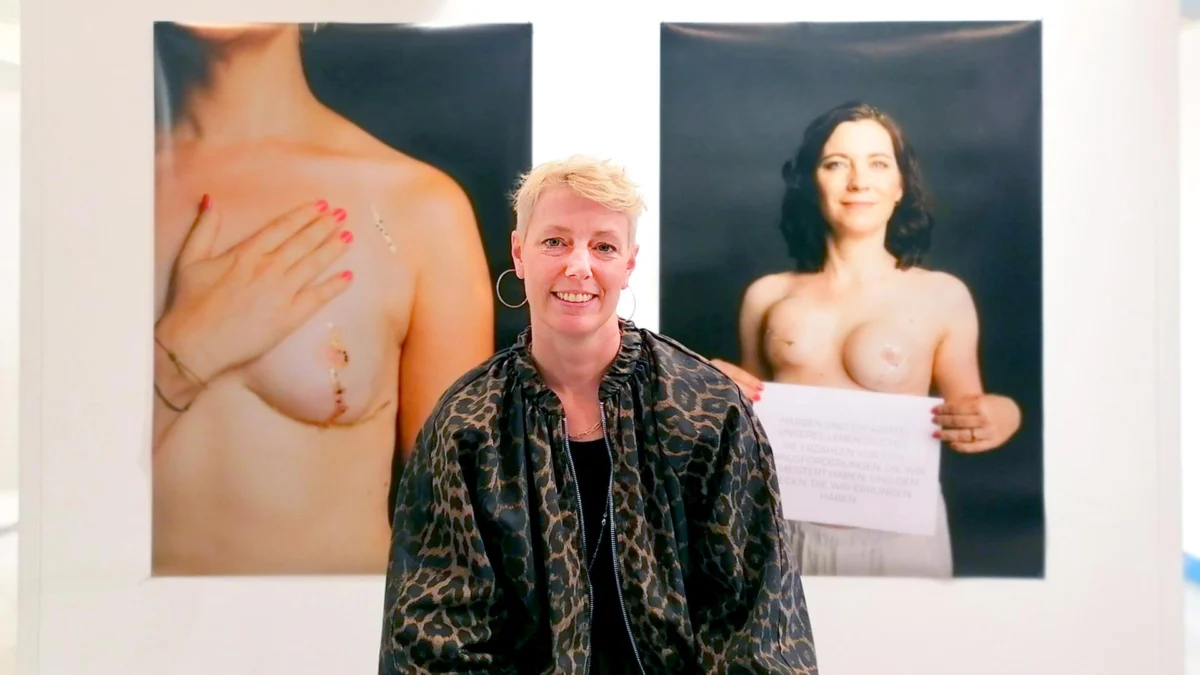
The exhibition features large-format portraits of women who have undergone mastectomies and other surgical interventions due to breast cancer. Far from clinical or somber, the images are radiant. The women’s surgical scars are meticulously highlighted with gold and glitter—a deliberate aesthetic choice inspired by the Japanese art of Kintsugi. By turning the focus away from the perceived "imperfection" of a post-surgical body and toward the beauty of survival, the exhibition challenges societal norms regarding beauty and femininity.
The Genesis of the Exhibition
The project was spearheaded by Rhea Seehaus, a 45-year-old resident of Mühltal and a board member of the association dasBuusenkollektiv e.V., a community dedicated to supporting breast cancer survivors. The association’s name itself is a clever play on words; the double "u" symbolizes the two breasts of a woman, emphasizing both the loss and the ongoing life of those affected.
The idea for the exhibition emerged from Seehaus’s own experience following her 2020 breast cancer diagnosis. She recalls a poignant moment prior to her surgery when a doctor bluntly told her to remember that she was not undergoing a "cosmetic surgery."
"I thought to myself, no one should have to experience that kind of messaging," Seehaus explains. She began to contemplate how to reconcile the medical necessity of her surgery with her own sense of self. The result was a vision: to make scars not just visible, but celebratory. "It was the reflection: How do I make scars clearly visible in such a way that it is aesthetic, that the women feel comfortable, and that other people can look at it with appreciation?"
The Philosophy of Kintsugi
The visual language of the exhibition is deeply rooted in the Japanese philosophy of Kintsugi. In this traditional art form, broken pottery is repaired with lacquer mixed with powdered gold, silver, or platinum. The philosophy treats breakage and repair as part of the history of an object, rather than something to be disguised. By highlighting the cracks, the object becomes more beautiful and more valuable for having been broken.

Applying this to human skin is a radical act of self-love. For the women in these photographs, the gold and glitter applied to their surgical sites act as a bridge between their past—marked by illness—and their future, defined by resilience. It acknowledges the "crack in the journey of life" while simultaneously asserting that the individual has emerged stronger and more authentic.
Chronology of the Project
- 2020: Rhea Seehaus receives her breast cancer diagnosis, sparking the initial desire to change the narrative around surgical scars.
- Formation of the Community: The association dasBuusenkollektiv e.V. is established, focusing on empowerment, early detection, and providing a space for survivors to share their stories.
- Development of the Concept: Seehaus develops the "Let Your Scars Shine" concept, moving from a private idea to a public art project.
- Casting and Photography: A call is issued for models. The goal is to represent a diverse array of surgical outcomes, including partial mastectomies, total mastectomies, reconstructive silicone implants, and fat grafting.
- Initial Showings: The images are first exhibited in clinical settings, albeit in smaller formats, to test the public reaction.
- October 2024: The city of Darmstadt becomes the first municipality to host the full-scale, large-format exhibition as part of the city’s official Breast Cancer Awareness Month (Pinktober) initiatives.
Supporting Data: The Impact of Empowerment
Breast cancer remains the most common cancer among women worldwide. In Germany alone, hundreds of thousands of women are affected. The medical focus is, by necessity, on survival and oncology. However, the psychosocial aspect of the disease—the feeling of "losing one’s femininity" or "becoming a stranger in one’s own body"—is frequently underserved.
dasBuusenkollektiv e.V. provides a crucial service in this regard. Their work spans:
- Peer-to-Peer Support: Connecting women who have shared similar medical trajectories.
- Early Detection Advocacy: Providing resources and guidance to women to help identify symptoms early.
- Psychosocial Support: Organizing expert discussions to help patients navigate the emotional landscape of recovery.
The exhibition serves as a physical manifestation of this support. By showcasing large, 120×80 centimeter portraits, the exhibition forces the viewer to confront their own biases regarding the "ideal" female form. When viewers see the women in the photos smiling, laughing, or tossing glitter into the air, the initial shock or hesitation often melts away, replaced by admiration and empathy.
Official Responses and Civic Integration
The city of Darmstadt has embraced the project as a centerpiece of its "Pinktober" programming. Monika Beuerlein, the deputy women’s and equality officer for the city, notes that the exhibition serves a vital political and social purpose.
"We always do something during the Breast Cancer Action Month in October," Beuerlein explains. "But this year, we wanted to address the societal and political aspects of beauty standards. Our wish is that people leave this exhibition having shifted their perspective."

The exhibition at the Justus-Liebig-Haus is not merely a display of art; it is an educational hub. The venue features informational materials and facilitates discussions with surgical oncologists and representatives from the Weiterleben cancer counseling center. The presence of city officials, such as Mayor Barbara Akdeniz, at the vernissage underscores the municipal commitment to normalizing conversations about cancer survivorship.
Implications: Changing the Beauty Paradigm
The implications of Let Your Scars Shine extend far beyond the walls of the library. By presenting these images in a public space, the organizers are actively de-stigmatizing the post-surgical body.
1. Breaking the Taboo
Breast cancer surgery often results in permanent bodily changes that are hidden away, leading to shame or isolation. This exhibition demands that these bodies be seen, not with pity, but with reverence. By making the scars the focal point—literally gilding them—the artists strip away the power of the "medical" or "disfigured" label.
2. A Call to Action for Healthcare Providers
The project also serves as a subtle critique of how medical professionals communicate with patients. Seehaus’s anecdote about the doctor who warned her against expecting a "cosmetic result" highlights a systemic failure to acknowledge the patient’s psychological well-being. The exhibition calls for a more holistic approach to surgery, where the patient’s identity is treated with the same care as their tumor.
3. The Future of Survivorship
The success of the Darmstadt exhibition suggests that there is a hunger for this kind of authentic representation. As more municipalities and galleries consider hosting the exhibition, the narrative around breast cancer continues to shift from one of "victimhood" to one of "vibrant survival."
Conclusion: A Celebration of Life
As the final preparations were made in the Justus-Liebig-Haus—the leveling of the frames, the careful placement of the lighting—it became clear that this project is about more than just photography. It is about the audacity of joy.

The women in the portraits do not look like patients; they look like survivors who have reclaimed their narratives. When a group of them is captured in a photograph, throwing confetti and laughing with abandon, the message is clear: cancer may have carved a path through their lives, but it has not defined the destination.
Through the lens of Kintsugi, the exhibition Let Your Scars Shine teaches us that we are not defined by the moments we are broken, but by the beauty with which we choose to heal. The exhibition is a testament to the fact that while the journey of breast cancer is arduous, the act of showing one’s scars is, in itself, the ultimate act of beauty.
Exhibition Details:
- Location: Justus-Liebig-Haus, Große Bachgasse 2, Darmstadt.
- Dates: October 20–23 and October 26–30.
- Access: Open during the regular business hours of the city library.