The landscape of modern German football is defined by more than just the ninety minutes played on the pitch; it is shaped in the front offices, the scouting departments, and the boardrooms. For Eintracht Frankfurt, a club defined by its passionate fanbase and its recent resurgence on the European stage, the current period represents a pivotal juncture. As the Bundesliga evolves, the "Adler" (Eagles) find themselves at the center of structural discussions, personnel changes, and strategic repositioning.
This report examines the ongoing transformation within Eintracht Frankfurt, analyzing the recent administrative shifts, the broader impact of recruitment strategies, and what the future holds for one of Germany’s most historic clubs.
1. Main Facts: The Strategic Restructuring
The narrative surrounding Eintracht Frankfurt in the current season is dominated by a transition toward a more data-driven and cohesive management structure. While the club has enjoyed significant success—including the 2022 UEFA Europa League title—the challenge has always been maintaining that momentum against the financial giants of the Bundesliga.
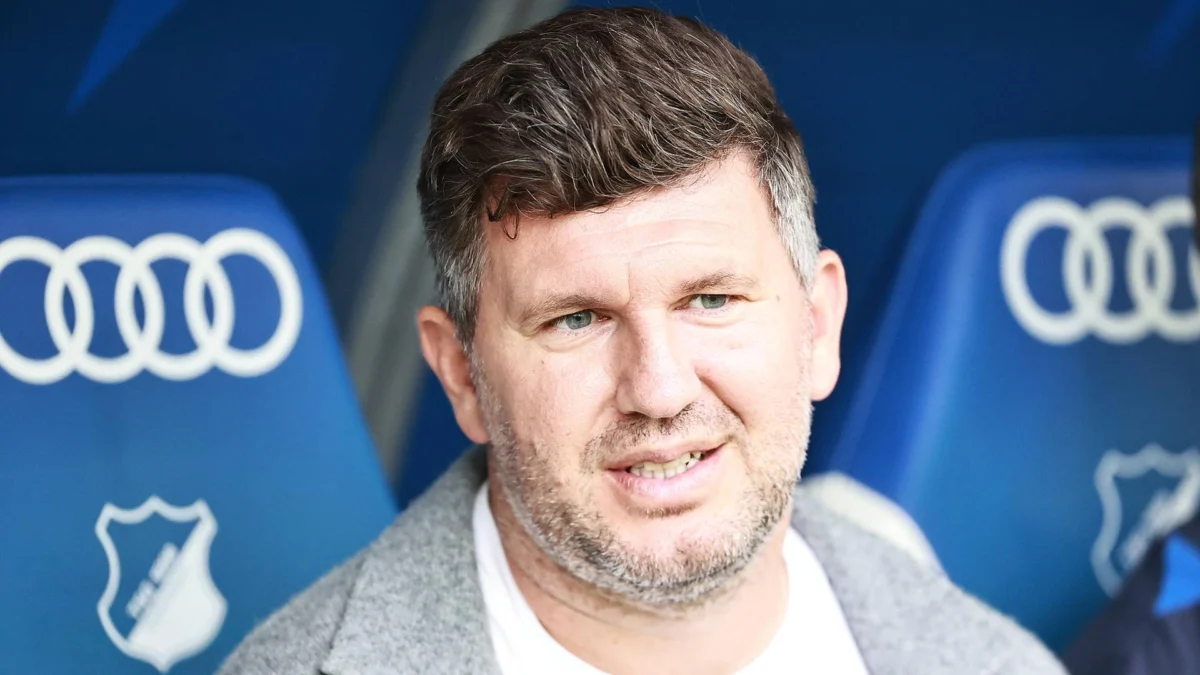
At the heart of the current discourse is the pursuit of high-level personnel to oversee footballing operations. Recent reports have highlighted the club’s interest in figures like Andreas Schicker, currently associated with TSG Hoffenheim, as part of a wider effort to refine the club’s sporting leadership. The objective is clear: to move away from reactive recruitment and toward a proactive, sustainable model that can identify talent before it reaches premium market value.

This shift is not merely about personnel; it is about philosophy. Frankfurt is looking to consolidate its position as a "Top 4" contender in the Bundesliga, a goal that requires a seamless integration between the scouting department, the coaching staff led by Dino Toppmöller, and the executive board.
2. A Chronology of Change: From Frankfurt to the Future
To understand where Eintracht Frankfurt is headed, one must trace the timeline of its recent evolution:
- 2022: The European Zenith: The victory in Seville remains the benchmark. It validated the club’s "all-in" strategy, proving that Eintracht could compete with the elite. However, it also created a financial and structural hangover, as the club struggled to replace departing stars.
- 2023: The Transition Phase: Following the departure of key architects of the Europa League run, the club entered a period of internal auditing. The focus shifted toward stabilizing the squad and integrating younger, high-potential players.
- Early 2024: The Strategic Pivot: As the club approached the new season, it became evident that the sporting director role needed a modern update. The search for a new head of sport became the club’s primary directive.
- Late 2024 (The Current Climate): The public association of names like Andreas Schicker with the club’s leadership structure signals the final phase of this restructuring. The board is looking for an individual who bridges the gap between traditional scouting and modern analytics.
3. Supporting Data: The Economic Realities of the Bundesliga
Eintracht Frankfurt operates in a league dominated by the fiscal gravity of Bayern Munich and the corporate backing of clubs like RB Leipzig and Bayer Leverkusen. To compete, Frankfurt relies on a business model centered on "Transfer Profitability" and "Fan Engagement Revenue."
The Scouting Index
Data shows that Frankfurt’s most successful seasons occur when their net spend on transfers is balanced by high-value sales. The club has masterfully leveraged the "Frankfurt Platform"—a reputation for developing talent—to attract players who see the Deutsche Bank Park as a gateway to the Premier League or top-tier European giants.

Financial Sustainability
The club’s balance sheet indicates a healthy recovery from the pandemic era, largely fueled by Champions League participation and record-breaking matchday revenue. However, internal reports suggest that the club is wary of wage inflation. Consequently, the focus on bringing in executives with a history of "smart money" management—finding undervalued talent—is a direct response to the financial constraints of the league.
4. Official Responses and Institutional Stances
The leadership at Eintracht Frankfurt, led by figures like Axel Hellmann and Markus Krösche, has maintained a disciplined silence regarding specific rumors, yet their public statements emphasize the "DNA of Eintracht."
In recent press briefings, the club hierarchy has consistently reiterated that their focus is on "continuity and competence." When questioned about potential management appointments, the official line has been that "the club is always evaluating its internal structures to ensure it remains competitive in an increasingly demanding market."
There is a concerted effort to insulate the squad from front-office speculation. Dino Toppmöller has publicly defended his players, stating that the focus remains solely on the tactical execution on the pitch. "We are building something here," Toppmöller noted in a recent interview. "The work in the background is important, but the reality for us is the next match. My job is to ensure that the transition in the front office does not manifest as a distraction for the players."

5. Implications: What Lies Ahead?
The implications of these structural changes are profound for the club’s trajectory over the next three to five years.
Tactical Consistency
If the club successfully installs a new sporting director with a clear vision, we can expect a more rigid adherence to a specific playing style. Historically, Frankfurt has fluctuated between high-intensity pressing and more pragmatic, defensive setups. A unified management approach will likely enforce a "club-wide" identity, ensuring that youth development teams and the first team operate under the same tactical umbrella.
The Recruitment Arms Race
The interest in Schicker and similar profiles highlights a shift toward the "Austrian School" of scouting—a model that has seen immense success at Red Bull-affiliated clubs. By prioritizing this type of leadership, Eintracht is signaling that they are no longer content to simply participate in the Bundesliga; they intend to influence the market.
Fan Expectations
The Eintracht faithful are among the most demanding in Germany. They have tasted European glory and expect the club to remain in the upper echelons of the table. The implication of this restructuring is that the club’s leadership is aware that failure to remain competitive will result in significant pressure from the fanbase. The administrative changes are, in many ways, an insurance policy against stagnation.

Conclusion: A Club at the Crossroads
Eintracht Frankfurt stands at a defining moment. The pursuit of refined leadership and a more sustainable, data-backed sporting philosophy is the correct path for a club of its stature. By balancing the raw passion of its fanbase with the clinical precision of modern football management, the club is attempting to bridge the gap between historic significance and modern dominance.
The coming months will reveal whether these administrative maneuvers translate into tangible success. For now, the "Adler" remain a club in motion—a team that refuses to settle for the status quo, constantly looking for the next advantage in a league that offers no quarter to those who stand still. Whether it is a new face in the boardroom or a tactical tweak on the pitch, the mission remains the same: ensuring that the flame of Frankfurt’s footballing ambition continues to burn brightly in the heart of the Bundesliga.
As the league season progresses, all eyes will be on how the club balances these behind-the-scenes transitions with the high-stakes reality of the Bundesliga, the DFB-Pokal, and European competitions. The foundation is being laid for a new era; now, the club must prove that it has the resolve to build upon it.