FRANKFURT AM MAIN – In a powerful display of resilience and international solidarity, a vital humanitarian aid convoy departed from Frankfurt on Friday, bound for the embattled Ukrainian city of Kharkiv. The mission, organized by the grassroots association "Frankfurt for Ukraine e.V.," represents far more than just a delivery of supplies; it is a defiant response to a calculated attempt to dismantle their work.
Just two weeks after a devastating fire gutted the organization’s warehouse, effectively destroying a significant portion of their carefully curated humanitarian inventory, the group has managed to mobilize 14 tons of critical aid. This feat, described by observers as a logistical and emotional triumph, underscores the unwavering commitment of Frankfurt’s civil society to supporting those suffering under the ongoing Russian invasion.
The Cargo: Essential Supplies for a City Under Siege
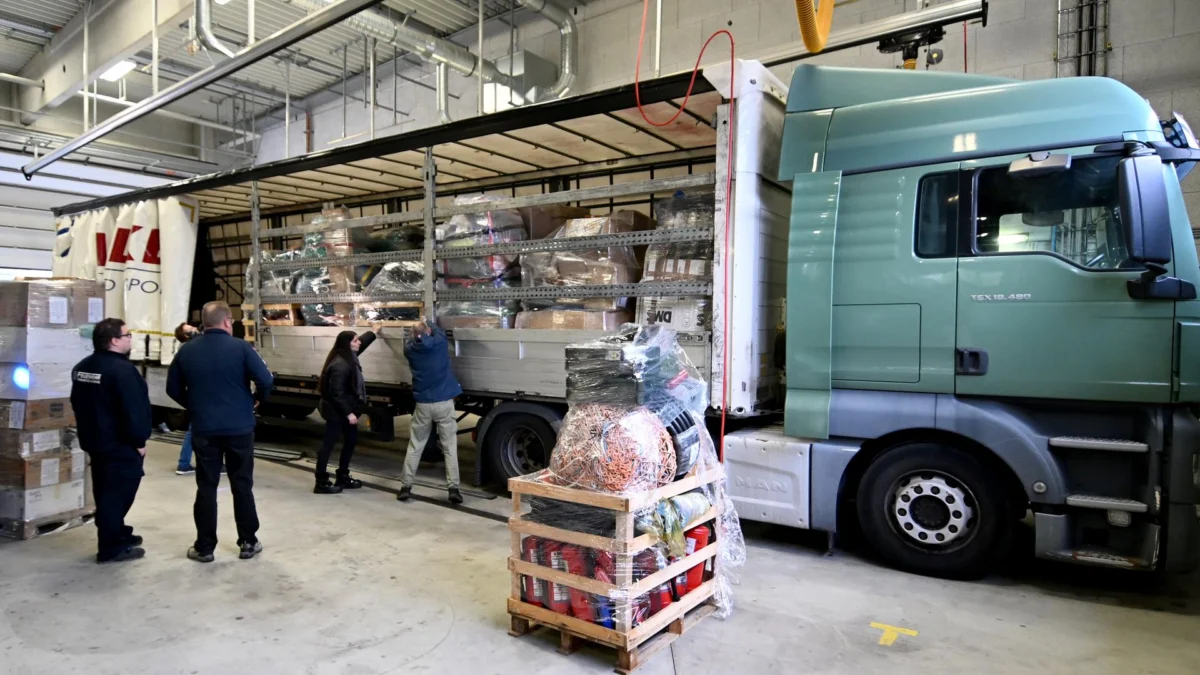
The convoy, consisting of a heavy-duty semi-trailer loaded with 30 pallets of equipment, is currently en route to Kharkiv, a city that remains a primary target of relentless aerial bombardment. According to Jumas Medoff, the initiator of "Frankfurt for Ukraine," the cargo is specifically tailored to the urgent needs of frontline communities and civilian infrastructure.
"The inventory is focused on sustainability and survival," Medoff explained in an interview with the Hessischer Rundfunk (hr). "We have loaded fire extinguishers, construction netting for debris management, automotive first-aid kits, and heavy-duty toolboxes. These are items that allow people to maintain some semblance of order and safety amidst the chaos of war."
The logistics of the operation are a testament to regional collaboration, with the 14 tons of goods sourced from donors across Frankfurt, Neu-Isenburg, and Rüsselsheim. The financial burden of the transport—a substantial undertaking involving fuel, tolls, and international transit logistics—is being covered by the State of Hesse, reflecting a governmental commitment to the initiative’s continuity. The journey to Kharkiv is expected to take approximately two days, navigating the complex geopolitical and physical landscape of the transit route.
Chronology of a Crisis: From Destruction to Departure
To understand the magnitude of this week’s success, one must look back at the events of the past fortnight. The path to Friday’s departure was nearly blocked by a malicious act that shocked the local community.
The Attack
The disaster occurred at a warehouse facility located on school grounds in the Frankfurt district of Dornbusch. The fire, which broke out in a storage area used by the association, resulted in the total loss of a significant cache of aid intended for the upcoming transport. The rapid escalation of the fire suggested a targeted attack, a theory that gained weight as investigations proceeded.
The Investigation
Local authorities, including the police and the specialized State Security (Staatsschutz) department, have opened an investigation into the incident, treating it as a suspected arson. The implications of such an act are chilling: it suggests that humanitarian aid efforts are not immune to the domestic echoes of the conflict. While the perpetrators remain at large, the investigation into the "suspected arson" has highlighted the security challenges faced by organizations supporting Ukraine on German soil.

The Rebound
Following the fire, the association faced what Medoff described as the "most bitter setback" in their four-and-a-half-year history. However, the tragedy triggered an immediate and overwhelming response from the public. Hundreds of donors from across Germany reached out to the organization, offering not just financial support, but the very supplies that had been lost in the flames. Within two weeks, the group managed to restock the missing 14 tons, proving that the intent to destroy the mission had instead galvanized its support base.
Official Responses and Strategic Implications
The incident has reverberated through the highest levels of local and state governance. The speed at which the organization recovered has been officially lauded by the Hessian Ministry of the Interior, which framed the successful departure of the convoy as a major victory for civil society.
Security and Infrastructure
The fire has prompted a broader conversation regarding the protection of humanitarian assets within Germany. Marcus Röck, Chief of the Frankfurt Fire Department, offered a stern assessment during the aftermath: "Infrastructure must be protected today, even against foreign powers." His comments reflect a growing anxiety among security officials that the reach of the conflict in Ukraine is extending into European cities through sabotage and intimidation.
The Role of the City
The City of Frankfurt has stepped in to assist the organization in finding new, more secure storage facilities. The current situation, where aid is stored in temporary or shared spaces like school grounds, is now being re-evaluated for security vulnerabilities. The municipal government has signaled that finding a long-term, safe location for the initiative is a high priority, recognizing that the demand for aid will not subside as long as the war continues.
The Human Element: Why the Mission Matters
Beyond the statistics of tons transported and the geopolitical analysis, the heart of the mission remains the individual impact on the lives of Ukrainians. For the volunteers of "Frankfurt for Ukraine," the work is personal and urgent.
"We know how important these things are," one volunteer emphasized. "Whether it is a simple adhesive bandage, a commode for an elderly person, or a rollator for someone with limited mobility, every item represents dignity for someone living in a war zone."
This perspective is what keeps the organization moving forward. The volunteers understand that while their warehouse can be rebuilt, the needs of the displaced, the injured, and the elderly in Kharkiv are constant. The "Frankfurt for Ukraine" initiative serves as a bridge, connecting the relative safety of the Rhine-Main area with the frontlines of European democracy.
Looking Ahead: A Model of Civil Resilience
The story of "Frankfurt for Ukraine" is emblematic of the "Zeitenwende" (turning point) that Germany has experienced since February 2022. It is a transition from passive observation to active, often strenuous, engagement.

Lessons Learned
The arson attack, while traumatic, has forced the organization to professionalize its security and storage protocols. It has also served as a litmus test for the resilience of the local community. The fact that the organization was able to replace its stock so quickly indicates that the public appetite for supporting Ukraine has not waned, even as the war drags on and inflation pressures households.
Future Challenges
As the convoy moves eastward, the organization is already planning for its next shipment. The challenges ahead remain significant:
- Security: Protecting future donations from sabotage.
- Logistics: Managing the increasing complexity of cross-border transport.
- Sustainability: Maintaining public interest and donor enthusiasm over the long term.
The organization remains undeterred. The destruction of their warehouse was intended to silence their work, but in the end, it merely amplified their cause. As Jumas Medoff stated, the goal is not just to deliver goods, but to show the people in Ukraine that they are not forgotten.
A Message of Defiance
By hitting the road just fourteen days after their resources were reduced to ash, the members of "Frankfurt for Ukraine" have sent a clear message: the aid will continue. The conviction of the volunteers, combined with the material support of the State of Hesse and the generosity of citizens, has created a formidable response to an act of hatred.
As the trucks pull away from the Frankfurt depot, they carry more than just medical kits and tools. They carry the collective resolve of a city that refuses to let the light of humanitarianism be extinguished by the shadows of war. In the quiet, determined work of these volunteers, the spirit of international cooperation remains vibrant, proving that even in the face of arson and intimidation, the drive to protect human life remains the strongest force of all.
The road to Kharkiv is long and fraught with danger, but for the people of Frankfurt, it is a road that must be traveled. Every pallet loaded is a promise kept, and every kilometer covered is a testament to the fact that when communities come together, they are capable of overcoming even the most deliberate attempts at destruction. The mission goes on, fueled by the knowledge that for the people waiting at the end of the line, this aid is not just a delivery—it is a lifeline.