By Investigative Desk, MDR AKTUELL
Updated: October 22, 2026
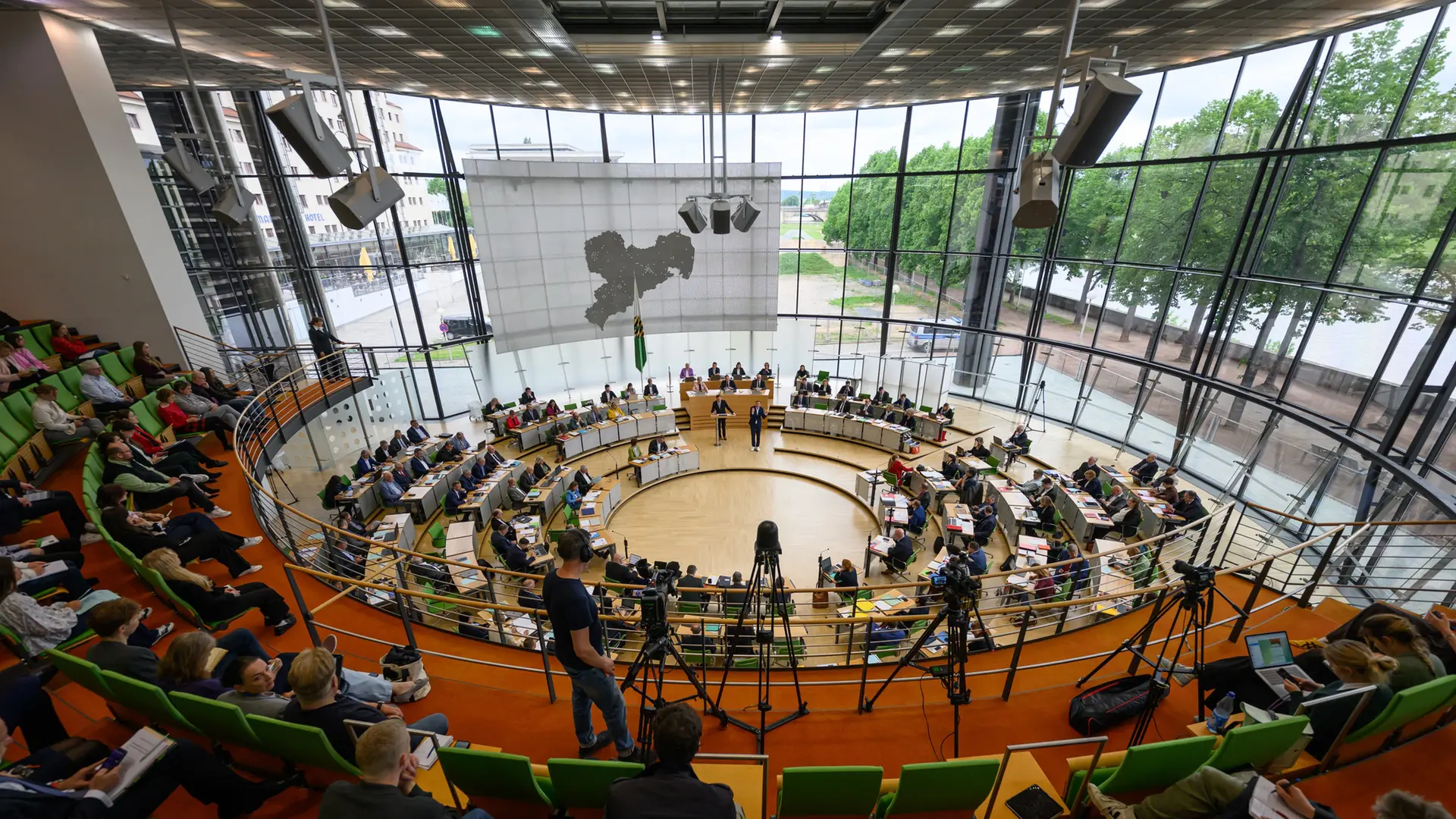
In the architecture of a functioning democracy, the relationship between the government and the parliament is defined by the principle of accountability. While the media acts as the public’s eyes and ears, the parliament serves as the direct oversight body, wielding the power to demand facts. One of the most critical tools in this arsenal is the "Small Inquiry" (Kleine Anfrage), a mechanism through which lawmakers can force the executive branch to provide detailed, accurate, and timely information on specific policy areas.
However, a recent controversy involving the arrival of the US-based defense contractor "Covenant" in Leipzig has cast a long shadow over the transparency standards of the Saxon state government. What began as a routine parliamentary inquiry has evolved into a heated debate over whether the government intentionally misled its own legislature, or if it has fallen victim to institutional incompetence that threatens the very foundation of parliamentary trust.
The Core Conflict: A Question of Truth
The incident centers on a series of parliamentary questions submitted by Nico Rudolph, a member of the Saxon State Parliament representing the BSW (Bündnis Sahra Wagenknecht). In late August 2026, when reports of the US defense firm "Covenant" planning to establish a presence in Leipzig were circulating primarily as rumors, Rudolph sought official confirmation.
The core of his inquiry was straightforward: Had the Saxon state government engaged in any discussions or negotiations with representatives of the Covenant corporation?
The initial response from the government, provided toward the end of September, was categorical: "No, no such discussions have taken place."
This denial, however, lasted only two weeks. On October 12, the government issued a formal correction to its previous statement. The updated response admitted that a meeting had, in fact, taken place on July 13 in the Ministry of Economic Affairs, involving the Minister himself and high-ranking representatives of the Covenant firm.
This admission of error did not arrive in a vacuum. It came exactly when the public became aware that Covenant had successfully opened a production facility in Leipzig. The timing has left opposition lawmakers and political observers questioning whether the government’s initial denial was a genuine administrative oversight or a calculated attempt to obfuscate the truth until the investment was a fait accompli.
Chronology of Events
To understand the gravity of the situation, one must look at the timeline of events that have led to the current political friction:
- July 13, 2026: A meeting occurs at the Saxon Ministry of Economic Affairs between the Minister and representatives of the US defense firm Covenant.
- Late August 2026: Nico Rudolph (BSW) files a Small Inquiry with the Saxon State Government regarding potential negotiations with Covenant.
- Late September 2026: The government responds to the inquiry, explicitly stating that no such discussions had occurred.
- Early October 2026: Covenant officially inaugurates its new production facility in Leipzig.
- October 12, 2026: Under growing pressure and likely in anticipation of further scrutiny, the government submits a correction to the parliament, admitting to the July 13 meeting.
- Mid-October 2026: Opposition parties demand an explanation for the discrepancy, citing a potential violation of the duty to provide accurate information to the legislature.
- November 20, 2026: The current deadline for the government to respond to further follow-up inquiries regarding the nature of the misinformation.
The "Funny Coincidence": Analyzing the Discrepancy
Nico Rudolph has not minced words regarding the timing of the correction. He describes the gap between the initial false response and the belated admission as a "funny coincidence."
"Either the government knew about the meeting all along, in which case they intentionally lied to the parliament," Rudolph argues, "or the left hand truly did not know what the right hand was doing. If the latter is true, it points to a level of internal disorganization that is frankly alarming for a state ministry."
The implications of either scenario are damaging. If the government lied, it suggests an executive branch that views parliamentary oversight as an obstacle to be bypassed rather than a democratic obligation. If the government was simply disorganized, it suggests a lack of institutional memory and control, raising questions about how other sensitive negotiations—perhaps involving larger defense contracts or state subsidies—are being managed.
The View from Academia: Constitutional Implications
Sven Siefken, a professor of political science at the Hochschule des Bundes (University of Applied Sciences of the Federal Administration), notes that while errors in parliamentary inquiries do occur, the context here is vital.
"If this is merely a clerical error, a correction usually suffices to settle the matter," Siefken explains. "However, if the inquiry was answered with intent to deceive, it represents a grave violation of the rights of the members of parliament. Because these inquiries are a central pillar of our constitutional order, intentionally misleading a lawmaker is not just a minor bureaucratic hiccup; it is an assault on the parliament’s ability to function as a check on executive power."
Siefken highlights that the Saxon state constitution provides a clear mandate for the government to answer inquiries honestly. While there are exceptions for sensitive data—such as national security or ongoing, highly confidential business negotiations—these exceptions must be explicitly invoked and justified.
"You cannot simply provide a false answer," Siefken emphasizes. "If the information is subject to secrecy, the government must state that it cannot disclose the information and provide the legal basis for that refusal. Providing a flat-out denial that is later proven false is a fundamentally different and more serious issue."
The Government’s Defense: A "Processing Error"
In response to inquiries from MDR AKTUELL, the Saxon State Chancellery issued a brief statement characterizing the event as an "internal processing error." They have not provided further details on how such a significant omission—the meeting between a cabinet minister and a defense contractor—could have been overlooked in an official government response.
This lack of detail has only fueled the skepticism of the opposition. The government’s attempt to characterize this as a mundane "clerical" error is seen by many as a tactical move to minimize the political fallout. However, for lawmakers like Rudolph, the explanation is insufficient.
"I have already submitted two follow-up inquiries," Rudolph stated. "One is focused on the actual business dealings with Covenant, and the second is a direct demand for an explanation as to how this misinformation occurred in the first place."
The government now faces the task of satisfying these inquiries by the November 20 deadline. The pressure is on, not just to provide the requested data, but to restore a modicum of trust in the transparency of the Saxon administration.
Implications for Future Oversight
The Covenant affair serves as a cautionary tale for modern governance. As states compete for industrial investments, particularly in the defense sector, the temptation to shroud negotiations in secrecy grows. However, the requirement for parliamentary transparency is intended specifically for these moments—when high-stakes economic decisions intersect with state policy.
If the government’s response on November 20 is perceived as evasive or incomplete, it is likely that the parliament will move to initiate more formal investigative procedures. This could include a special committee of inquiry, which would have the power to summon ministers and undersecretaries to testify under oath.
For now, the people of Saxony are watching. The case of the Covenant facility is no longer just about a new factory or the jobs it may bring to Leipzig; it has become a litmus test for the health of the state’s democracy. At the heart of the matter is a simple, yet non-negotiable principle: in a democracy, the government must be accountable to the people’s representatives, and the truth must not be an elective component of that accountability.
The coming weeks will determine whether the administration can provide the transparency required to put this controversy to rest, or if this "internal processing error" will fester into a political scandal that defines the current legislative period.