Introduction: A Shocking Discovery
In the early hours of a Saturday morning, the tranquil streets of Osnabrück, Lower Saxony, became the backdrop for a medical incident that has left seasoned law enforcement officers and emergency medical professionals in a state of profound disbelief. A 26-year-old woman was discovered lying on a public walkway, visibly incapacitated by what was later determined to be a near-lethal level of alcohol consumption.
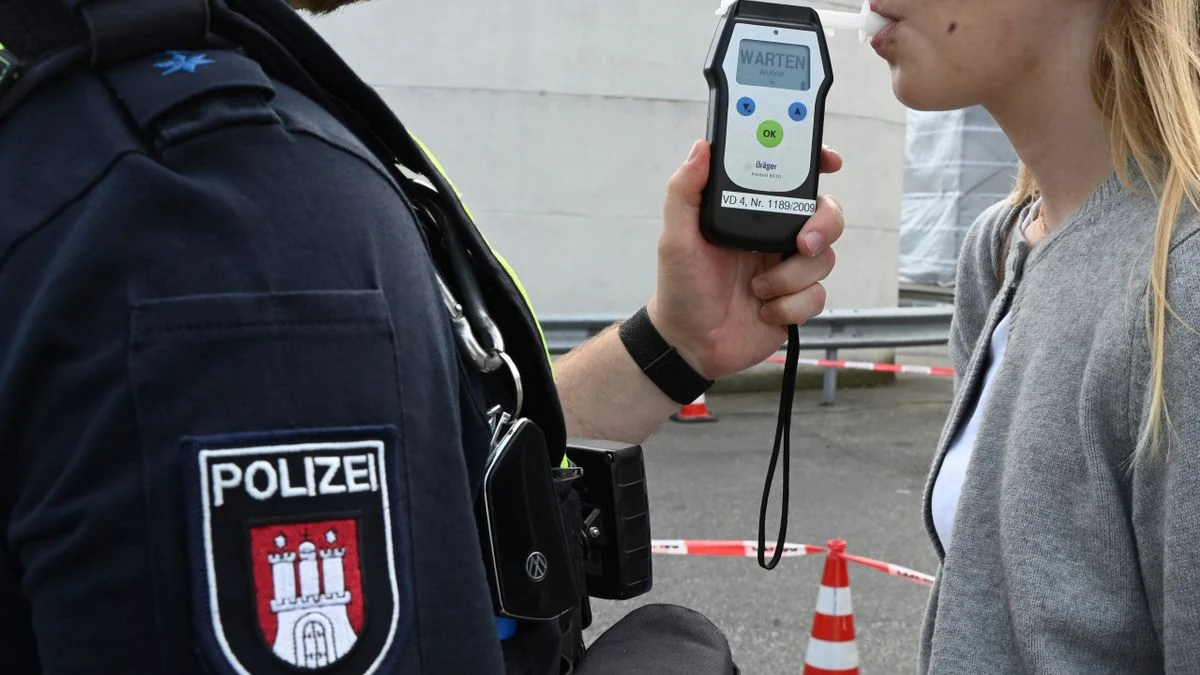
Upon testing, the woman’s blood alcohol content (BAC) was recorded at a staggering 5.25 per mille. This figure, which is more than ten times the legal driving limit in Germany and significantly exceeds the threshold typically associated with acute alcohol poisoning and potential coma or death, has triggered a broader conversation regarding substance abuse, public health, and the limits of human physiological tolerance.
Chronology of the Incident
The events unfolded in the pre-dawn hours of Saturday. Local residents, alerted by the presence of a person slumped on the ground, contacted the Osnabrück police department. Upon arrival, officers found the 26-year-old woman in a state of severe intoxication.
According to initial reports released by the police on Sunday, the woman was conscious but incoherent. When questioned by the responding officers, she provided a fragmented account of her evening, claiming that she had been attempting to make her way home following a visit to a local swimming facility. The logistical timeline of how she transitioned from a recreational environment to such a state of collapse remains a subject of investigation.
Officers immediately recognized that this was not merely a case of public drunkenness, but a life-threatening medical emergency. Recognizing the danger posed by such a high concentration of alcohol in the bloodstream, the police prioritized the woman’s transport to a local hospital. The medical staff at the clinic, accustomed to dealing with trauma and intoxication, were reportedly "stunned" when the diagnostic results were confirmed, leading to her immediate admission to an intensive care unit for constant monitoring.
Supporting Data: The Science of 5.25 Promille
To understand the gravity of the situation in Osnabrück, one must look at the physiological implications of a 5.25 BAC reading. In the medical community, blood alcohol levels are measured in per mille (‰).
- 0.5‰: The typical legal limit for driving in Germany. At this stage, slight euphoria and lowered inhibitions are common.
- 1.5‰ to 2.0‰: Significant impairment of motor skills, slurred speech, and loss of emotional control.
- 3.0‰: This level is often considered the threshold for severe alcohol poisoning. At this stage, individuals often suffer from loss of consciousness, confusion, and a significant risk of respiratory depression.
- 4.0‰ and above: At this level, the risk of coma is extremely high. The central nervous system is so depressed that the body may struggle to maintain basic autonomic functions, such as breathing and heart rate. Death due to respiratory failure or aspiration of vomit is a constant, looming threat.
A reading of 5.25‰ is, for the vast majority of the human population, a fatal dose. That the individual remained conscious enough to attempt to communicate with police is described by experts as an "extraordinary physiological anomaly." It is possible that the individual possessed an extremely high tolerance developed through chronic consumption, or that the alcohol was absorbed over a specific timeframe that allowed for a narrow margin of survival.
Official Responses and Clinical Observations
The reaction from the authorities was one of genuine astonishment. In their official statement, the Osnabrück police noted that the reading "left the helpers speechless." This sentiment was echoed by the medical team that took over the case.
"When we deal with values this high, we are not just looking at a patient who needs to ‘sleep it off,’" noted a medical professional familiar with the case, speaking under the condition of anonymity. "We are looking at a patient who is on the precipice of total system failure. The fact that she was alive and coherent enough to give an account of her evening is something that, in our clinical experience, is rarely seen."
The hospital administration has confirmed that the patient was kept under strict medical observation to prevent cardiac arrest or respiratory failure. While the woman is expected to recover physically from the acute intoxication, the case has prompted a mandatory referral to social services and addiction counseling, as such a level of consumption suggests a deep-seated struggle with substance dependency.
Implications: The Broader Crisis of Alcohol Abuse
The Osnabrück incident serves as a stark, harrowing case study for the wider issue of alcohol abuse in Germany. Despite ongoing public health campaigns, alcohol remains a deeply ingrained component of social life, and the consequences of overconsumption are often treated with a degree of cultural indifference until a life-threatening emergency occurs.
The Normalization of High-Risk Drinking
Sociologists argue that cases like this are the "tip of the iceberg." For every individual who collapses in public view, there are potentially dozens more who reach dangerous levels of intoxication in private settings. The "normalization" of binge drinking—often categorized as "heavy episodic drinking"—is a public health crisis that places an immense burden on the German emergency medical system.
The Role of Law Enforcement and First Responders
The Osnabrück police acted with textbook efficiency. By prioritizing the woman’s medical needs over potential legal repercussions for public intoxication, they saved a life. However, this raises questions about the allocation of resources. Police departments are increasingly acting as de facto social workers and emergency medical technicians. When officers are diverted to manage extreme intoxication cases, their ability to respond to criminal activity is temporarily compromised.
Medical Infrastructure and Long-Term Care
The case also highlights the strain on clinical staff. Hospitals in urban centers like Osnabrück regularly deal with intoxication-related admissions, but patients with a 5.25‰ BAC require intensive, one-on-one care that diverts resources from other critical surgeries and treatments. The long-term implication is a need for better-integrated psychiatric and addiction-focused aftercare. Sending a patient home after they are "sober" is a failing strategy; long-term recovery requires intervention at the psychosocial level.
Looking Forward: Prevention and Policy
Is there a solution to the prevalence of extreme alcohol consumption? Experts suggest a three-pronged approach:
- Public Awareness: Moving beyond "Don’t drink and drive" campaigns to focus on the physiological destruction caused by binge drinking.
- Harm Reduction: Implementing better screening processes in emergency rooms to identify "at-risk" individuals before they reach the point of 5.0‰ intoxication.
- Policy Regulation: While Germany has a long-standing culture regarding alcohol, discussions regarding the pricing, availability, and marketing of high-alcohol-content beverages are becoming increasingly relevant in the wake of such incidents.
Conclusion
The 26-year-old woman in Osnabrück survived a brush with death that few could withstand. As she recovers under the care of medical professionals, the city—and perhaps the nation—is left to contemplate how such a dangerous level of consumption became reality. This incident is a sobering reminder that behind every statistic is a human story of struggle, and that the fine line between a night out and a tragedy is often thinner than we dare to admit. The authorities in Osnabrück have done their part in averting a fatality; now, the challenge shifts to ensuring that the underlying causes of this life-threatening event are addressed with the seriousness they deserve.