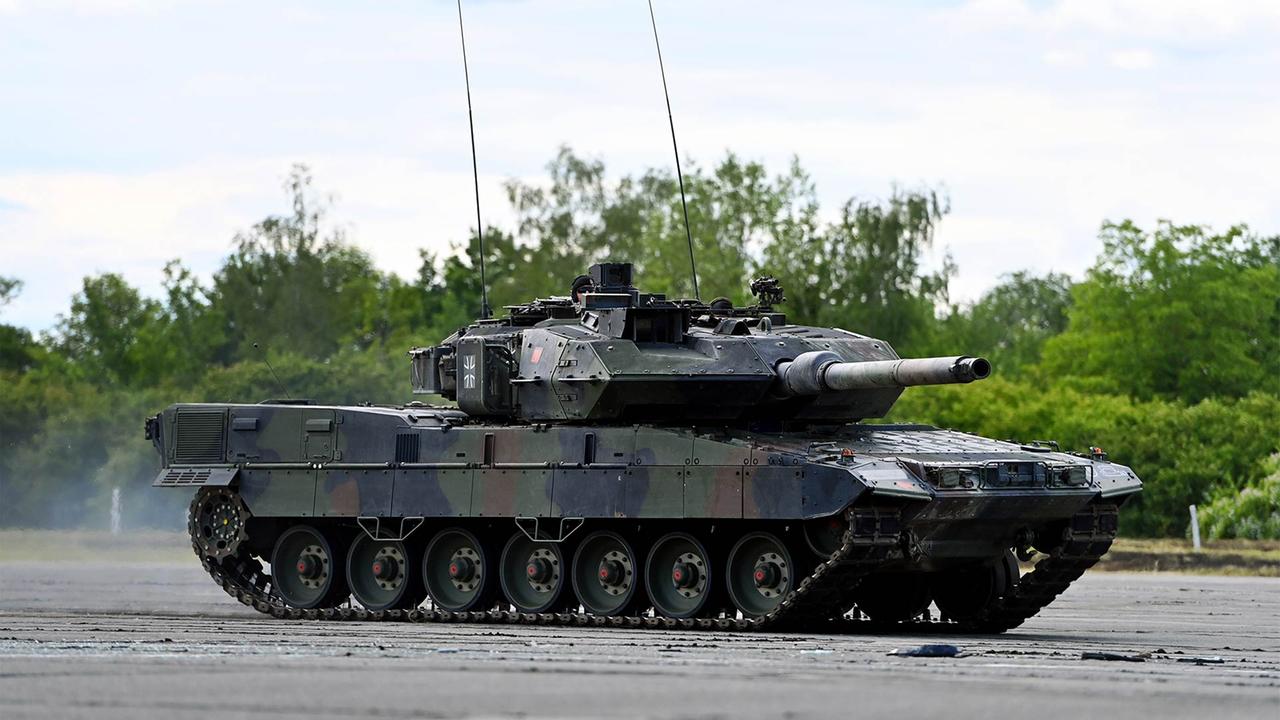
As the German-French defense giant KNDS navigates a complex geopolitical landscape, its leadership remains steadfast in its ambition to go public. Despite a previous cancellation in July, the manufacturer of the Leopard 2 tank is keeping a close watch on market conditions, with 2026 still marked as a potential window for an initial public offering (IPO).
Executive Summary: The Strategic Pivot
KNDS, the powerhouse formed by the merger of Germany’s Krauss-Maffei Wegmann and France’s Nexter, is currently at a strategic crossroads. While the global demand for heavy armor and sophisticated land systems has reached levels not seen since the Cold War, the financial markets have proven to be a difficult terrain for defense stocks.
KNDS CEO Jean-Paul Alary recently reiterated that the company is maintaining its preparations for an IPO. However, the timing is no longer guaranteed. In a candid interview with Handelsblatt, Alary clarified that while a 2026 debut remains a viable option, it is contingent upon shareholder expectations being met—a hurdle that has not yet been cleared due to prevailing market volatility.
Chronology: A Delayed Departure
The narrative of the KNDS IPO is one of cautious optimism tempered by economic reality.
- Early 2026: KNDS signaled its intent to capitalize on the "super-cycle" of defense spending, driven by increased EU and German defense budgets following the intensification of regional conflicts.
- July 2026: The highly anticipated IPO was abruptly shelved. Management cited "changing market conditions," a euphemism for the cooling investor sentiment toward defense stocks that had previously seen a massive rally.
- October 2026: KNDS leadership confirms that the plan is merely "postponed, not abandoned." The company is currently monitoring the broader economic indicators, including interest rate trajectories and geopolitical stability, to determine the optimal window for re-entry.
Supporting Data: The Defense Sector’s Paradox
The current state of the defense industry presents a peculiar paradox. While order books are overflowing—KNDS itself expects a robust 30% revenue growth for the current fiscal year—the stock market performance has been underwhelming.
The Correction Effect
The initial surge in defense stocks, which began in early 2022, was fueled by massive government rearmament programs. However, the current phase is defined by "profit-taking." Investors have become increasingly selective, moving away from broad sector enthusiasm toward a more granular analysis of project pipelines.
The volatility has been exacerbated by political uncertainty. For example, the German government’s recent decision to halt the F126 frigate project sent ripples of concern through the sector, highlighting the vulnerability of defense contractors to shifting political priorities. The impact on established players has been severe; Rheinmetall, for instance, has seen its share price decline by more than 50% from its record highs reached a year ago.
The Global IPO Landscape
The struggle for a successful IPO is not limited to the defense sector. According to data from the consultancy EY, the German market has seen a sluggish year for new listings. In the first nine months of 2026, only eight companies went public in Germany, a stark contrast to the 99 listings in Europe and 242 in China.
Globally, the IPO market is characterized by a "quality over quantity" approach. While the total number of IPOs has dipped by 4% compared to the previous year, the total capital raised has more than doubled, reaching $288 billion. This is largely attributed to "mega-listings" such as SpaceX, which raised $86 billion, and the massive secondary listing of SK-Hynix in the United States.
Official Responses and Governance
The ownership structure of KNDS remains a central pillar of its corporate strategy. Currently, the company is held in a 50/50 split between the French state and the Wegmann family of Germany.
The Proposed Ownership Shift
Should the IPO proceed, the plan involves the following distribution:
- Public Float: 20% of shares would be offered to public investors.
- Wegmann Family: The family would retain 40% of the equity, signaling long-term commitment.
- The German State: The remaining 40% could potentially be acquired by the German government, a move that would solidify the company’s status as a strategic national asset.
CEO Jean-Paul Alary has emphasized that regardless of the IPO timeline, the company is actively seeking industrial partnerships to scale production. The demand for the Leopard 2A7V and other systems remains critical for NATO interoperability, and the company is under immense pressure to accelerate delivery times while managing supply chain constraints.
Implications: The Road Ahead
The path to the stock exchange for KNDS is fraught with both internal and external challenges.
Market Sentiment and Economic Headwinds
The "pipeline" for IPOs in the final quarter of 2026 remains cautiously optimistic. Companies like Anthropic are preparing for high-profile listings, while others, such as OpenAI, have deferred their plans due to security and governance concerns.
Martin Steinbach of EY notes that while the pipeline is "well-filled," timing is everything. "Uncertainties—such as a potential cooling of the US economy, the outcomes of the US midterm elections, and the persistent pressure from rising interest rates—can impact the IPO sentiment in the short term," Steinbach warns.
The Domestic German Context
On the German stock exchange, the DAX has struggled with the broader macroeconomic environment. Concerns regarding the Eurozone’s interest rate policy, combined with the geopolitical instability surrounding the Iran-Israel conflict, have created a risk-off environment for investors. The DAX dipping below the 25,000-point mark in October serves as a reminder of how fragile the current market sentiment is.
Strategic Resilience
Despite these external pressures, KNDS remains a fundamental component of European security. Its ability to generate a 30% revenue increase is a testament to the necessity of its products. The decision to wait for the "right" market conditions demonstrates a mature management approach. Rather than rushing into a hostile market, KNDS is choosing to prioritize long-term stability and valuation, ensuring that when it does eventually enter the public market, it does so from a position of strength rather than desperation.
Conclusion: A Measured Approach
The KNDS story is emblematic of the broader European defense industry: trapped between the urgent necessity of rapid expansion and the harsh, often fickle realities of global capital markets. While the board and the owners remain committed to the IPO, they are no longer beholden to the arbitrary timelines of the past.
For potential investors, the KNDS story is one of long-term value linked to geopolitical security. For the company, the upcoming months will be a test of endurance, balancing the manufacturing demands of an era of rearmament with the financial discipline required to satisfy the modern, wary shareholder. As the global economy navigates these uncertain waters, the "wait and see" strategy of KNDS may prove to be the most prudent path forward.