By MDR SACHSEN | Updated: October 23, 2026, 17:11 CET
In a significant judicial development for the Sächsische Schweiz-Osterzgebirge region, the Dresden Regional Court has delivered its final verdict in the appeals process regarding the 2022 wildfire at the iconic Bastei rock formation. The case, which centered on the reckless use of shisha pipes in a protected National Park, has finally reached a conclusion, offering a nuanced assessment of responsibility and criminal intent.
The court sentenced the primary defendant to a suspended prison term of one year and nine months. Meanwhile, the two other individuals standing trial alongside him were acquitted. This ruling marks a departure from the initial proceedings at the District Court of Pirna, reflecting a more complex interpretation of the events that led to one of the most significant environmental threats in the region’s recent history.
The Core Facts: A Moment of Negligence with Global Consequences
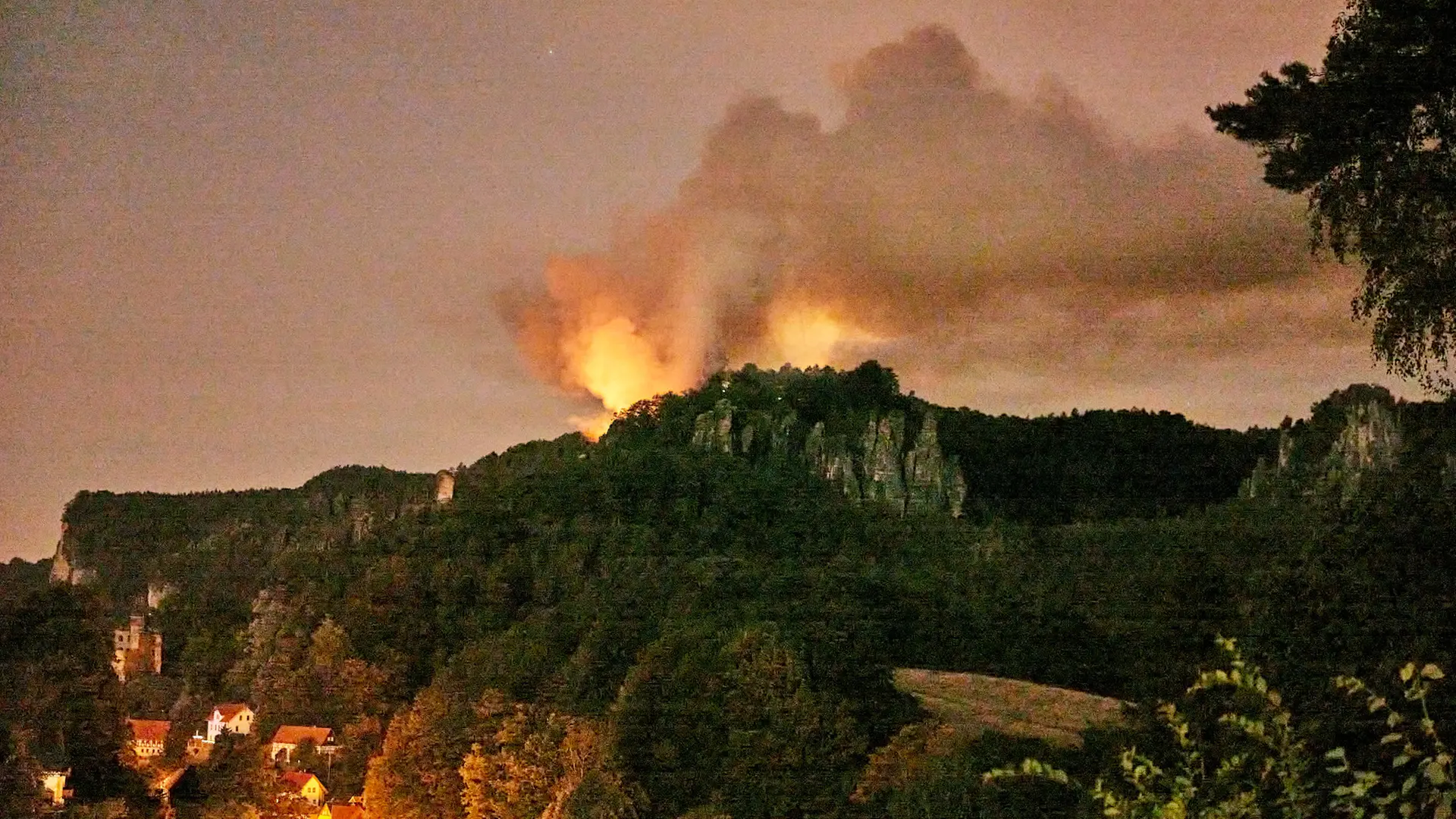
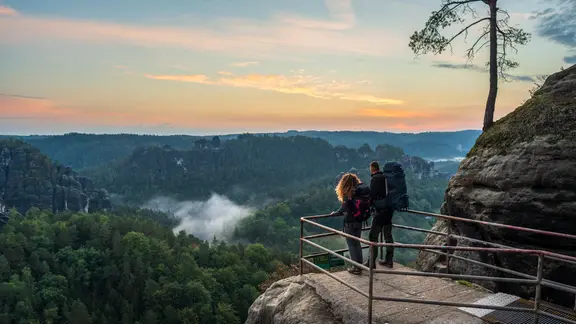
On July 17, 2022, a serene summer day in the Saxon Switzerland National Park—a premier tourist destination known for its rugged sandstone cliffs and dense, ecologically sensitive forests—was shattered by the outbreak of a wildfire. The fire originated near the "Kanapee" lookout, a popular vantage point offering panoramic views of the Elbe Valley.

Investigators determined that the fire was sparked by a group of four young men who had spent several hours smoking shisha pipes in the restricted zone. The core of the accusation focused on the disposal of glowing charcoal embers. By discarding the remnants of their hookah coal over the cliff edge into the dry, flammable vegetation below, the individuals inadvertently triggered a chain reaction that quickly spiraled out of control.
The resulting blaze forced a massive multi-day mobilization of emergency services. Firefighters from across the region, supported by aerial assets and specialized ground units, battled the flames in treacherous, vertical terrain. The operation was hampered by the heat, the difficulty of accessing deep rock crevices, and the constant threat of falling debris. For over 48 hours, the firefighting crews worked tirelessly to prevent the fire from spreading to wider, more vulnerable sections of the National Park, eventually containing the blaze before it could cause irreparable destruction to the local ecosystem.
Chronology of the Legal Proceedings
The legal journey from the forest floor to the courtroom has been long and marked by shifting interpretations of the law.
- July 2022: The fire occurs, leading to an immediate investigation by the Saxony State Police and the forestry authorities. The suspects are identified shortly thereafter.
- Initial Trial (District Court of Pirna): The lower court took a hardline stance. It convicted the primary defendant of intentional arson through omission, handing down a two-year suspended sentence. The three accomplices were found guilty of aiding and abetting, receiving one-year suspended sentences each.
- The Appeal (Dresden Regional Court, 2026): Seeking a more precise legal assessment, the case moved to the higher regional court.
- The Final Verdict: The court acquitted two of the participants entirely. The fourth individual involved was absent from the appeal, meaning his original one-year suspended sentence remains in effect. The primary defendant received a reduced sentence compared to the initial trial.
Supporting Data and Judicial Reasoning
The shift in the verdict from the District Court of Pirna to the Dresden Regional Court is rooted in the fine distinctions of criminal intent. During the appeal, the prosecution had sought a two-year sentence for the primary defendant and one-year terms for his associates.

The presiding judge, however, opted for a more measured approach. The court concluded that while the primary defendant did indeed realize that dumping glowing coal into the dry brush posed a severe risk of fire—and accepted that risk by acting anyway—the situation was fundamentally different for his companions. The evidence suggested that the other men could neither have predicted the catastrophic outcome with the same certainty nor were they in a position to effectively intervene to stop the primary actor.
Furthermore, the appeal process benefited from a more thorough forensic investigation. A specialized fire investigator testified, providing definitive evidence that discarded cigarette butts could be ruled out as the ignition source. The focus remained squarely on the shisha coals. However, the court also noted a degree of uncertainty regarding whether the coals were the sole and direct cause, or if the environmental conditions—such as extreme drought and wind—were the primary catalysts that allowed the fire to ignite so rapidly.
Official Responses and Public Sentiment
The incident left a deep scar on the public consciousness of the region. The Sächsische Schweiz National Park is not merely a recreational space; it is a protected heritage site where the balance between human activity and ecological preservation is constantly debated.
The Role of the Prosecutor
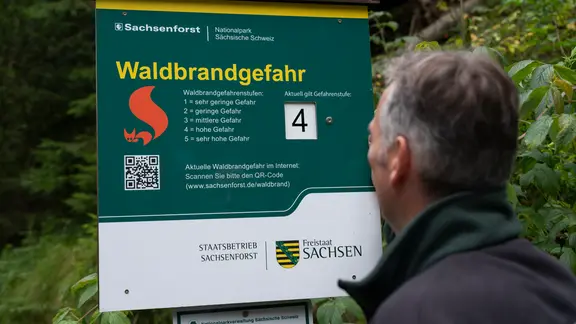
The Public Prosecutor’s office maintained throughout the trial that the actions of the group were a clear case of criminal negligence, if not outright reckless endangerment. They argued that the high forest fire danger levels (which are frequently updated and posted at trailheads) were ignored by the group, who chose to engage in an activity—smoking shisha—that is inherently dangerous in a dry, forested environment.
The Defense’s Perspective
The defense lawyers emphasized the lack of intent. They argued that their clients were young, arguably naive, and certainly did not set out to destroy a portion of the national park. The defense highlighted that the primary defendant had cooperated with the investigation and expressed remorse, factors that likely contributed to the court’s decision to grant a suspended sentence rather than immediate incarceration.
Broader Implications for the National Park
The case serves as a grim warning to tourists and locals alike. As climate change increases the frequency of long, dry summers in Germany, the "Fire Danger Level" in the Saxon Switzerland National Park is now treated with far greater severity by park rangers and the police.

Stricter Enforcement
Since the 2022 fire, the administration of the National Park has increased patrols in the core zones. The "zero-tolerance" policy regarding open fires is now more rigorously enforced. Visitors are regularly reminded that the thin soil and dry pine needles in the area act as a tinderbox, and even a small ember can lead to a fire that requires hundreds of personnel and millions of euros in public resources to extinguish.
The "Ganzjahrestourismus" Dilemma
The region has been working to promote "all-year-round tourism" to reduce the pressure during peak summer months. However, the legal and environmental fallout of this incident has sparked a local debate: Should certain sensitive areas be closed entirely during periods of high fire risk? The debate touches on the tension between public access to nature and the duty to protect that nature from human-induced disasters.
Looking Forward: A Lesson in Responsibility
The conclusion of this appeal is a milestone, but the consequences of the 2022 fire will be felt for years. The physical recovery of the forest is slow, and the legal chapter, while closed for the three defendants, remains a point of reference for future environmental crimes.
The court’s decision to differentiate between the primary actor and his companions highlights a fundamental principle of German criminal law: proportionality. It acknowledges that while the outcome was tragic, the legal system must look at the specific actions of each individual.

As the Saxon Switzerland region looks to the future, the hope is that this case will deter future visitors from the kind of recklessness that led to the "Bastei fire." The court’s verdict is not just a punishment for a specific act, but a societal statement that the preservation of our natural landscapes carries a collective responsibility. Whether one is a hiker, a photographer, or a tourist looking for a place to relax, the rules regarding fire safety in the National Park are not merely suggestions—they are the thin line between a protected natural treasure and an environmental catastrophe.
For the residents of Pirna, Bad Schandau, and the surrounding communities, the verdict brings a sense of closure to a difficult period. However, the sight of the scarred rock face near the Kanapee lookout remains a visual reminder of how quickly a moment of carelessness can change the landscape forever.

Key Takeaways for the Public:
- Fire Safety: Smoking and open fires are strictly prohibited in the core zones of the Saxon Switzerland National Park at all times.
- Legal Responsibility: The courts are increasingly viewing environmental destruction as a serious criminal offense, with consequences that can include long-term criminal records and suspended prison sentences.
- Vigilance: Visitors are encouraged to report any signs of smoke or illegal fire activity to the park authorities immediately, as early intervention is the only way to prevent large-scale forest fires.
The Dresden Regional Court has spoken. The case is, for now, history. But the lesson remains etched into the sandstone of the Elbe Sandstone Mountains: Nature is resilient, but it is not invincible against human error.