The footballing landscape in Frankfurt is bracing for a clash that carries far more weight than the typical mid-table Regionalliga fixture. On Saturday at 14:00, the FSV Frankfurt stadium at the Bornheimer Hang will host the “Little Frankfurt Derby” between the struggling hosts and the surging U21 side of Eintracht Frankfurt. While the conditions—mid-October weather and a notoriously heavy pitch—echo the atmosphere of their last encounter two years ago, the internal dynamics of both clubs could not be more divergent. For one side, it is a battle for consistency; for the other, it is a desperate fight for survival, both on the pitch and on the touchline.
Main Facts: A Tale of Two Trajectories
The current standings paint a deceptively simple picture: both teams find themselves locked in the middle of the Regionalliga Südwest table, separated by little more than goal difference. However, this statistical parity masks two vastly different stories. Two years ago, the narrative was reversed; the FSV was a league leader, while the Eintracht youth side struggled to keep their heads above the relegation zone.
Today, the roles have shifted. The Eintracht U21 squad, under the guidance of coach Patrick Glöckner, has successfully navigated the “growing pains” of being a newly promoted side. After a turbulent start to the season marked by two consecutive defeats, the young Eagles have stabilized, finding a rhythm that has seen them dismantle tough opponents like Aalen and secure vital wins in regional clashes against Fulda and Steinbach Haiger.
In contrast, the FSV Frankfurt project appears to be hitting a wall. With only one point harvested from their last five league encounters, the mood in Bornheim has soured significantly. The recent 3-2 defeat in Trier—a match in which the FSV squandered a comfortable 2-0 lead after 60 minutes—has sent shockwaves through the club.
The Chronology of a Crisis
The current malaise at the FSV did not happen overnight. Since the departure of the successful long-term manager Tim Görner during the summer, the club has been in a state of transition. Victor Kleinhenz, appointed to fill the void, has struggled to imprint his philosophy on a squad that currently lacks the defensive steel required to close out games.
The trajectory of the last few weeks has been downward:
- Late Summer: The club maintained optimism, despite a heavy 1-5 friendly loss to the Eintracht Bundesliga side (featuring stars like Hugo Larsson and Arthur Theate).
- Early Autumn: A series of draws and narrow losses began to erode confidence.
- The Trier Debacle: The 3-2 collapse last Sunday served as a breaking point for many fans and observers, highlighting an inability to manage leads—a trait often associated with a lack of tactical maturity or leadership on the pitch.
For Eintracht Frankfurt’s U21s, the timeline is one of progressive improvement. Following a shaky start, the team has turned the corner through tactical discipline. Coach Patrick Glöckner has successfully fostered a defensive stability that allows his creative attackers to play with confidence. The only cloud hanging over their progress has been a strange statistical anomaly: the team has conceded six penalties already this season, a record that has frustrated the coaching staff and arguably cost the side several points.
Supporting Data: Tactical and Personnel Challenges
The derby preparation is complicated by the unique nature of a “second team.” Eintracht’s U21 acts as a pipeline to the professional Bundesliga squad, meaning the lineup is subject to the needs of the senior team.
The Personnel Seesaw
Coach Glöckner faces a perpetual challenge in squad selection. Players like Malik Pimpong, Jeremiaha Maluze, and Julian Etse have all demonstrated the quality required for the Bundesliga, and their movement between squads is a testament to the academy’s success. However, it complicates the consistency of the U21 starting XI. For the derby, Maluze will be unavailable, as he is slated to travel with the Eintracht first team for their high-profile Bundesliga clash against Borussia Dortmund.

For the FSV, the challenge is internal. The squad possesses experience, but the lack of results has led to a fragile mental state. Kleinhenz’s post-match comments following the Trier loss—“We have many topics that we want and need to work on”—suggest a manager aware of the tactical gaps, but time is a luxury he may no longer have.
Penalty Statistics and Defensive Hurdles
The statistical discrepancy regarding penalties is a point of contention for Glöckner. While his defense has generally remained compact in open play, the frequency of spot-kicks conceded is a significant outlier that threatens to derail their climb up the table. Conversely, FSV’s inability to maintain defensive pressure for a full 90 minutes remains their primary concern. In the Regionalliga, where physical stamina and concentration in the final quarter of the match are paramount, the FSV has frequently folded, as seen in their late-game collapse against Trier.
Official Responses and Managerial Sentiment
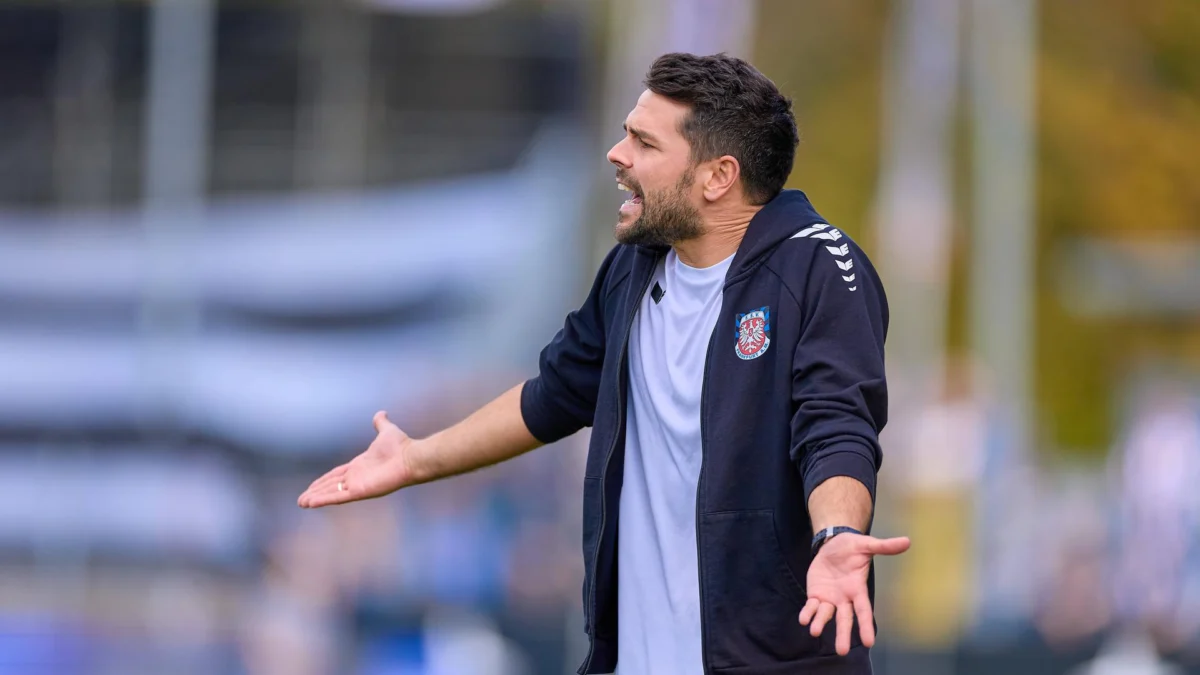
The pressure on FSV manager Victor Kleinhenz is the elephant in the room. At 35, he is tasked with stabilizing a historic club, but the board’s patience is famously thin. While no official statement has been issued regarding his immediate future, it is an open secret in the local football scene that the derby could be his “make or break” moment.
Eintracht coach Patrick Glöckner, who brings his own history as a former Eintracht player from the 1996/97 season, remains focused on the long-term development of his players. “The team has really developed well and now has a lot of self-confidence,” Glöckner noted in an interview with hr-sport. Regarding the constant need to improvise his lineup due to first-team call-ups, he remained philosophical: “It’s not a problem for me; I knew that beforehand. We are happy when our boys play for the pros. It’s a good challenge for us coaches.”
Implications: A Crossroads for Both Clubs
The implications of Saturday’s result are far-reaching.
For the FSV: A loss would likely signal the end of the Victor Kleinhenz era. Beyond the managerial change, a defeat would drop the club into the thick of a relegation scrap, potentially spiraling a historic club into a deeper existential crisis. The Bornheimer Hang, which has seen better days, needs a win to restore the faith of its supporters.
For Eintracht U21: A victory would solidify their place in the upper half of the table, validating their transition from a struggling promoted side to a competitive mid-table force. It would also provide a massive confidence boost for the young players, proving that they can handle the psychological pressure of a derby atmosphere.
As the two teams prepare to take the pitch, the atmosphere at the Bornheimer Hang will be one of palpable tension. In a match where form often goes out the window, the winner will earn more than just three points—they will earn the bragging rights of Frankfurt and, perhaps more importantly, the momentum required to define the remainder of their season. The “Little Derby” is, in every sense, a major test of character.