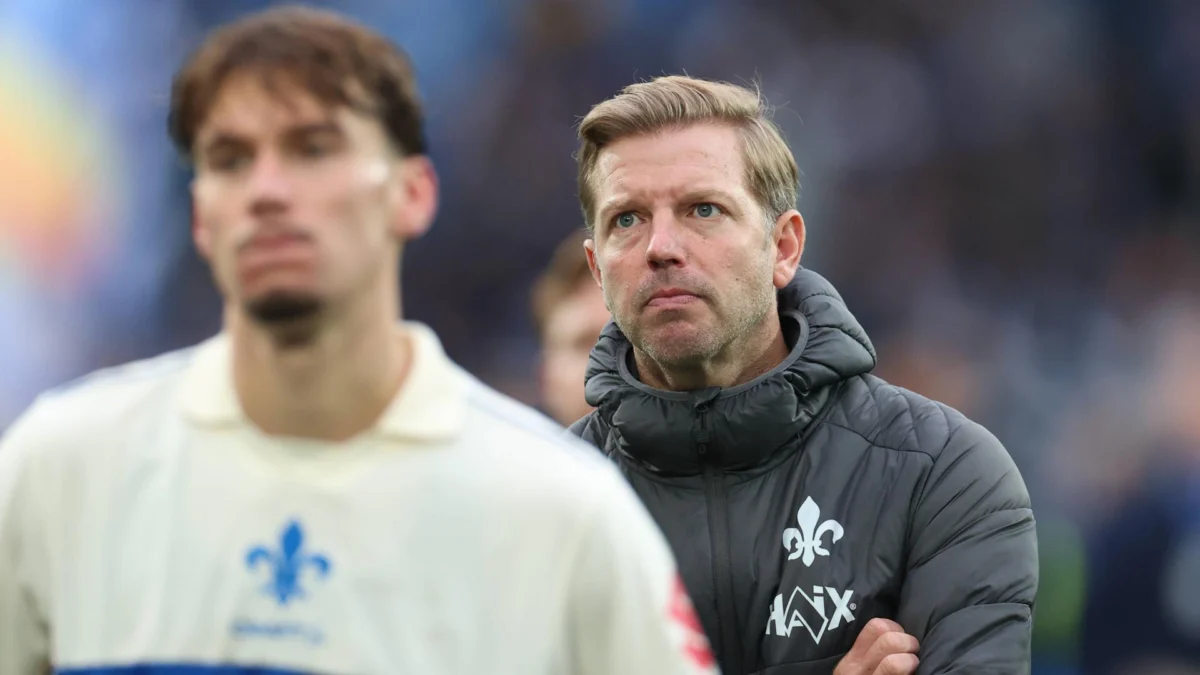
The atmosphere at the Merck-Stadion am Böllenfalltor is thick with tension as SV Darmstadt 98 prepares for a pivotal Friday night encounter against FC St. Pauli. Following a catastrophic 4-0 defeat away at Karlsruher SC—a result that left the team languishing in the second-to-last spot in the table—the "Lilien" find themselves at a critical crossroads. With the pressure mounting, head coach Florian Kohfeldt has overseen a week of intense internal dialogue, hoping that a combination of raw honesty and the "Bölle factor" can spark a much-needed turnaround.
The Aftermath of a Catastrophic Defeat
The defeat in Karlsruhe was not merely a loss of three points; it was a psychological blow that reverberated throughout the club for days. While football is often a sport of "move on to the next one," the severity of the 0-4 performance against a then-winless Karlsruhe side demanded more than a standard post-match review.
"We all—the coaching staff, management, and the players—had no real explanation for what happened in Karlsruhe," admitted Florian Kohfeldt during Thursday’s press conference. The blunt honesty from the manager underscored the gravity of the situation. There was no attempt to sugarcoat the performance; it was described as a total collapse from the first minute to the last. For a squad that arrived with aspirations of climbing the table, the reality of being 17th in the standings has turned the coming weeks into a high-stakes survival mission.
Chronology of a Turbulent Week
The days following the Karlsruhe match were defined by communication—or, more specifically, the lack of hierarchy in the communication. Recognizing that the coaching staff had already said their piece, the players took the initiative to hold a closed-door session, entirely devoid of the coaching staff.

The Players-Only Summit
The decision by the team to isolate themselves and address their collective issues was met with approval from the management. Kohfeldt described the move as "right and necessary," acknowledging that players often communicate differently when the hierarchy is removed. While the specific details of these discussions remain behind closed doors, reports suggest the air was cleared with intensity. It was a moment of accountability, where the players were forced to confront their own underperformance and the lack of cohesion that characterized their last outing.
Shifting the Focus to St. Pauli
As the training week progressed, the focus shifted from introspection to preparation. The team has been drilling on tactical adjustments, knowing that St. Pauli will arrive in Darmstadt looking to exploit the same vulnerabilities that Karlsruhe exposed. The mood in training has been described as focused, if somewhat somber, as the squad understands that the grace period afforded by the early season is officially over.
Supporting Data: The "Bölle Factor"
Despite the dismal away record—the Lilien have yet to secure a single point on the road—there is a stark contrast when the team plays in front of their home crowd. Darmstadt has secured seven points at the Böllenfalltor, providing a statistical lifeline that the club is desperate to maintain.
The Home-Away Disparity
The data presents a clear narrative:

- Away Form: Three major collapses (Kaiserslautern, Wolfsburg, and Karlsruhe). Each defeat saw the team crumble defensively and lose all composure.
- Home Form: Recent momentum is positive. The last two home matches resulted in victories against Bielefeld and Cottbus, proving that the squad is capable of high-level performance when buoyed by their supporters.
Kohfeldt is leaning heavily on this home-field advantage. "We have won our last two home games. The last one was thoroughly deserved, which gives us confidence," the coach noted. This reliance on the "Bölle factor" is not just emotional; it is a tactical necessity to stabilize the team’s season before the gap to safety becomes insurmountable.
Official Responses and Tactical Shifts
In his pre-match briefing, Florian Kohfeldt made it clear that the status quo is no longer an option. He signaled that the team sheet for the St. Pauli match will look different than the one that failed in Karlsruhe.
The Consequence of Failure
"I believe we will see one or two changes," Kohfeldt stated, adding, "Some things cannot be without consequences. That is normal in professional sports." While he stopped short of naming names, the message was clear: players who failed to track back, communicate, or maintain intensity in the last match are at risk of losing their starting berths.
The coach is looking for a reaction—not just in terms of effort, but in terms of tactical discipline. The shift in personnel is expected to address the defensive fragility that has plagued the team in recent away fixtures, with an emphasis on creating a more compact and resilient structure that can withstand the pressure of a 90-minute encounter.

Implications for the Season
The match against St. Pauli is more than just a regular fixture; it is a litmus test for the club’s ambition this season. A win could provide the momentum needed to escape the relegation zone and stabilize the managerial project under Kohfeldt. Conversely, another lackluster performance would deepen the crisis and likely force the board to consider more drastic measures.
The Pressure to Perform
"There is pressure, there is no question about that," Kohfeldt conceded. "We don’t need pity, we need to step on the gas." This sentiment reflects the mindset of a club that knows it is under-delivering on its potential. The players carry the weight of expectation from a loyal fan base that has seen the team compete at higher levels in recent years.
Strategic Outlook
Looking ahead, the next month of the schedule will define the trajectory of the season. If Darmstadt can leverage the energy of the Böllenfalltor and successfully integrate the tactical changes signaled by the coach, the Karlsruhe match may be remembered as the "bottoming out" point—the catalyst for a necessary cultural and tactical reset. However, if the team fails to translate their internal discussions into on-pitch output, the "Lilien" will face a long, arduous winter of discontent.
Conclusion
As the stadium lights prepare to illuminate the pitch on Friday, the pressure is on the players to deliver the response they promised each other behind closed doors. The combination of an honest, players-only summit and the comforting familiarity of the home ground provides the best possible stage for redemption. For Darmstadt 98, the message is simple: talk is cheap—the real work begins when the referee blows the whistle. The future of their season depends on whether they can prove that the disaster in Karlsruhe was an outlier rather than a systemic failure.