The summer of 2026 will be remembered not merely as a season of heat, but as a watershed moment in the unfolding climate crisis. New data released by the European Union’s Copernicus Climate Change Service (C3S) paints a sobering portrait of a continent under siege: record-breaking temperatures, unprecedented marine heatwaves, and a hydrological drought that has crippled the lifeblood of European industry and agriculture—its rivers.
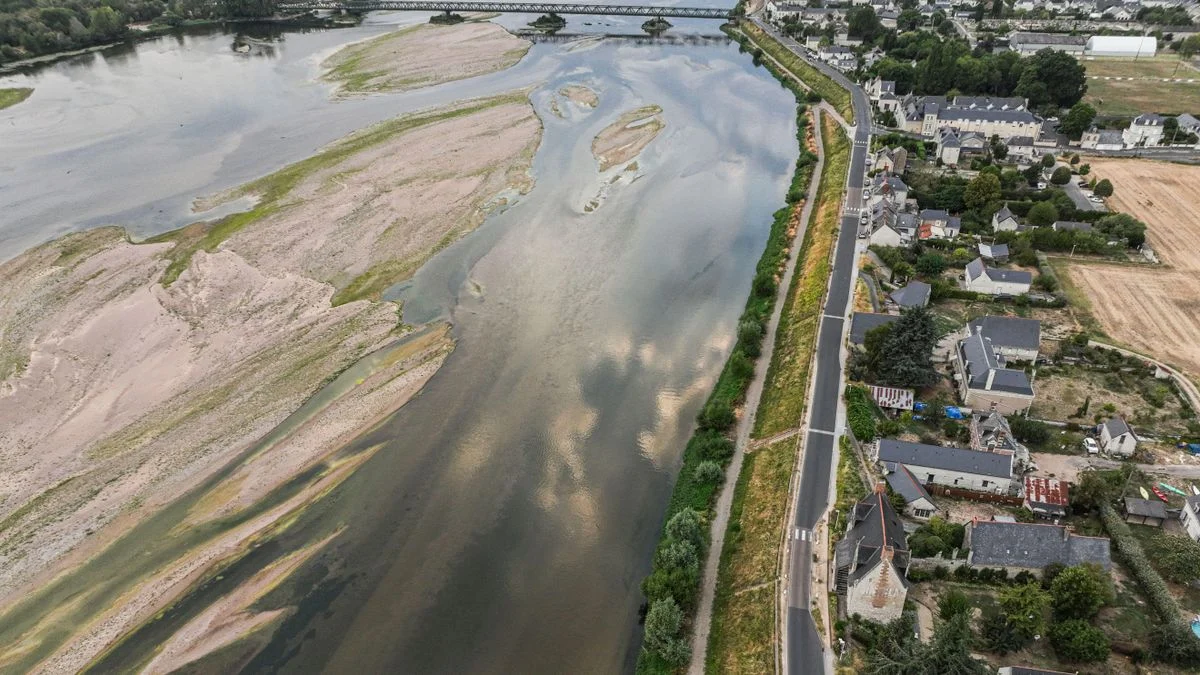
According to the latest C3S assessment, Europe witnessed its third-warmest summer on record, while Western Europe experienced its hottest summer since observations began. As temperatures soared, the continent’s major arteries—the Rhine, Danube, Po, Loire, Rhône, and Seine—saw their flow rates plummet to their lowest levels since tracking began in 1992. The crisis is no longer a future threat; it is a present reality, reshaping the geopolitical and economic landscape of the continent.
The Hydrological Crisis: Rivers at Their Breaking Point
For centuries, Europe’s rivers have served as the backbone of trade, energy production, and agriculture. However, the summer of 2026 tested the resilience of these vital waterways to the breaking point. The hydrological data from July and August reveals a catastrophic decline in discharge levels across the continent.
The Rhine, a critical corridor for industrial logistics, saw shipping capacity severely restricted as water depths dropped to historic lows. Similarly, the Po in Italy—the nation’s agricultural heartland—experienced conditions so severe that irrigation for crops became nearly impossible in many regions. The Danube, Loire, and Seine faced parallel fates, with flow rates reaching levels that experts have described as "near-record or absolute record lows."
This lack of water has triggered a cascade of secondary crises. The cooling of nuclear reactors, which requires massive volumes of river water, was hampered by both low flow and high ambient temperatures, forcing operators to adjust output at critical facilities. Simultaneously, the hydroelectric power sector faced a shortfall, undermining the transition to renewable energy just as demand for electricity peaked due to the blistering heat.
Marine Heatwaves: The Invisible Fire
While the land baked, the seas surrounding Europe were undergoing a transformation of their own. The Copernicus report highlights that large stretches of the Atlantic coast and the western and central Mediterranean experienced sea-surface temperatures that defied historical norms.
These marine heatwaves—prolonged periods of abnormally high ocean temperatures—do not stop at the shoreline. "Marine heatwaves can amplify the heat in adjacent coastal areas by limiting nocturnal cooling and increasing humidity, thereby exacerbating heat stress," the report notes.
In effect, the warming oceans acted as a thermal engine, preventing the atmosphere from cooling down at night. For populations in coastal cities, this meant that the traditional respite of a cool night air was absent, leading to sustained health risks for vulnerable groups. The ecological cost is equally profound, with marine ecosystems facing collapse as native species struggle to survive in rapidly warming, oxygen-depleted waters.
Chronology of a Scorched Summer
The summer of 2026 did not arrive as a sudden spike, but as a sustained assault.
- June: The Ominous Beginning. Early season temperatures began to trend significantly above the 1991–2020 average, setting the stage for what was to follow.
- July: The Hydrological Collapse. As the heat intensified, soil moisture deficits became acute. The flow of major rivers began a steep, unprecedented decline that would persist through the end of August.
- August: The Peak of Extremes. The month saw the convergence of peak terrestrial heat and the height of marine heatwaves. Western Europe bore the brunt of this, with daily average temperatures remaining consistently above the 30-degree Celsius threshold for extended periods.
Data indicates that there were 17 days in which at least 60 percent of Western Europe experienced temperatures exceeding 30°C. To put this in perspective, this is a significant escalation from the 11 days recorded during the infamous 2003 heatwave and the seven days experienced in the summer of 2025.

A Statistical Overview: Defining the New Normal
The numbers provided by the Copernicus Climate Change Service are stark:
- Temperature Anomalies: Western Europe recorded a summer average temperature of 21.7°C, which is 2.5°C above the 1991–2020 average.
- Spatial Extent of Heat: By the end of the season, a record-breaking 52 percent of the continent’s landmass had been subjected to "very strong" heat stress, defined as a "felt" temperature of 38°C or higher.
- Long-term Trend: The consistent deviation from the 30-year average confirms that the heatwaves of 2026 are not anomalous "freak" events, but are part of an accelerating trend driven by anthropogenic climate change.
Implications: The Nexus of Climate and Geopolitics
The crisis of 2026 has brought the concept of "energy security" into sharp focus. The reliance on river transport for fuel, the dependence on nuclear cooling, and the need for water-intensive hydroelectric power demonstrate how climate change is intrinsically linked to European stability.
The Economic Toll
The disruption to river logistics has sent shockwaves through supply chains. With major waterways like the Rhine struggling, the cost of transporting coal, chemicals, and raw materials has surged. This, in turn, has added inflationary pressure to an already strained European economy.
Energy Security and Sovereignty
As the continent attempts to decouple from volatile global fossil fuel markets, the vulnerability of its own renewable and baseline energy systems to drought poses a strategic dilemma. If the climate remains unstable, the "green transition" may face significant hurdles, as water—previously taken for granted—becomes a precious and contested commodity.
Agricultural Resilience
With irrigation systems failing due to low river levels and soil moisture depletion, the agricultural sector faces a long-term existential threat. European food security is no longer guaranteed by traditional farming practices, necessitating a rapid shift toward drought-resistant crops and advanced water management infrastructure.
Official Responses and the Path Forward
The data from Copernicus is not merely a report; it is a call to action. European policymakers are now faced with the reality that infrastructure built for the climate of the 20th century is failing in the climate of the 21st.
"The link between climate change and geopolitical challenges is now undeniable," the C3S report emphasizes. Governments are beginning to respond with a mix of short-term adaptation and long-term planning:
- Infrastructure Overhaul: There is a renewed push to deepen shipping channels and invest in multi-modal transport networks that do not rely solely on inland waterways.
- Water Management: Countries across the Rhine and Danube basins are exploring transboundary agreements to ensure equitable water distribution during extreme drought, moving away from unilateral usage toward integrated basin management.
- Urban Planning: Cities are being redesigned to combat the "urban heat island" effect. Increased green space, reflective materials, and "cool corridors" are being prioritized to protect citizens during extreme heat events.
Conclusion: The Horizon of Change
The summer of 2026 stands as a grim milestone. It has stripped away the illusion that Europe is shielded from the most severe impacts of the climate crisis. The combination of record-low river flows and record-high marine temperatures is a clear signal that the hydrological and meteorological cycles of the continent are shifting.
As we look toward the future, the lessons of 2026 are clear: climate adaptation must move from the periphery of policy to the very center. The cost of inaction is no longer measured only in environmental degradation, but in the stability of our economies, the security of our energy supply, and the health of our populations. The riverbeds that ran dry this summer may refill with the autumn rains, but the challenge they represent will remain, demanding a fundamental reevaluation of how Europe interacts with its environment in a warming world.