Introduction: A Titan Bows Out
In the unforgiving volcanic landscape of the Big Island of Hawaii, the dream of sporting immortality has come to a premature and painful end. Patrick Lange, a three-time Ironman World Champion and a titan of the sport, saw his quest for a fourth title vanish into the tropical heat during the cycling leg of this year’s Ironman World Championship. For the 40-year-old German legend, the race did not conclude with the glory of a finish-line tape, but rather with the heavy, silent resignation of a body pushed beyond its limits.
Lange, who entered the race as the defending champion and a clear favorite, faced a physical crisis that forced him to abandon his campaign midway through the 180.2-kilometer bike course. The news sent shockwaves through the triathlon community, marking a somber milestone in the career of one of the sport’s most decorated athletes.
The Chronology of a Collapse
The day began with promise. Lange, known for his tactical brilliance and consistent execution, performed strongly during the swim, exiting the water in a position that kept him well within striking distance of the leaders. As he transitioned to the bike, the outlook for a historic performance seemed bright. However, the grueling reality of the Hawaiian course soon began to take its toll.
The First Signs of Trouble
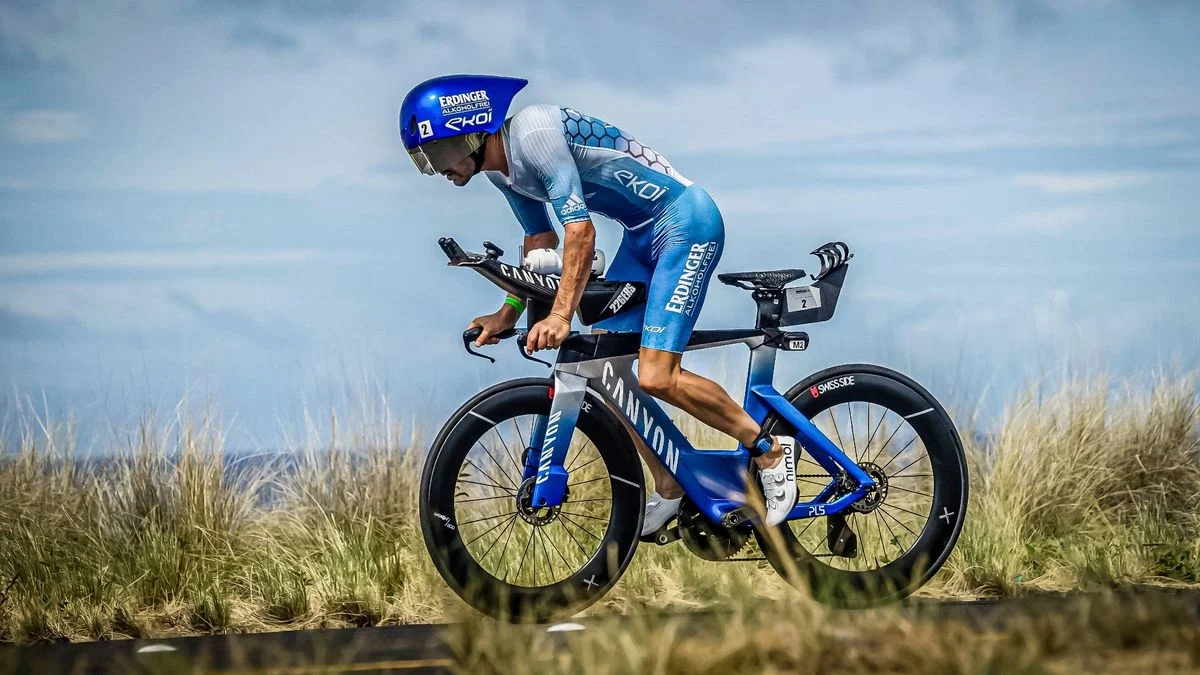
Approximately 65 kilometers into the bike leg, the trajectory of Lange’s race shifted dramatically. Observers noticed the veteran athlete drifting toward the side of the road, his rhythm disrupted. He was seen clutching his left hamstring, a clear indicator of physiological distress.
In a pivotal moment of the race, Lange stopped to consult with his long-time coach, Ben Reszel. The minutes that followed were a microcosm of the internal battle every athlete faces: the tension between the desire to push through agony and the reality of a body that has simply reached its threshold. After a lengthy discussion, Lange attempted to remount his bike, hoping that the muscular tension might subside.
The Final Fade
The attempt to continue proved futile. As Lange rejoined the pack, his performance plummeted. What was once a seamless, powerful cadence turned into a struggle to maintain a competitive pace. He was quickly overtaken by a cascade of rivals, dropping outside the top 40 competitors.
The psychological toll of losing contact with the front of the race proved as taxing as the physical pain. By the 96-kilometer mark—just over halfway through the bike segment—the decision was made to withdraw. The pain in his "posterior chain" had become too severe to manage, and the risk of catastrophic injury or further physical damage rendered the continuation of the race unjustifiable.
Supporting Data: A Legacy in Numbers
To understand the magnitude of this exit, one must look at the stature of the man involved. Patrick Lange is not merely a participant; he is a cornerstone of modern triathlon history.
- World Championship Pedigree: Lange’s resume is headlined by three Ironman World Championship titles (2017, 2018, and 2024).
- The Pursuit of History: Heading into this race, Lange was tied with the legendary Jan Frodeno for the most Ironman World Championship titles by a German athlete. A fourth victory would have solidified his status as the undisputed greatest German triathlete in history.
- A Career of Excellence: Beyond his three gold medals, Lange’s trophy cabinet boasts a collection of silver and bronze medals from various World Championship events, cementing his status as a permanent fixture on the global podium for nearly a decade.
The disappointment is compounded by the fact that this is not an isolated incident. Lange struggled with similar muscular issues during the Ironman Texas earlier this April. While he and his team had hoped that a strategic recovery and training regimen would mitigate these symptoms, the heat and intensity of the Hawaiian course proved to be a bridge too far.
Official Responses: "A Brutal Decision"
The aftermath of the withdrawal was characterized by a mix of profound sadness and professional perspective. Coach Ben Reszel, speaking to German broadcaster ZDF, provided an intimate look at the emotional weight of the decision.
"It is, of course, a brutal decision," Reszel stated, his voice reflecting the gravity of the situation. He described the physical sensation as a "tendency for cramping throughout the entire posterior chain," a condition that made it impossible for Lange to apply the necessary power to his pedals.
Reszel offered insight into the psychological erosion that occurs when a champion feels their competitive edge slipping away. "When you get on the bike in fifth place and are slowly passed by one athlete after another, it does something to you. You lose that connection to the race, and it becomes progressively harder to find the motivation to continue suffering when the goal is already slipping through your fingers."
For Lange, the disappointment is twofold: the loss of a race he felt prepared to win, and the realization that his body could no longer support the standard of excellence he has set for himself for over a decade.
Implications: The Final Chapter Awaits
The exit from Hawaii does not mark the end of Patrick Lange’s journey, but it certainly accelerates the final chapter. Earlier this year, in July, Lange made the announcement that he intended to retire from the sport.
The Road to Roth
Following the heartbreak in Hawaii, the focus of the triathlon world now shifts to the German’s swan song. Lange has confirmed that his final professional race will take place at the prestigious Challenge Roth next July. This legendary event, known for its electric atmosphere and fast course, provides a fitting stage for one of the sport’s greatest ambassadors to bid farewell.
The Impact on the Sport
The absence of Lange in the latter stages of the Ironman World Championship leaves a power vacuum at the top of the sport. His departure serves as a stark reminder of the volatility of endurance racing, where even the most meticulous preparation can be undone by the simple, stubborn reality of physiology.
As the race on the Big Island continued to unfold without its defending champion, the discussion among analysts turned to the changing of the guard. The sport is witnessing a transition, with new, younger athletes looking to fill the void left by veterans like Lange and Frodeno. However, the respect commanded by Lange remains undiminished. His legacy is not merely defined by his three world titles, but by the professionalism, technical innovation, and tactical acumen he brought to the sport.
Conclusion: A Champion’s Dignity
As the sun sets over the lava fields of Hawaii, the story of Patrick Lange’s final attempt at a fourth title ends in a DNF (Did Not Finish). While the result will be recorded as a failure by the cold logic of the race clock, those who witnessed the struggle understand the deeper narrative. It was the story of a man who fought until his body physically forbade him from continuing, a man who has given everything to a sport that demands nothing less than total surrender.
Lange leaves the Hawaiian stage with his head held high, his record intact, and his eyes set on one final performance in Roth. For the triathlon community, the focus now moves from the disappointment of the present to the celebration of a storied career that will reach its final, well-deserved crescendo in the coming year. The legend of Patrick Lange remains secure—not just for the races he won, but for the grace with which he navigated even the most painful of endings.