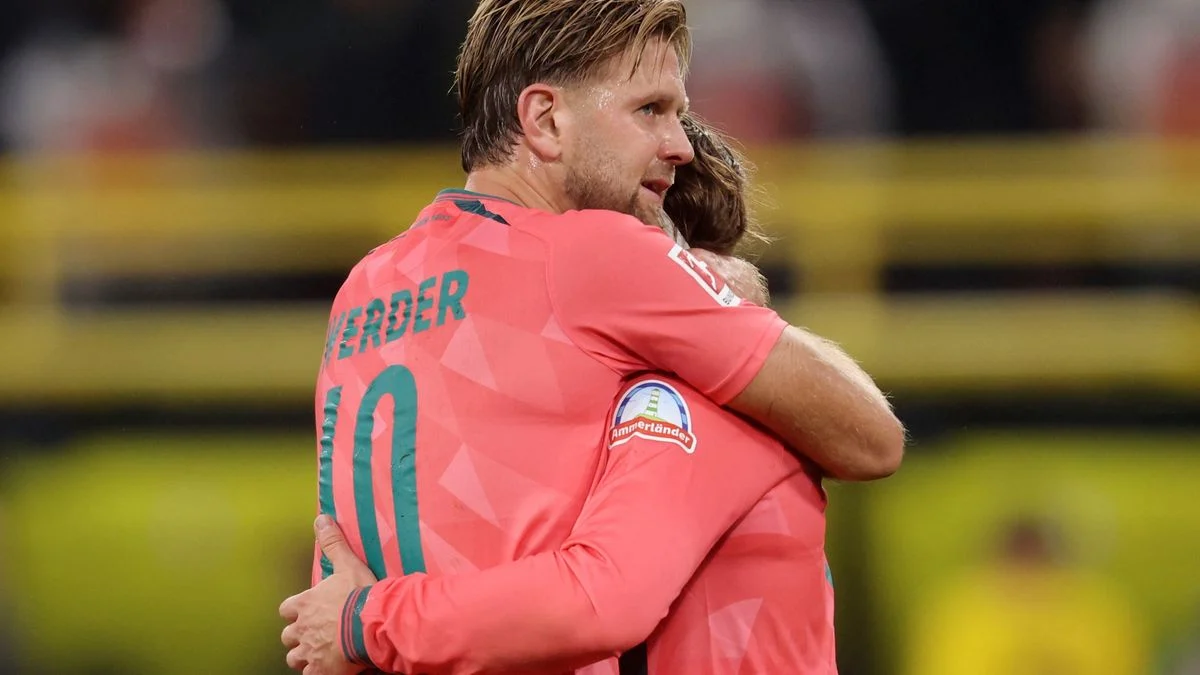
In a Bundesliga thriller that encapsulated the volatile nature of football, Borussia Dortmund’s perfect start to the season came to a jarring halt at a sold-out Signal Iduna Park. Despite leading 2-0 with mere minutes remaining, BVB was forced to settle for a 2-2 draw against Werder Bremen, with their former talisman, Niclas Füllkrug, delivering the final blow in stoppage time.
The Main Facts: A Stunned Signal Iduna Park
The match, marking the return of the Bundesliga following a three-week international break, appeared to be heading toward a routine victory for the home side. Borussia Dortmund, looking to extend their flawless four-game winning streak to open the season, dominated possession and controlled the tempo for large swaths of the afternoon.
However, the game concluded in heartbreak for the hosts. Daniel Svensson broke the deadlock in the 80th minute, followed by a Nico Schlotterbeck header five minutes later that seemed to seal the three points. Yet, Bremen—resilient and tactically disciplined—refused to yield. Ludovit Reis pulled one back in the 88th minute, setting the stage for Niclas Füllkrug to strike against his old club in the 90+2 minute. The result marks the first time this season that Dortmund has dropped points, potentially jeopardizing their position at the top of the league table.
A Chronological Breakdown: From Stagnation to Chaos
The Opening Standoff (0’–45’)
The rustiness typically associated with a long international hiatus was evident in the first half. Both Dortmund and Bremen struggled to find rhythm, with the game characterized by a sterile midfield battle. Dortmund dictated the terms with heavy ball possession, yet they lacked the creative ingenuity required to break down a deeply entrenched Werder defensive line.
For the first 30 minutes, neither side managed a single shot on target. The first real moment of activity came in the 32nd minute when Serhou Guirassy rose to meet a corner, only for his header to be comfortably claimed by Bremen’s goalkeeper, Karl Hein. The game finally ignited in the closing stages of the first half. Ludovit Reis sent a warning shot wide for Bremen in the 37th minute, prompting an immediate response from the BVB. Marcel Sabitzer’s 30-meter free-kick narrowly missed the post, and Maximilian Beier found himself through on goal in the 43rd minute, only to be denied by an impressive reflex save from Hein.
The Second Half Escalation (46’–79’)
Dortmund returned from the tunnel with renewed vigor. Nico Schlotterbeck, who had been an injury doubt following his international duty, tested Hein from distance immediately after the restart. Ethan Nwaneri soon followed suit, but the Bremen goalkeeper remained an insurmountable obstacle.
Werder Bremen, though largely defensive, displayed clinical counter-attacking intent. In the 54th minute, Niclas Füllkrug muscled his way past defender Joane Gadou to fire a shot that required a desperate, last-ditch save from Dortmund’s Gregor Kobel.
The game’s most controversial moment arrived in the 62nd minute. After a scramble in the box, Nwaneri netted a spectacular bicycle kick. The stadium erupted in celebration, only to be silenced by referee Christian Dingert, who disallowed the goal due to an earlier foul by Schlotterbeck. The tension became palpable as the clock ticked toward the final ten minutes.
The Dramatic Climax (80’–90+2’)
The breakthrough finally arrived in the 80th minute. A successful ball recovery by Maximilian Beier allowed Daniel Svensson to break clear, coolly slotting the ball into the net to make it 1-0. When Schlotterbeck powered home a header from a set-piece in the 85th minute to extend the lead to 2-0, the result seemed beyond doubt.
However, the narrative shifted instantly. Ludovit Reis’s 88th-minute goal injected a frantic energy into the closing minutes. With the momentum firmly behind the visitors, Füllkrug—who had been contained for much of the match—found space in the box during the second minute of injury time. His clinical finish leveled the score, silencing the home crowd and leaving the Dortmund bench in disbelief.

Supporting Data: By the Numbers
The statistical profile of the match highlights a game of two distinct halves.
- Possession: Dortmund maintained 62% of the ball, underscoring their dominance in the middle third.
- Efficiency: Despite their dominance, BVB struggled with final-third precision, recording only 5 shots on target from 16 total attempts.
- Goalkeeping Heroics: Karl Hein was undoubtedly the man of the match for Bremen, registering 4 key saves that kept his side in the game during Dortmund’s peak pressure.
- Defensive Resilience: Bremen conceded 7 corners but successfully neutralized all but one of Dortmund’s primary aerial threats.
The data suggests that while Dortmund’s system is functioning at a high level, the lack of a "killer instinct" in the first half nearly cost them more than just the draw. Conversely, Bremen’s efficiency—scoring twice from only three shots on target—demonstrates a ruthlessness that will be crucial for their survival and mid-table ambitions this season.
Official Responses and Tactical Observations
Post-match comments reflected the contrasting emotions of the two managers. Dortmund’s coaching staff emphasized the "missed opportunity" to put the game to bed earlier, specifically citing the disallowed Nwaneri goal as a psychological turning point that stalled their momentum.
"We controlled the game for long stretches," one staff member noted, "but in the Bundesliga, you cannot switch off for a second, especially against a player of Füllkrug’s caliber. We gave them hope, and they capitalized on it."
Bremen’s manager lauded his team’s refusal to quit. "Even at 0-2, I saw a group that believed in the tactical plan. The goal from Reis was the catalyst, but the confidence our players showed in the final minutes was the real story. Coming to Dortmund and leaving with a point is a massive statement."
Tactically, Dortmund’s dependence on wide play and individual flashes of brilliance—like the counter-attack for the first goal—was effective but ultimately insufficient against a compact, low-block formation. Their reliance on set-pieces, evidenced by Schlotterbeck’s goal, remains a potent weapon, but they will need to find more creative solutions against teams that choose to park the bus.
Implications: The Road Ahead
This draw serves as a wake-up call for Borussia Dortmund as they enter a grueling phase of the season. The club faces an exhausting October, with six matches scheduled across the Bundesliga, DFB-Pokal, and the UEFA Champions League.
The October Gauntlet:
- Champions League Fatigue: The squad faces extensive travel, with upcoming fixtures taking them as far as Azerbaijan and Norway. The logistical strain of these trips, combined with the intensity of European nights, will test the depth of the squad.
- Table Dynamics: With this result, Dortmund has handed the initiative to their rivals. Any further slip-ups in the upcoming weeks could see them tumble from the top spot, increasing the pressure on their mid-week European performances.
- Mental Fortitude: The challenge for Dortmund now is how they process this late collapse. The ability to bounce back immediately in their next fixture will be the primary indicator of whether this was a mere "hiccup" or a sign of deeper defensive vulnerabilities that opponents will now look to exploit.
For Werder Bremen, this point is worth more than a single digit in the standings. It provides a massive morale boost and proof of concept for their defensive strategy. As the league enters a period of high-frequency matches, the grit displayed at Signal Iduna Park will serve as a foundational building block for their season.
In conclusion, the 2-2 draw was a testament to the unpredictable brilliance of the Bundesliga. For Dortmund, it is a reminder that in football, nothing is earned until the final whistle. For Füllkrug and Bremen, it is a glorious late-season narrative that adds color and drama to an already compelling campaign.