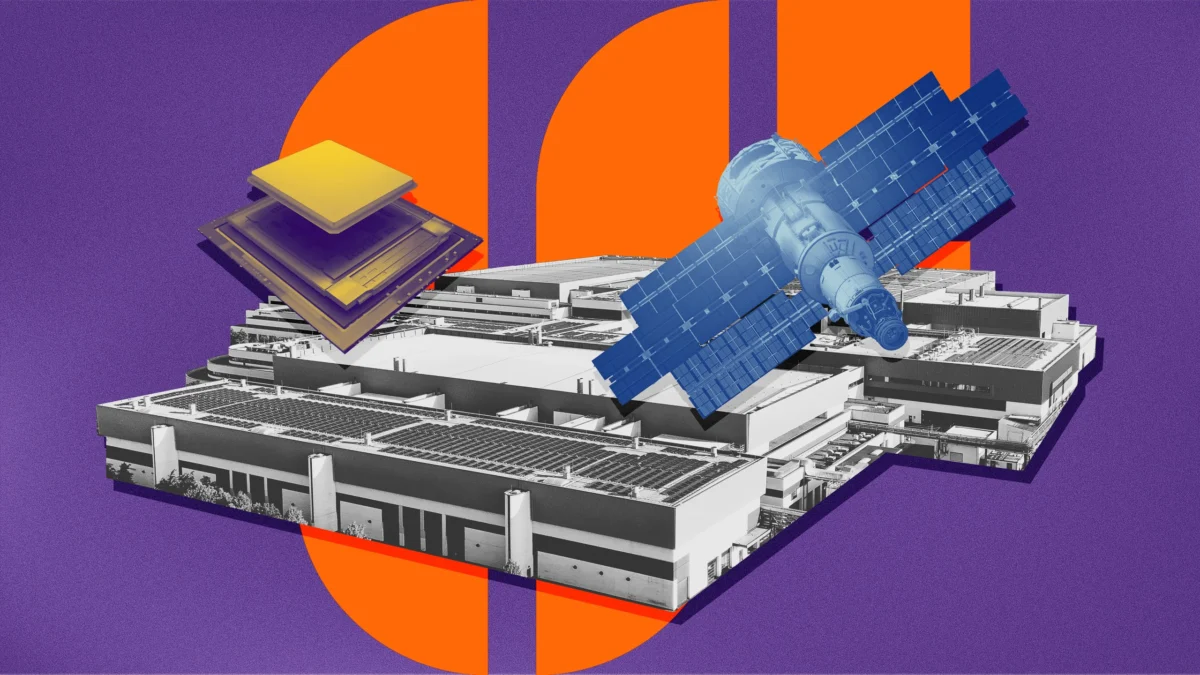
DRESDEN, Germany – Amidst a period of global semiconductor supply chain restructuring, the US-based chip giant Globalfoundries has officially marked a pivotal milestone in its European operations. On a crisp Friday afternoon, company leadership joined regional officials and industry partners to celebrate the "Richtfest"—the traditional topping-out ceremony—of its latest multi-billion-euro manufacturing expansion at its Dresden site.
For Globalfoundries, the expansion is more than just a logistical upgrade; it is a fundamental shift in strategy. Under the guidance of CEO Tim Breen, the company is recalibrating its production capabilities to capture a larger share of the burgeoning Artificial Intelligence (AI) and high-performance computing market, signaling a clear intent to cement Saxony as a critical hub in the global silicon value chain.

Main Facts: The Core of the Investment
The expansion project in Dresden, valued at over €1 billion, represents one of the most significant industrial investments in the region in recent years. The facility is designed to bolster capacity for "FDX Fusion," a proprietary manufacturing process developed by the company’s engineering teams in Germany.
Globalfoundries operates as a pure-play foundry, meaning it does not design its own chips but rather manufactures semiconductors for third-party fabless companies. By integrating advanced production techniques, the company aims to move beyond traditional consumer electronics and into the specialized, high-margin world of AI-driven hardware.
According to company spokespeople, the project is proceeding with precision, remaining strictly within its allocated budget and hitting all major construction milestones on schedule. This stability is particularly notable given the inflationary pressures and supply chain volatility that have plagued the semiconductor industry since 2021.
A Chronology of Growth: From Fab 1 to the AI Frontier
The evolution of Globalfoundries in Dresden is a microcosm of the semiconductor industry’s broader history in Europe.
- The Early Years (The AMD Era): The Dresden site, often referred to as "Silicon Saxony," traces its roots back to the former Advanced Micro Devices (AMD) manufacturing facilities. When Globalfoundries was spun off from AMD in 2009, it inherited a legacy of high-precision manufacturing expertise.
- Strategic Consolidation (2010–2020): Over the last decade, Globalfoundries has transitioned from a general-purpose manufacturer to a specialist in feature-rich chips. This allowed the company to survive periods of intense competition from Asian rivals like TSMC.
- The Expansion Phase (2023–2024): With the surge in demand for chips capable of handling edge AI and IoT (Internet of Things) workloads, the company greenlit its current expansion project. This phase focused on retooling cleanrooms to support next-generation lithography and process control.
- The Topping-Out (Present Day): The completion of the primary structural framework marks the transition from heavy construction to the installation of high-precision cleanroom equipment—a phase that will continue through the coming months as the site prepares for pilot production.
Supporting Data: Why Dresden?
The choice of Dresden as the site for this expansion was not incidental. Silicon Saxony represents the largest microelectronics cluster in Europe, providing a unique ecosystem of research institutions, skilled labor, and specialized suppliers.
Data from the region indicates that the semiconductor industry in Saxony contributes significantly to the German GDP. The Globalfoundries site specifically benefits from:

- Research Synergies: Close proximity to the Fraunhofer Institute and technical universities ensures a steady pipeline of engineers specialized in wafer fabrication.
- Supply Chain Integration: By keeping production localized in the heart of Europe, Globalfoundries mitigates the geopolitical risks associated with the heavy concentration of chip manufacturing in the Asia-Pacific region.
- Capacity Targets: The new facility is expected to add thousands of wafers per month to the company’s total output, specifically targeting the power-efficient chips required for sophisticated AI tasks at the "edge"—that is, processing data directly on devices rather than in massive, energy-hungry data centers.
Official Responses and Stakeholder Perspectives
CEO Tim Breen, speaking to journalists shortly before the ceremony, emphasized the urgency of the expansion. "We need the capacity," Breen stated, cutting through the typical corporate jargon. His comments underscore the reality that in the semiconductor business, supply constraints are often the only ceiling on revenue growth.
Regional political leaders have hailed the expansion as a victory for the "European Chips Act," a legislative framework designed to double the EU’s share of global chip production to 20% by 2030. The federal and state governments have provided substantial support, viewing the investment as a safeguard against the type of supply chain disruptions that crippled the European automotive and machinery sectors during the COVID-19 pandemic.

Implications: The Road Ahead for Globalfoundries
The pivot toward AI-ready semiconductors is a calculated gamble. While the demand for AI is currently at an all-time high, the market is also prone to rapid cycles of boom and bust.
The Technological Edge
The "FDX Fusion" process is the company’s "secret sauce." Unlike the high-end, multi-nanometer chips required for massive cloud-based LLMs (Large Language Models), FDX Fusion focuses on the "sweet spot" of efficiency and cost. It is optimized for chips that need to process complex algorithms while consuming minimal power—a critical requirement for the next generation of autonomous vehicles, industrial robotics, and smart medical devices.

Competitive Positioning
By focusing on this segment, Globalfoundries is effectively carving out a space where it is less likely to engage in a "race to the bottom" with competitors focused on general-purpose chips. The company is positioning itself as a strategic partner for companies that need custom, reliable, and high-performance silicon that is manufactured outside of the geopolitical friction points of the Pacific.
Economic and Societal Impact
The expansion is projected to secure the long-term future of thousands of high-tech jobs in Saxony. However, the implications extend beyond employment. By strengthening its European manufacturing base, Globalfoundries is helping to foster "technological sovereignty" for the continent. As European industries become increasingly digitized, the ability to source critical components locally becomes a matter of national security, not just economic efficiency.

Future Challenges
Despite the optimism, the road ahead is not without obstacles. Globalfoundries must manage the rising costs of energy, which remains a primary concern for German manufacturing. Furthermore, the company will need to maintain a relentless pace of innovation to ensure that the Dresden facility does not become obsolete as architectural standards for AI chips shift.
Conclusion
As the flags were raised atop the new building in Dresden, the message was clear: Globalfoundries is not merely expanding a factory; it is defining its future in the AI age. By doubling down on the Dresden site, the company is signaling its confidence in European engineering and its commitment to meeting the world’s insatiable hunger for smarter, faster, and more efficient chips.

The successful completion of this expansion will likely serve as a litmus test for the viability of large-scale semiconductor manufacturing in Europe. If Tim Breen’s vision holds, the chips that drive the AI revolution of the next decade may very well be born in the cleanrooms of the Elbe valley.