


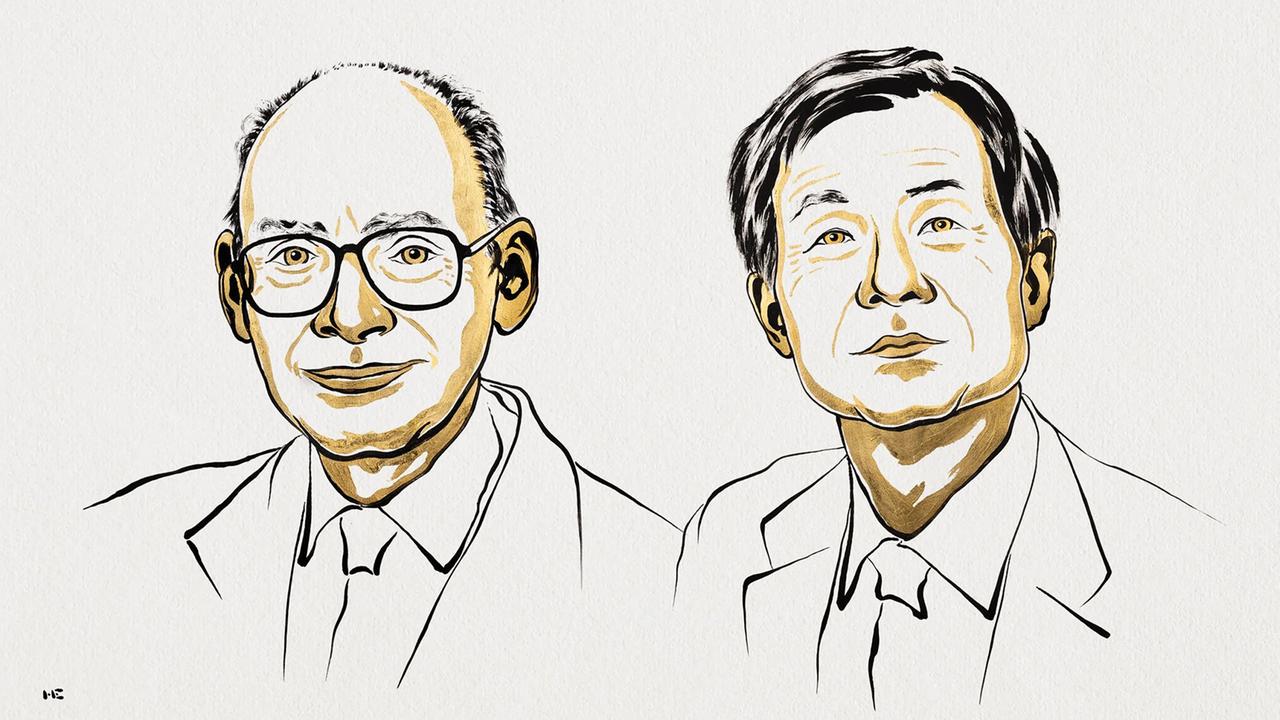
The Royal Swedish Academy of Sciences has awarded the 2026 Nobel Prize in Chemistry to French scientist Henri B. Kagan and Japanese researcher Kenso Soai. The duo is recognized for their groundbreaking work on non-linear effects and autocatalysis in asymmetric organic synthesis—a discovery that fundamentally alters our understanding of molecular symmetry and provides a critical blueprint for the modern pharmaceutical industry.
The announcement, made on October 7, 2026, in Stockholm, marks a pivotal moment in synthetic chemistry. By solving a century-old mystery regarding how homochirality—the prevalence of one "handedness" in biological molecules—emerges spontaneously, Kagan and Soai have provided the tools necessary to synthesize complex life-saving drugs with unprecedented precision.
The Core Discovery: Solving the Chirality Conundrum
At the heart of the 2026 Nobel Prize lies the concept of chiral molecules. Many fundamental building blocks of life, such as amino acids and sugars, exist in two distinct forms that are mirror images of one another—much like a pair of human hands. In chemistry, these are known as enantiomers: the L-form (left-handed) and the R-form (right-handed).
While these molecules may share the same chemical formula, their spatial arrangement dictates their biological activity. In nature, biology is "homochiral"; for instance, almost all proteins in living organisms are composed of L-amino acids. When a synthetic drug is produced, if both mirror-image forms are present, the results can be catastrophic.
Heiner Linke, chair of the Nobel Committee for Chemistry, emphasized the significance of the laureates’ work: "Henri Kagan and Kenso Soai have delivered a solution to a century-old chemical riddle: how homochirality can emerge spontaneously. Their work moves us from merely observing this phenomenon in nature to mastering it in the laboratory."
A Legacy of Innovation: The Paths of Kagan and Soai
Henri B. Kagan: Pioneering Asymmetric Synthesis
Born in 1930, Henri B. Kagan stands as a titan of 20th and 21st-century chemistry. His seminal work, conducted largely at the Université Paris-Sud in Orsay, France, provided the foundation for catalytic asymmetric synthesis.
In 1986, Kagan introduced innovative methods to influence chemical reactions, allowing for a significant excess of one mirror-image form over the other. By designing specialized catalysts, he demonstrated that chemists could "steer" a reaction toward the desired outcome. At 95 years old, Kagan becomes one of the oldest individuals to ever receive a Nobel Prize, a testament to the enduring impact of his foundational research on the evolution of chemical manufacturing.
Kenso Soai: The Breakthrough in Autocatalysis
Kenso Soai, based at the Tokyo University of Science, took the challenge of chirality to a new level. In a landmark 1995 publication, he proposed a chemical reaction capable of creating homochiral molecules. By 2003, he successfully demonstrated a reaction where only one of the two mirror images was produced, a phenomenon known as "Soai autocatalysis."
"Apart from life itself, no one had achieved this feat," the Nobel Committee noted. Soai’s ability to use the product of a reaction to catalyze further production of that same, specific mirror-image molecule effectively mirrors the self-replicating nature of biological systems.
The Human Impact: Why Chirality Matters
The importance of this research extends far beyond academic chemistry; it is a matter of public health and safety. The most infamous example of the dangers of uncontrolled chirality is the Thalidomide (Contergan) tragedy of the 1960s.
In that instance, the drug was produced as a mixture of both mirror images. While one form successfully acted as a sedative and anti-nausea medication, its mirror-image counterpart caused severe developmental defects in thousands of fetuses. The tragedy highlighted the desperate need for "enantiopure" synthesis—the ability to produce only the beneficial form of a molecule while excluding the potentially toxic counterpart.
Modern pharmaceuticals, from cancer treatments to antidepressants, rely on the techniques pioneered by Kagan and Soai. By ensuring that only the "correct" version of a molecule is synthesized, manufacturers reduce side effects, lower toxicity, and increase the efficacy of medicines, ultimately saving countless lives.
Chronology of the 2026 Nobel Week
The announcement of the Chemistry prize follows a week of intense global attention on the Nobel ceremonies:
- Monday, October 5: The Nobel Prize in Physiology or Medicine was awarded to three researchers for their pioneering work in optogenetics, a method that uses light to control the activity of neurons, effectively acting as a "light switch" for the brain.
- Tuesday, October 6: The Nobel Prize in Physics recognized the work of Belgian-born researcher Francis Halzen for his contribution to the detection of high-energy neutrinos of astrophysical origin, opening a new window into the violent events of the deep universe.
- Wednesday, October 7 (Today): The Chemistry Prize was awarded to Kagan and Soai.
- Thursday, October 8: Announcement of the Nobel Prize in Literature.
- Friday, October 9: Announcement of the Nobel Peace Prize.
- Monday, October 12: The final award, the Nobel Prize in Economic Sciences.
Official Responses and Reflections
Upon hearing the news, Kenso Soai expressed his profound gratitude during a virtual press conference held by the Nobel Committee. "I am overjoyed to receive this wonderful news," Soai said from Tokyo. "It is one of the most exciting days of my life. To share this honor with Professor Kagan, whose work laid the groundwork for my own, is a tremendous privilege."
The global scientific community has lauded the decision. Peers noted that the award recognizes not just a single discovery, but the cumulative effect of decades of dedication. The 12-million-Swedish-krona (approximately €1 million) prize will be shared equally between the two laureates.
Implications for the Future of Chemistry
The recognition of Kagan and Soai underscores a shift in chemistry toward "sustainability through precision." By mastering asymmetric synthesis, researchers are not only creating safer drugs but are also developing more efficient chemical processes that produce less waste.
In the future, the principles discovered by the 2026 laureates may be applied to:
- Material Science: Creating synthetic polymers with specific, high-performance chiral structures.
- Origin of Life Research: Providing further clues into how the homochirality of biological life on Earth might have begun billions of years ago.
- Industrial Efficiency: Reducing the energy requirements of chemical production by utilizing highly specific, autocatalytic pathways.
As the scientific world looks back at the accomplishments of Kagan and Soai, it is clear that their work serves as a cornerstone of modern molecular design. Their legacy is not just in the textbooks, but in the millions of chemical reactions occurring daily in laboratories and industrial plants around the globe—each one a tribute to the power of understanding the mirror-image nature of our universe.
The Nobel Committee’s decision to honor these two scientists reinforces the fundamental truth that the smallest details in molecular architecture can have the most profound effects on our macroscopic world. As we look ahead, the techniques perfected by Kagan and Soai will undoubtedly continue to serve as the guiding lights for the next generation of chemists tasked with solving the challenges of tomorrow.







