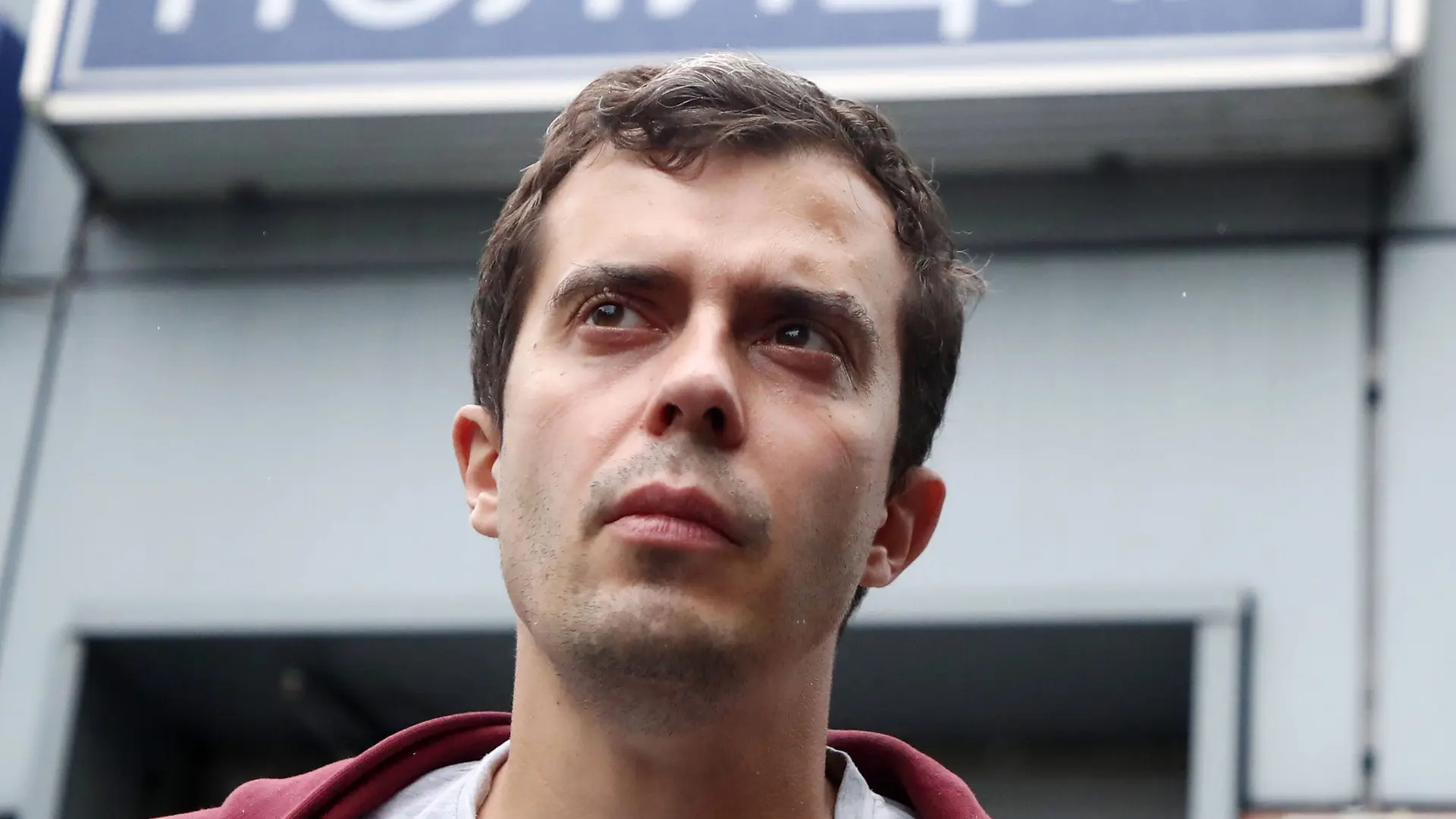
In the landscape of modern investigative journalism, few figures embody the struggle for transparency and democratic integrity as vividly as Roman Dobrokhotov. As the founder and editor-in-chief of the investigative outlet The Insider, Dobrokhotov has spent over a decade systematically deconstructing the opaque machinery of the Russian state. On Thursday, his relentless pursuit of the truth was formally recognized as he was awarded the prestigious "Prize for the Freedom and Future of the Media" by the Medienstiftung der Sparkasse Leipzig. The honor serves as a stark reminder of the risks taken by those who operate at the intersection of high-stakes investigative reporting and state-sponsored persecution.
Main Facts: A Career Defined by Exposure
Roman Dobrokhotov, 43, is a journalist whose work has fundamentally shifted the international understanding of the Kremlin’s clandestine operations. Under his leadership, The Insider has evolved from a niche investigative blog into one of the most formidable thorns in the side of the Russian security apparatus.
The outlet gained global notoriety for its meticulous, data-driven approach to accountability. Most notably, The Insider played a pivotal role in the collaborative investigation into the 2014 downing of Malaysia Airlines Flight MH17, identifying the military chain of command responsible for the tragedy. Furthermore, Dobrokhotov’s team was instrumental in uncovering the operational details behind the poisoning of Kremlin critic Alexei Navalny, using flight logs and phone data to trace the activities of Federal Security Service (FSB) agents.
His work extends to the "Tiergarten murder" in Berlin and the attempted assassination of former double agent Sergei Skripal in Salisbury. By utilizing open-source intelligence (OSINT) and leaking internal databases, Dobrokhotov has managed to pierce the veil of secrecy that defines the Putin administration, proving that even the most protected state secrets are vulnerable to the light of rigorous scrutiny.

A Chronology of Resistance: From Soviet Youth to Exile
To understand Dobrokhotov’s mission, one must look at the trajectory of his life, which mirrors the volatile evolution of post-Soviet Russia.
The Hope of the 1990s
Born in Moscow in the early 1980s, Dobrokhotov spent his formative years amidst the crumbling structures of the Soviet Union. He describes his school years in the early 1990s as a unique epoch of relative freedom—a fleeting window of opportunity in Russian history where civil society dared to breathe. It was an era of profound change that shaped his worldview, fostering a belief in the necessity of political participation and the potential for a democratic Russia.
The Gradual Erosion of Rights
Dobrokhotov initially aimed for a career in diplomacy, studying political science with an eye toward international relations. However, the ascent of Vladimir Putin in 2000 signaled a shift that would ultimately derail those plans. Dobrokhotov observed the systematic dismantling of democratic norms: the gradual suppression of independent press, the rigging of elections, and the marginalization of political dissent.
By 2010, the "slow crawl" of authoritarianism became an urgent crisis. Dobrokhotov, then a young activist, became a frequent participant in protests against electoral fraud and for the right to assembly, leading to his first series of detentions. This was the turning point where he transitioned from a political observer to a practitioner of investigative journalism.

The Breaking Point: 2021
The pressure from the Kremlin intensified in 2021 when the Russian Justice Ministry officially designated The Insider as an "foreign agent"—a legal instrument designed to strangle independent media financially and socially. Following his arrest and the confiscation of his travel documents to prevent his departure, Dobrokhotov faced a choice: remain in Russia to face a long prison sentence or find a way out. He chose the latter, embarking on a harrowing escape across the border through forests, ultimately reaching the safety of Latvia. Today, he continues his work from the editorial offices in Riga, serving as a beacon for exiled Russian journalists.
Supporting Data: The Cost of Investigative Journalism
The efficacy of The Insider is backed by a methodology that leaves little room for denial. By synthesizing flight manifests, hotel records, and telecommunications data, the outlet has provided evidence that contradicts official Kremlin denials with surgical precision.
However, the cost of this accuracy is extreme. The Russian government’s "foreign agent" laws have forced many journalists into exile and resulted in the shuttering of major independent outlets. Despite the threat of imprisonment and constant state harassment, The Insider has maintained a robust publishing schedule, proving that the digital age makes total censorship nearly impossible, provided the investigative infrastructure is resilient.
Official Responses and the Stance of the Medienstiftung
The decision of the Medienstiftung der Sparkasse Leipzig to award Dobrokhotov is a statement of solidarity. The foundation has long championed the role of the free press as a cornerstone of democratic stability. In awarding this prize, the foundation acknowledges that the threats facing journalists today are not just local but global.
Russian authorities, conversely, have consistently labeled such reports as "Western-funded disinformation campaigns" aimed at destabilizing the state. They maintain that the laws regarding "foreign agents" are necessary for national security. This rhetoric, however, has been widely rejected by international human rights organizations, who view the labeling of journalists as a tactic to criminalize the act of questioning government policy.
Implications: The Future of Democracy and Media
The situation surrounding Roman Dobrokhotov carries profound implications for the future of civil society in Russia and beyond.
The Survival of Democracy
Dobrokhotov’s philosophy is rooted in the belief that democracy is not a self-sustaining system but a daily practice. He argues that democracy "survives only as long as people are willing to take to the streets, make grievances public, and support each other." His assertion serves as a critique of political apathy; he maintains that one cannot simply wait for politicians to rescue a nation from tyranny.
The Role of Independent Media
The transition of The Insider to an exile-based operation in Riga demonstrates the new reality of the information war. As authoritarian regimes increase their internal control, independent media must increasingly operate from abroad, leveraging global networks to maintain their reach into their home countries. This "journalism in exile" model is becoming a vital lifeline for citizens in closed societies who are otherwise subjected to state-controlled narratives.
A Call to Global Solidarity
The awarding of the "Prize for the Freedom and Future of the Media" is more than a ceremony; it is a signal to the global community that the fight for information is universal. Dobrokhotov’s work underscores that when journalists are silenced, the capacity for society to address corruption, war crimes, and human rights abuses vanishes.
His journey from a hopeful student in the 1990s to a journalist in exile in 2026 is a testament to the endurance of the human spirit. It serves as a reminder that the truth, while often inconvenient for those in power, is an irrepressible force. As long as journalists like Roman Dobrokhotov continue to document the discrepancies between official state narratives and the lived reality of the populace, the prospect for eventual political change in Russia remains alive.
The legacy of this work will not be measured in awards or accolades, but in the archival evidence of a period in history that the Kremlin desperately seeks to erase. By documenting the mechanics of power, Dobrokhotov has ensured that the actions of the powerful are recorded, scrutinized, and ultimately held to account before the court of history. In a world where the boundaries of truth are increasingly contested, his work remains a vital defense against the encroachment of silence.