By Financial News Desk
September 23, 2026
For decades, the global financial community has viewed Germany through a single, stubborn lens: the "Land of the Savers." In this narrative, the German household was defined by the Sparbuch—the humble savings book—and an almost pathological aversion to the perceived volatility of the stock market. However, a new comprehensive study by the Dutch ING bank suggests that the narrative is undergoing a fundamental, if gradual, transformation. While Germany remains a nation that values security, a significant portion of its population is finally embracing the capital market as a vital tool for long-term wealth creation.
The Shifting Landscape of German Finance
According to the latest data, 46 percent of Germans now actively invest in stocks, bonds, funds, or Exchange-Traded Funds (ETFs). This figure is not only a record for the nation but also places Germany above the European average. Among the six largest economies in the Eurozone, Germany now boasts the highest participation rate in capital market investments, trailing only Switzerland and Turkey in a broader European context.
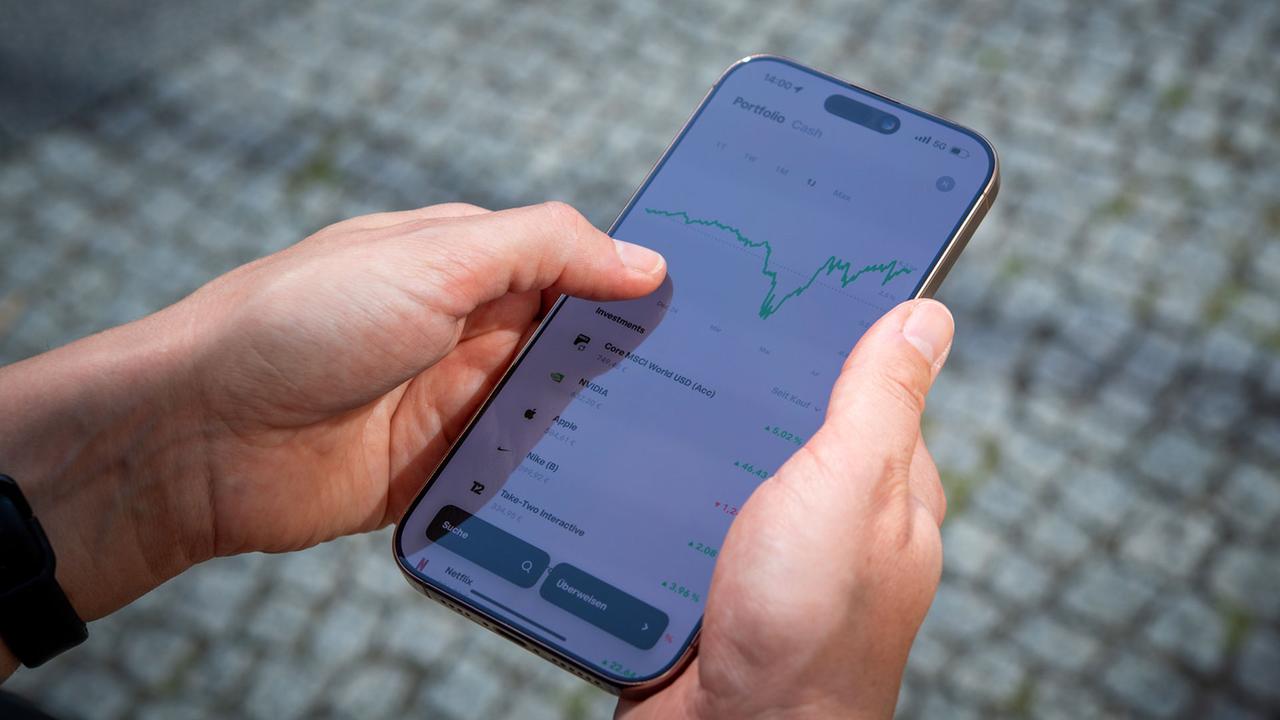
This shift marks a significant departure from historical norms. For years, the German psyche was dominated by memories of mid-20th-century economic instability and a cultural preference for tangible, liquid assets. Today, however, the digital revolution—manifested in user-friendly trading apps and accessible online brokerage platforms—has lowered the barrier to entry, turning what was once the domain of the financial elite into a mainstream activity for the average citizen.
Chronology of Change: From Sparbuch to Smartphone
The transition from a savings-only culture to an investment-oriented one did not happen overnight. The following timeline outlines the key drivers of this transformation:
- 1990s – Early 2000s: The era of the "Sparbuch." With high interest rates on traditional savings accounts, there was little incentive for the average German to assume the risks of the equity markets.
- 2008 – 2015: The Global Financial Crisis and the subsequent era of "zero-interest" monetary policy forced a rethink. As traditional savings accounts began yielding negative real returns due to inflation, the opportunity cost of staying out of the market became impossible to ignore.
- 2018 – 2023: The "Digital Democratization." The rise of neo-brokers and mobile trading apps simplified the process of buying fractional shares and automated savings plans (Sparpläne), specifically targeting younger demographics.
- 2024 – 2026: The current "Institutional Normalization." Equity investing has moved from a fringe activity to a recognized pillar of household financial planning, spurred by widespread public debates regarding the future of the state pension system.
Supporting Data: Wealth and Demographics
The scale of this shift is substantial. The total value of investment funds and exchange-listed stocks held by German households now exceeds 2.1 trillion euros—a figure representing nearly half of the nation’s Gross Domestic Product (GDP). On a per-household basis, this equates to roughly 51,000 euros in capital market assets.
While these numbers are impressive, they mask a lingering inequality. Data from the Deutsches Aktieninstitut (German Share Institute) indicates that in 2025, approximately 14 million Germans were active investors. While this is a robust number, it represents less than one-fifth of the total population, suggesting that while the "investing bug" has spread, it has not yet reached a majority of households.
The driving force behind this growth is the younger generation. ING’s study highlights that the age group between 18 and 24 shows a significantly higher propensity for investing compared to their European peers. Furthermore, the 35–44 age demographic currently exhibits the highest overall acceptance of capital market products, likely due to a combination of professional income growth and long-term retirement planning.
The Cost of Caution: A Trillion-Euro Lesson
Despite the progress, the "fear of the market" remains the single greatest barrier to wealth accumulation in Germany. The ING study provides a sobering analysis of what this caution has cost the German public.
Between 1996 and 2025, the preference for low-interest savings accounts over diversified equity investments resulted in an estimated "lost wealth" of nearly 400 billion euros. If these assets had been invested in a standard global equity portfolio, the potential gain could have exceeded 1.2 trillion euros. This represents a staggering loss of potential purchasing power for the average German household, effectively acting as a silent tax imposed by risk aversion.
Official Responses and Expert Analysis
ING Chief Economist Carsten Brzeski remains cautiously optimistic about these trends. "The Germans are investing more frequently than their reputation suggests," Brzeski noted. "However, the psychological barrier of risk aversion is deep-seated."
Financial regulators and government officials are beginning to address this. There is a growing consensus that without greater exposure to the capital markets, the German population will face a retirement crisis. The government’s recent efforts to promote private pension schemes that incorporate equity components reflect a policy-level acknowledgment that the Sparbuch is no longer a viable vehicle for long-term financial security in an inflationary environment.
However, the "risk-first" mentality persists. According to the study, even among existing investors, the fear of market volatility and potential capital loss remains the primary reason for holding back or limiting exposure. Second to this is a desire for extreme liquidity—the need to have cash "on hand," even if that money loses value daily against inflation.
Implications for the Broader Economy
The transformation of the German investor has wider implications for the stability of the DAX and the broader European economy. On the day of this reporting, the DAX dipped below 25,500 points, struggling against broader macroeconomic pressures such as global inflation concerns and tight monetary policy.
Even with positive signals, such as the OECD’s upward revision of Germany’s economic growth forecast, investors remain skittish. The irony is that as more Germans enter the market, they are becoming more sensitive to the same global fluctuations that have historically kept them away.
Future Outlook
The path forward for Germany is clear: education. The study notes that a "perceived lack of knowledge" remains a top-three barrier to entry. To fully transition into an equity-owning society, Germany must bridge the gap between "having a brokerage account" and "understanding long-term wealth management."
As the demographic shift continues—with younger, tech-savvy investors replacing the older generation—it is likely that the "German Shareholder" will become a permanent feature of the European financial landscape. The era of the Sparbuch is not dead, but it is certainly losing its dominance. Whether this new, more active generation can maintain their nerve during market corrections will be the ultimate test of Germany’s financial maturity.
Conclusion
The evolution of the German investor is a reflection of a broader global trend: the democratization of finance. While the transition is hampered by historical fears and a cultural bias toward caution, the numbers don’t lie. Germany is becoming a nation of investors. This shift is not just a statistical change; it is a fundamental reconfiguration of the German household’s relationship with the future. By moving beyond the safety of the savings book, the German public is slowly, but surely, beginning to secure its place in the modern global economy. Whether this trend survives the next major market downturn remains to be seen, but for now, the momentum is undeniably in favor of the market.