

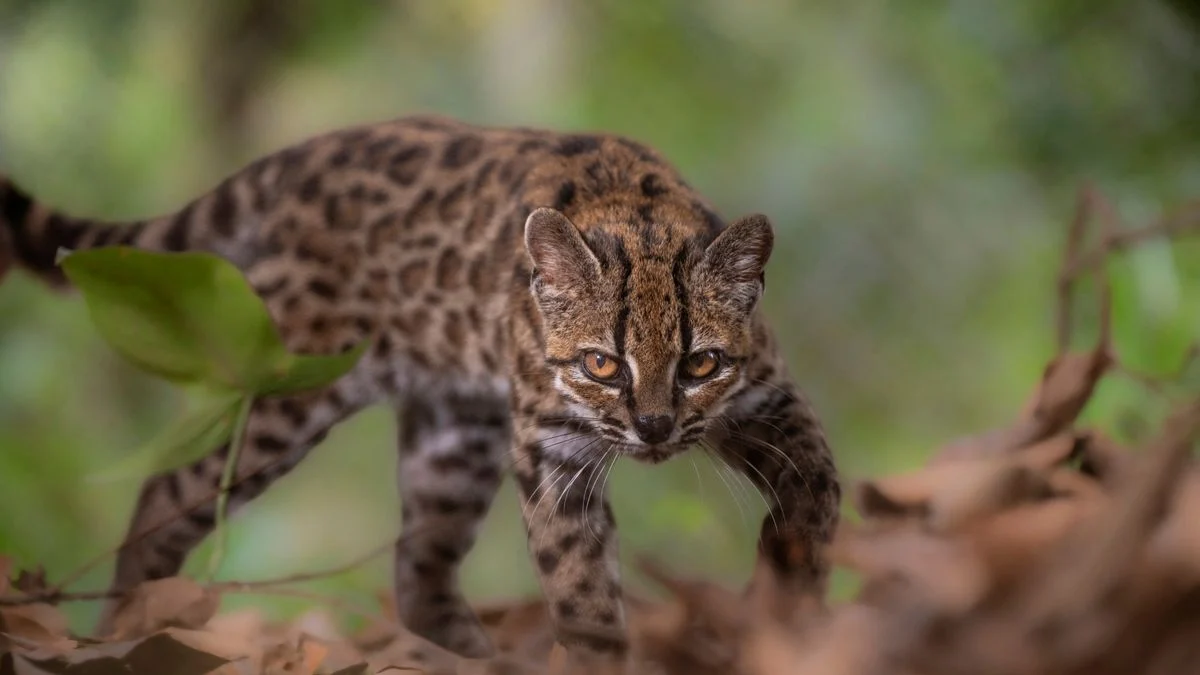
In the dense, mist-shrouded canopies of the Bolivian Andes, a feline shadow has long evaded the scientific record. For years, rumors of a distinct, petite wildcat persisted among local communities, yet it remained elusive to researchers—until now. In a landmark discovery that has sent ripples through the zoological community, researchers have officially identified Leopardus tilcayo, a new species of small wildcat. The discovery, published in the prestigious journal Current Biology, marks a historic milestone: it is the first time in over a century that a new, living cat species has been formally described and recognized.
The revelation of Leopardus tilcayo not only adds a new branch to the feline family tree but also forces a re-evaluation of how we categorize biodiversity in one of the world’s most fragile and understudied ecosystems.
The Main Facts: A Distinct Lineage
Leopardus tilcayo is a petite predator, standing as a testament to the evolutionary ingenuity of South American wildlife. Measuring approximately 46 centimeters (about 18 inches) in length and weighing a modest 1.4 kilograms (roughly 3 pounds), the cat is a master of camouflage. Its coat is a sophisticated pattern of light-brown fur adorned with irregular, dark rosettes, allowing it to blend seamlessly into the mottled light and shadows of the high-altitude cloud forests.
Genetically, however, the cat is a titan. The research team, utilizing advanced genomic sequencing, compared the DNA of L. tilcayo against 38 other known species of the Leopardus genus. The findings were definitive: this animal is not merely a subspecies or a regional variation. Its lineage diverged from its closest relatives approximately 1.4 million years ago, representing a distinct evolutionary path that has been hidden in plain sight.
A Decade-Long Mystery: The Chronology of Discovery
The path to identifying L. tilcayo was as unconventional as the cat itself. The story began roughly ten years ago in a Bolivian wildlife reserve, where a local resident stumbled upon an orphaned kitten. Initially, the villager assumed the animal was a domestic cat and took it in. However, as the months passed, the creature’s behavior remained stubbornly wild. It lacked the social domestication expected of a house cat, exhibiting high-strung, predatory instincts and a nocturnal nature that suggested a different origin.

The cat was eventually surrendered to a wildlife rehabilitation center, where it caught the attention of biologist Paola Nogales-Ascarrunz. At the time, Nogales-Ascarrunz was struck by the animal’s peculiar physical characteristics—features that did not perfectly align with the known morphology of the Leopardus tigrinus (the oncilla or northern tiger cat).
For years, the individual was tentatively categorized as a variant of the oncilla. It was only through the advent of more sophisticated molecular genetic analysis that the scientific community could confirm what Nogales-Ascarrunz had long suspected: this was not a known species. The transition from "rescued pet" to "holotype of a new species" represents a decade of careful observation, data collection, and eventual genetic validation.
Supporting Data: Why It Matters
The formal recognition of Leopardus tilcayo is backed by a robust dataset comparing the genomes of the entire Leopardus clade. The divergence of 1.4 million years is significant; in evolutionary terms, this implies that the cat has been a distinct entity since the Early Pleistocene.
Key Biological Characteristics:
- Size: ~46 cm in body length.
- Weight: ~1.4 kg.
- Morphology: Light brown base coat with irregular, distinct rosettes.
- Evolutionary Divergence: ~1.4 million years from the closest Leopardus ancestor.
- Dietary Habits: Preliminary analysis of scat samples reveals the remains of small rodents, suggesting a specialized niche as a nocturnal hunter of the forest floor.
Current data remains sparse regarding the animal’s population size. To date, only two individuals have been positively identified. While camera trap imagery suggests that the species is active primarily during the night, scientists admit that they are essentially starting from zero in terms of understanding its behavioral ecology and population density.
Implications for Conservation and Taxonomy
The discovery of Leopardus tilcayo is a profound "wake-up call" for the scientific community. The fact that an animal of this size could remain unknown to science for so long in a world of high-resolution satellite imagery and global connectivity suggests that we are significantly underestimating the biodiversity of South America’s remaining forests.

1. A Taxonomy Re-think
The authors of the Current Biology study suggest that L. tilcayo is likely not the only misclassified cat. Many of the small, spotted wildcats in the Leopardus genus have been grouped together based on superficial physical similarities. Genetic re-testing of museum specimens and existing wild populations could reveal a "hidden" diversity of species that have been masked by convergent evolution—where different species look alike due to similar environmental pressures.
2. The Urgent Need for Habitat Protection
Bolivia’s cloud forests are under constant threat from deforestation, agricultural expansion, and climate change. The identification of a new species in this region serves as a powerful argument for the expansion of protected areas. If a new, million-year-old species was discovered in an area already designated as a reserve, how many other species are currently teetering on the edge of extinction before they are even documented?
3. The "Century-Old" Benchmark
The last time a new, living cat species was discovered was in 1923. In the intervening 100 years, the field of biology has seen the rise of DNA sequencing, remote sensing, and artificial intelligence. The fact that the discovery of L. tilcayo required a mix of traditional field biology (the observation by Nogales-Ascarrunz) and modern genomic science underscores that technology is only as good as the eyes on the ground.
Official Responses and Future Outlook
The scientific community has lauded the discovery as a landmark event. Paola Nogales-Ascarrunz and her colleagues are now focused on securing funding for field expeditions to determine the true extent of the species’ range.
"We are essentially looking at a ghost," says one researcher familiar with the study. "We have the genetic evidence, we have the animal in hand, but the forest still holds the secret of how many others are out there."

Looking forward, the priority is clear: habitat mapping. By using the known territory of the two identified individuals, researchers hope to deploy more camera traps and non-invasive genetic sampling (such as environmental DNA from water sources) to estimate the total population.
The story of Leopardus tilcayo is a reminder that the natural world still holds mysteries. It is a humble, quiet, and elusive inhabitant of the Andes that has, in its own way, rewritten the history of the feline family. As conservationists push for the protection of its habitat, the hope is that L. tilcayo will not be a flash in the pan, but a species that continues to roam the mist for another million years.
For now, the small, rosette-patterned cat remains a symbol of both the resilience of nature and the vital, unfinished business of science: to identify, understand, and protect the life that shares our planet—even when it hides in the shadows.
























