


The 2026 Nobel Prize in Medicine honors a breakthrough that sounds like science fiction: using light to control the electrical impulses of the brain. By repurposing a protein from a simple green alga, Peter Hegemann, Georg Nagel, and Karl Deisseroth have fundamentally altered our understanding of neural circuitry and opened the door to a new era of medical therapy.
On October 5, 2026, the scientific world turned its gaze toward Stockholm as the Nobel Committee announced the recipients of the Physiology or Medicine prize. The accolade was awarded to Peter Hegemann (Humboldt University of Berlin), Georg Nagel (University of Würzburg), and Karl Deisseroth (Stanford University/Howard Hughes Medical Institute). Their collective work on optogenetics—a technique that allows researchers to activate or inhibit specific neurons with millisecond precision using light—represents one of the most significant leaps in modern neuroscience.
The Genesis of a Paradigm Shift: Main Facts
At its core, optogenetics is a fusion of optics and genetics. By introducing light-sensitive proteins—originally evolved by single-celled organisms to detect light—into target neurons, scientists can turn these cells "on" or "off" simply by shining a light on them.
Before this breakthrough, researchers were largely reliant on electrical stimulation or pharmacological agents, both of which lack spatial and temporal specificity. You could stimulate a region of the brain, but you could not isolate the specific cell type responsible for a behavior. With optogenetics, that limitation vanished. The technology has provided a "remote control" for the brain, allowing investigators to map out the complex neural circuits that underpin everything from memory and emotion to movement and sensory processing.
A Chronological Odyssey: From Algae to the Cortex
The story of optogenetics is a testament to the unpredictable nature of basic research. It did not begin in a neurology clinic, but in a pond.
The Algal Foundation (Late 1990s – 2000)
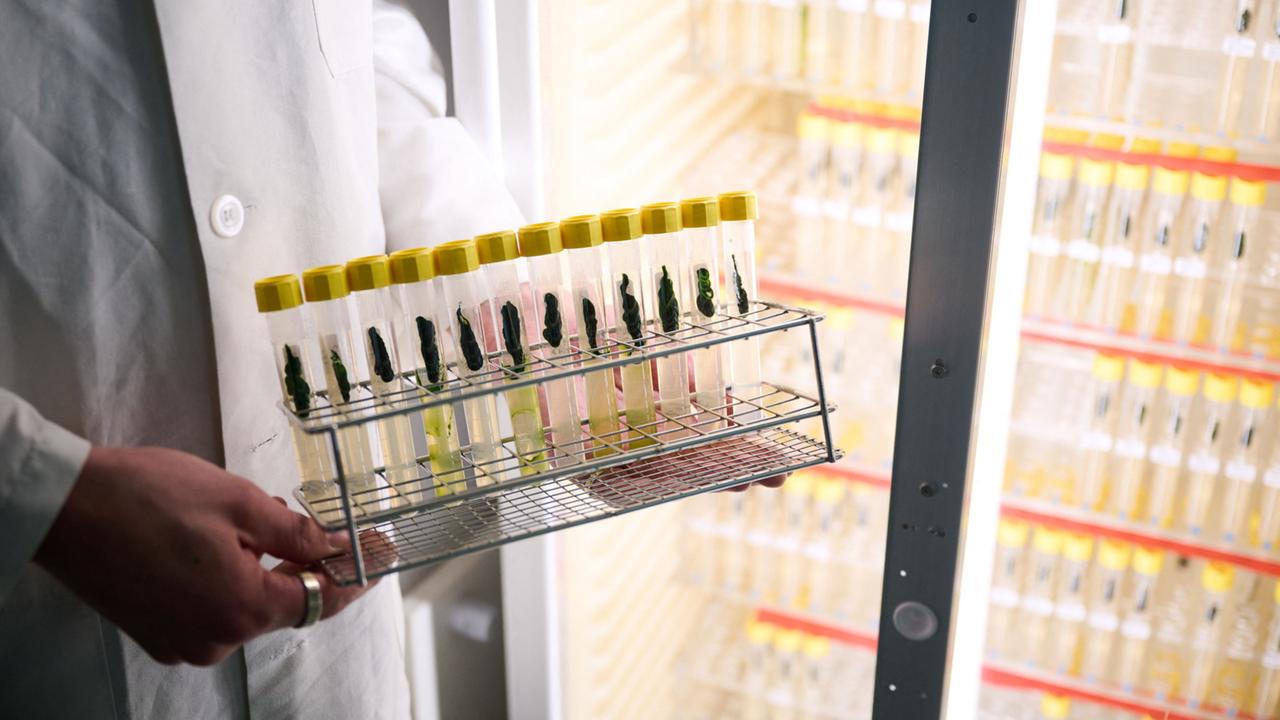
Peter Hegemann, a biophysicist, had long been fascinated by the green alga Chlamydomonas reinhardtii. He wanted to understand how this single-celled organism could sense light and navigate toward it. As the genomic sequencing of the alga became available at the turn of the millennium, Hegemann’s team identified genes that coded for light-sensitive proteins.
He reached out to Georg Nagel, then at the Max Planck Institute for Biophysics in Frankfurt, to test these proteins. Their experiments, which involved injecting the proteins into the oocytes of African clawed frogs, yielded a startling result: the protein, now known as Channelrhodopsin-2, acted as a light-gated ion channel. When hit with blue light, the channel opened, allowing ions to flow across the membrane and generate an electrical signal.
Bridging the Gap (2002 – 2005)
The lightbulb moment for the researchers was the realization that neurons, too, communicate through electrical signals. If they could express these algal proteins in neurons, they could potentially control brain activity with light.
Karl Deisseroth, a psychiatrist and neuroscientist at Stanford, became the essential link in moving this from a molecular curiosity to a neurobiological tool. Working with Nagel, the team successfully introduced the channelrhodopsin gene into mammalian neurons. In 2005, the landmark paper was published, demonstrating that short pulses of blue light could trigger precise, rapid firing in these modified nerve cells. By 2007, the technique had been validated in the brains of living mice, proving that optogenetics could operate within the complex, intact environment of a mammalian central nervous system.
The Theoretical Precursor: Francis Crick’s Vision
The Nobel Committee noted that the concept of using light to control neurons was not entirely unprecedented. In the late 1970s, Francis Crick, co-discoverer of the DNA double helix, speculated that the ultimate challenge in neuroscience was controlling specific cell types. He argued that light was the only tool with the necessary speed and precision to manipulate neural firing patterns. While many at the time dismissed his idea as impractical, the work of Hegemann, Nagel, and Deisseroth turned his theoretical musing into a concrete reality.
Implications for Human Health
While optogenetics began as a tool for basic research, its clinical potential is rapidly unfolding. The ability to manipulate neural activity is a "holy grail" for treating neurological and psychiatric disorders.
The Path to Clinical Therapy
The most advanced applications of optogenetics currently involve the human eye. Retinitis pigmentosa is a degenerative condition that leads to blindness by destroying the light-sensing cells of the retina. By using optogenetic gene therapy to turn the remaining, non-light-sensitive cells into "pseudo-photoreceptors," researchers are restoring visual signals to the brain. In September 2026, the US Food and Drug Administration (FDA) accepted a biologic license application for a therapy of this nature, signaling that we are on the verge of the first medical applications of this technology.
Parkinson’s and Beyond
Beyond vision, researchers are using optogenetics to understand the neural circuit failures in Parkinson’s disease, epilepsy, and severe depression. By identifying exactly which "nodes" in a circuit are overactive or underactive, scientists hope to develop more targeted neurostimulation techniques, such as improved Deep Brain Stimulation (DBS) or gene-based therapies that could "reset" faulty brain networks.
Supporting Data and Scientific Community Response
The academic community has been near-unanimous in its praise for the 2026 laureates. Patrick Cramer, President of the Max Planck Society, highlighted the sheer perseverance required to succeed. "Hegemann did not allow himself to be discouraged by years of difficulties," Cramer stated, noting that the discovery of the first light-gated ion channel was a "completely novel type of membrane protein."
The Karolinska Institute, which selects the Nobel Prize in Medicine, emphasized that this is a quintessential example of "curiosity-driven research." Patrik Ernfors of the institute remarked, "You investigate a green alga, discover an ion channel, and on that basis, we can now control activity in the brain with light. It is a perfect example of how fundamental discovery leads to transformative technology."
Conclusion: A New Language for the Brain
The impact of optogenetics extends far beyond the laboratory bench. It has allowed researchers to move from simple "mapping" of the brain—observing which areas light up during a task—to "causal testing." We can now ask: Does this specific group of neurons cause this feeling? Does this circuit store this memory?
As we look toward the future, the work of Hegemann, Nagel, and Deisseroth will likely be viewed as the moment neuroscience moved from an observational science to a manipulative, engineering-based discipline. The "light switch" they discovered has not only illuminated the inner workings of the brain but has also provided the tools to repair it. Their work reminds us that the most profound medical breakthroughs often start in the most unlikely places—this time, in the biology of a tiny, single-celled alga.












