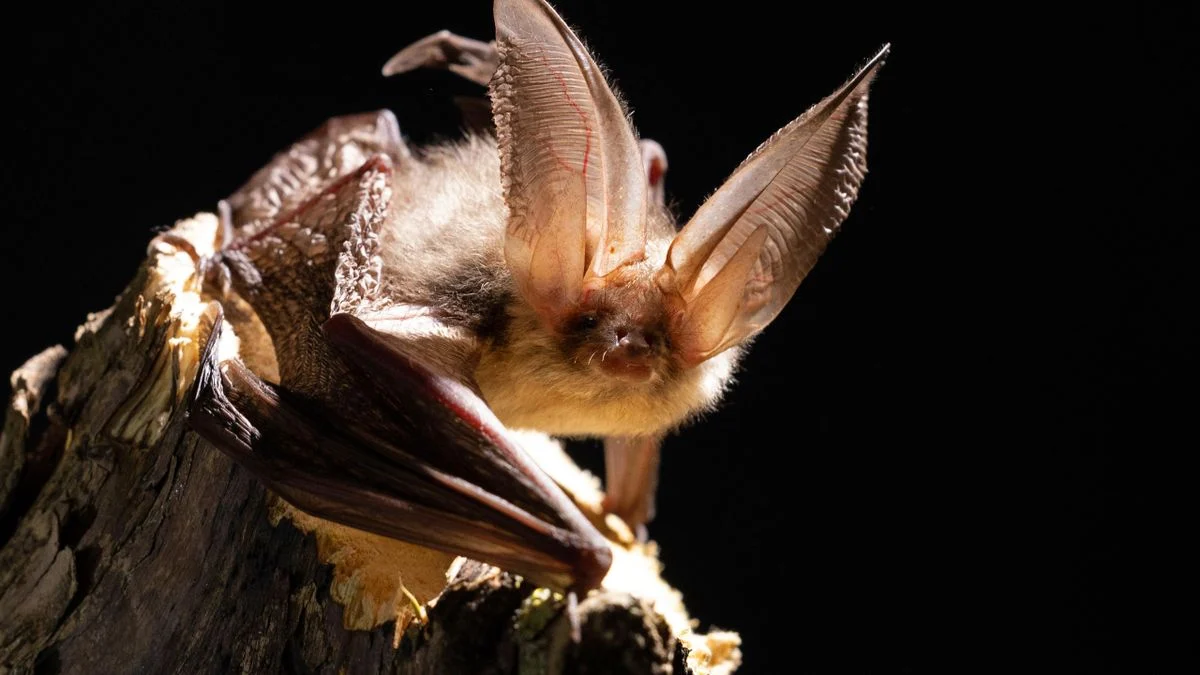
For centuries, the nocturnal silhouette of the bat has captured the human imagination—a creature that defies the terrestrial constraints of its mammalian kin. Yet, for all their ubiquity, the evolutionary origins of the order Chiroptera—which includes both bats and flying foxes—have remained shrouded in scientific uncertainty. A groundbreaking study published in the prestigious journal Nature has now rewritten this history, placing the cradle of bat evolution firmly within the borders of prehistoric Europe.
This discovery, supported by a massive international research effort, challenges long-held assumptions that pointed toward Africa, Asia, or North America as the ancestral home of these winged mammals. By mapping the genetic, physical, and ecological landscape of these creatures, scientists have identified a timeline that aligns the rise of the bat with the immediate aftermath of the most significant extinction event in Earth’s history.
Main Facts: A New Evolutionary Narrative
The core finding of the research is that the common ancestor of all modern bats emerged approximately 65 million years ago. This date is of particular significance, as it falls in the immediate geological wake of the Cretaceous-Paleogene (K-Pg) mass extinction, which saw the demise of non-avian dinosaurs.
"For decades, we have looked across the globe for the origin of bats, but the evidence was hidden in plain sight," the researchers noted. By synthesizing genomic data with morphological studies, the team successfully reconstructed the phylogenetic tree of the order Chiroptera. The findings suggest that as the planet cooled and ecosystems underwent a radical transformation following the K-Pg event, the ancestors of bats—small, likely insectivorous, and nocturnal—exploited new, empty ecological niches in Europe. From this European epicenter, they radiated outward, eventually populating every continent on Earth with the exception of Antarctica.
This radiation was not merely a matter of survival; it was an evolutionary masterstroke. Today, Chiroptera accounts for more than one-fifth of all living mammalian species. With approximately 1,500 identified species, they stand as the second-largest order of mammals, surpassed only by the prolific rodents.
Chronology: From European Caves to Global Dominance
The evolutionary journey of the bat is a testament to rapid adaptation. The study highlights several key milestones in the timeline of their development:
1. The Post-Extinction Awakening (65 Million Years Ago)
As the dust settled after the asteroid impact that ended the age of dinosaurs, the mammalian world was in flux. The European landscape, characterized by vast, dense forests and temperate climates, provided the perfect laboratory for early mammalian experimentation. The study posits that the first "proto-bats" developed their unique anatomical flight adaptations during this period of high selective pressure.
2. The Fossil Record: The Vielasia Clue (50 Million Years Ago)
While the genomic clock points to 65 million years ago, the physical evidence is solidified by fossil discoveries. The study highlights a pivotal site in southwest France, where the remains of at least 23 Vielasia individuals were unearthed in ancient cave systems. These fossils, dated to roughly 50 million years ago, are remarkably sophisticated. They confirm that even at this early stage, these creatures possessed both the aerodynamic structures for powered flight and the specialized physiological components necessary for echolocation.
3. Global Expansion (45 Million Years Ago to Present)
Once the blueprint for flight and navigation was perfected in the European theater, the ancestors of modern bats began their migration. Their ability to cross vast distances allowed them to bridge the gap between continents. Over the next several million years, they diversified into the myriad forms we see today—from the tiny, specialized species like the Kitti’s hog-nosed bat (Craseonycteridae) in Thailand and Myanmar to the large, fruit-eating flying foxes of the tropics.
Supporting Data: The Biological Paradox
The research team delved deep into the biological markers that make bats so unique, framing them as a "biological paradox." Their data highlights three primary areas of distinction:
Genetic Minimalism
Perhaps the most striking finding is the size of the bat genome. Despite their complex physiological abilities, bats possess, on average, only about two billion base pairs. For comparison, the human genome is significantly larger, containing more than three billion base pairs. This "genomic minimalism" is a highly efficient evolutionary strategy, likely linked to the high metabolic costs of flight and the need for rapid cellular repair and maintenance.
Longevity Against the Odds
Bats defy the standard laws of mammalian biology. In many mammalian species, there is a strong correlation between body size and lifespan; smaller animals generally have faster metabolisms and shorter lives. Bats, however, are a glaring exception. Some species live to be 20 or 30 years old—a lifespan eight to ten times longer than would be expected for an animal of their size. This suggests the evolution of highly efficient DNA repair mechanisms and sophisticated anti-aging biological pathways, areas of research that are now drawing significant interest from medical scientists studying human longevity.
The Echolocation Advantage
The study emphasizes that the emergence of echolocation was not a late addition but a foundational trait. This "biological sonar" allowed bats to colonize the night, a niche that was largely unoccupied by other predators. By utilizing sound to navigate and hunt in total darkness, they bypassed the competition for resources that occurred during the daylight hours.
Official Responses and Scientific Context
The publication of this study in Nature has sent ripples through the scientific community, sparking a re-evaluation of biogeography. Leading experts in evolutionary biology have lauded the research for its integrative approach.
"This is not just a study about bats; it is a masterclass in how to combine modern genomics with deep-time paleontology," said an independent reviewer associated with the European Paleontological Society. "By pinning the origin of such a successful group of animals to a specific time and place, the researchers have given us a new anchor point for understanding mammalian evolution."
The integration of data from Current Biology—which previously documented the sophisticated nature of early fossilized bats—with this new genomic evidence creates a cohesive narrative that is difficult to dispute. The inclusion of the Kitti’s hog-nosed bat as a key specimen in the analysis provided a critical "living fossil" perspective, helping to bridge the gap between ancient ancestors and modern diversity.
Implications: Why This Matters for the Future
The implications of this discovery extend far beyond the history books. Understanding how bats emerged and survived the aftermath of a global catastrophe provides crucial data points for modern conservation and biology.
1. Resilience and Climate Change
By studying how bats adapted to the shifting climates of the early Eocene, scientists hope to gain insights into how modern species might cope with current anthropogenic climate change. The adaptability shown by the Chiroptera order during the post-dinosaur era underscores their role as highly resilient organisms—though the team warns that modern habitat loss is occurring at a pace that may outstrip even the most adaptable species.
2. Medical Advancements
The "longevity secret" of bats is a major focus for future research. If scientists can decode the genetic mechanisms that allow these small mammals to avoid the typical wear and tear of aging, the implications for human medicine—particularly in the treatment of age-related diseases and cancer—could be profound.
3. Ecological Stability
As the second-largest order of mammals, bats are essential for the health of global ecosystems. They act as primary pollinators, seed dispersers, and natural pest controllers. By confirming their origin and understanding their evolutionary trajectory, researchers are better equipped to protect the diversity of the 1,500 species that currently inhabit our planet.
Conclusion
The narrative of the bat is one of triumph against the odds. From the ashes of the K-Pg extinction, they developed the tools to conquer the sky, the night, and eventually, the entire world. This new research not only places their birthplace in the heart of Europe but also highlights the remarkable biological ingenuity that has allowed them to persist and thrive for 65 million years. As we look to the future, these creatures remain not just a subject of biological wonder, but a mirror reflecting our own potential for adaptation in a rapidly changing world.