

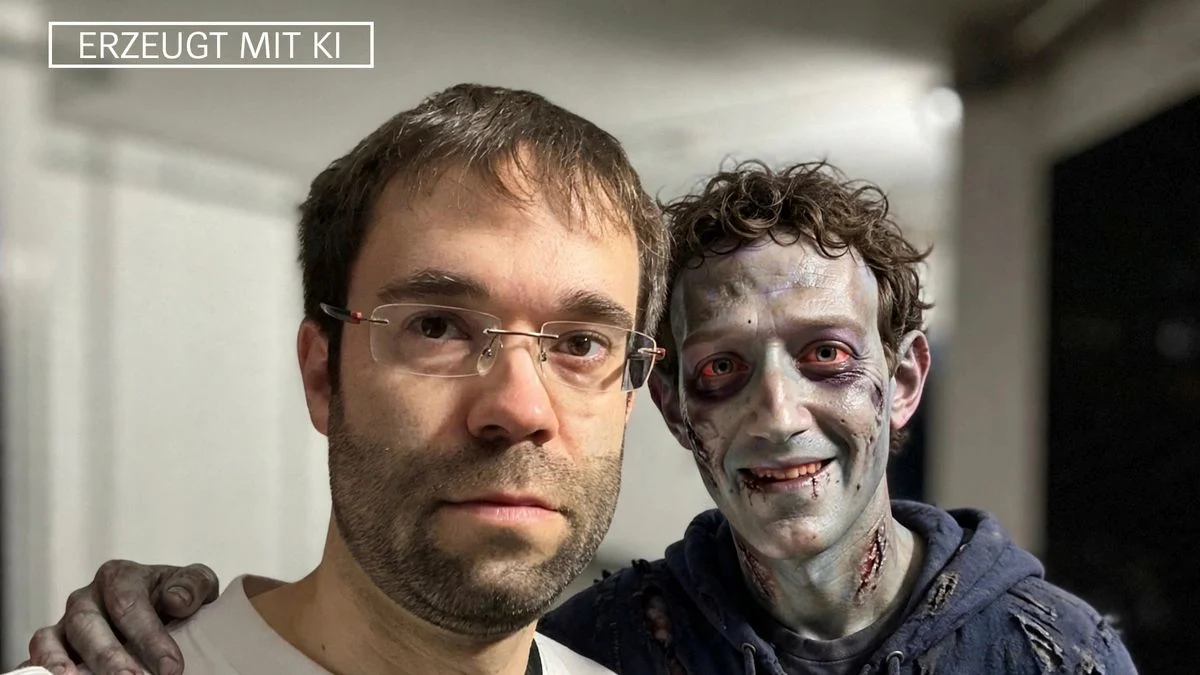
In the rapidly evolving landscape of artificial intelligence, Mark Zuckerberg has positioned Meta not merely as a social media conglomerate, but as the primary architect of the next phase of human-digital interaction. The centerpiece of this ambition is "Muse," a sophisticated AI agent designed to act as a personalized digital companion. Recent internal testing of this prototype suggests that Meta is moving beyond simple chatbots and toward a model of "agentic" software—AI that doesn’t just answer questions, but actively executes tasks, anticipates user needs, and curates the digital experience.
As the industry grapples with the implications of generative AI, Meta’s Muse represents a significant pivot. Unlike the sterile, objective tone of ChatGPT or the search-focused architecture of Perplexity, Muse is designed to operate within the social fabric of Meta’s ecosystem, effectively becoming a "personal agent" for the user.
The Core Concept: What is Muse?
At its most fundamental level, Muse is an integration of Meta’s Llama-3 large language model with a layer of proactive task-management capabilities. While standard LLMs wait for a prompt, Muse is designed to observe user behavior within the Meta suite—including Instagram, WhatsApp, and potentially the Ray-Ban Meta smart glasses—to suggest actions before they are explicitly requested.
During initial trials, the agent demonstrated a remarkable ability to parse complex instructions. Users could task the AI with synthesizing recent communication threads, organizing digital photo albums based on sentimental metadata, or even drafting responses to contacts that align with the user’s historical linguistic style. The "agentic" nature of the software is the differentiator; it is a tool that intends to minimize "digital friction."
Chronology: The Road to Agentic AI
Meta’s journey toward the deployment of Muse was not an overnight endeavor. It is the culmination of years of internal restructuring and a multi-billion dollar pivot toward generative AI.
- Early 2023: Meta dissolves its Responsible AI team and reallocates resources to the "GenAI" division. Mark Zuckerberg announces that the company’s primary focus is now on building creative, expressive, and agentic AI.
- September 2023: The launch of Meta AI, integrated into WhatsApp, Messenger, and Instagram. This served as the "proof of concept" for natural language interaction at scale.
- Q1 2024: Internal development of "Muse" shifts from a chatbot to an agentic framework. Engineering teams focus on "tool-use"—teaching the AI to interface with third-party APIs and internal platform databases.
- Q3 2024: Private beta testing begins. Testers are given access to a personalized agent that can navigate the user’s personal digital history to assist in daily administrative tasks.
- Present Day: Meta continues to refine the agent’s "memory" architecture, focusing on long-term context retention while simultaneously addressing the intense privacy concerns inherent in such deep-level data integration.
Supporting Data: The Efficiency Gap
The push for agentic AI like Muse is fueled by data regarding user productivity. Internal metrics at Meta suggest that the average user spends upwards of two hours daily navigating social media interfaces to manage information, schedule interactions, or curate content.
Initial reports from the test phase indicate that users equipped with an agentic interface like Muse reduced the time spent on "micro-tasks"—such as sorting notifications, drafting standard replies, and locating specific media files—by approximately 40%.
Furthermore, the sentiment analysis of test users showed a high degree of "digital intimacy." Users reported feeling that the AI "understood" their preferences, such as their preference for professional versus casual tone in messaging or their specific aesthetic criteria for photo organization. However, this efficiency comes at a cost: the necessity for the AI to have near-total access to the user’s digital footprint, including private messages, search history, and location data.
Official Responses and Strategic Vision
Meta’s leadership has been vocal about the "agentic" future. In recent shareholder calls, Mark Zuckerberg has framed the development of Muse as a defensive and offensive necessity.
"We are building the future of the internet," Zuckerberg noted in a recent company-wide address. "The goal isn’t just to have an AI that chats with you. It’s to have an AI that is an extension of your intent. If you want to plan a trip, or organize your social life, or manage your business, Muse shouldn’t just give you a list of links. It should do the work."
Critics, however, have questioned the transparency of this vision. In response to mounting privacy concerns, Meta’s Chief AI Scientist, Yann LeCun, has frequently defended the company’s approach to open-source models, arguing that decentralized, transparent AI development is the only way to prevent a "monopoly on intelligence." Yet, the Muse agent itself remains a closed-system product, tightly tethered to the Meta ecosystem, raising questions about whether the company is prioritizing open science or proprietary data lock-in.
The Ethical and Privacy Implications
The implementation of an agent that lives inside your personal communications and habits introduces significant, unprecedented risks.
1. The Data Privacy Paradox
Muse functions by "learning" from you. This means that every conversation, every photo liked, and every location tagged is a training point. While Meta claims that this data is anonymized and processed locally on hardware where possible, the core architecture requires cloud-based computation to maintain long-term context. This creates a centralized repository of individual user behavior that is unparalleled in its depth.
2. The Loss of Human Agency
There is a fine line between an AI that "assists" and one that "manipulates." If Muse begins to suggest specific responses or curate content in a way that aligns with its own engagement-based optimization goals, are the users still making autonomous decisions? The "nudging" potential of such an agent could fundamentally alter the nature of digital communication.
3. Economic and Social Displacement
The broader rollout of Muse threatens to disrupt the gig economy and the role of virtual assistants. If a free (or subscription-based) AI agent can handle scheduling, travel booking, and correspondence, the economic viability of human-led administrative services may collapse. Furthermore, as AI agents begin to communicate with other AI agents, the human element of digital social interaction may be relegated to the periphery.
Implications for the Future: A New Digital Paradigm
As we look toward the wider release of Meta’s Muse, it is clear that we are entering the era of "Ambient Computing." AI will no longer be a destination—a website you visit—but a constant presence in the background of your digital life.
For the average user, this offers a tantalizing promise: the end of digital clutter and the beginning of a personalized, frictionless interface. For the privacy advocate and the digital rights activist, it represents the final erosion of the private self.
The success of Muse will ultimately depend on whether Meta can convince its user base that the trade-off—their data for the agent’s efficiency—is worth the price. If the internal test results are any indication, the allure of a seamless digital experience is likely to outweigh the abstract concerns of data privacy for the vast majority of the public.
However, the regulatory landscape is shifting. With the EU’s AI Act and ongoing antitrust investigations in the United States, Meta’s deployment of Muse will likely face intense legal scrutiny. The question remains: can Meta build a "personal" agent that doesn’t feel like an intrusion?
As we wait for the broader public rollout, the Muse project serves as a mirror held up to our own habits. We have spent two decades training algorithms to know us; now, we are building the tools to let them act on our behalf. Whether this leads to a more empowered human experience or a more automated, compliant one is the defining question of the next decade.
For now, the ghost in the machine is waiting for its next instruction. The question is: who is really in control of the command line?

























